Plate Nº 22 · recorded October 10, 2026
Health & Medicine ResearchReported finding
Kidney-Sparing Procedure Cuts Death Risk 70% Versus Surgery
Embolization cut in-hospital deaths to 4.9% versus 17.1% for nephrectomy in a study of 849 stable patients with severe kidney trauma from 2017-2022.
By Elena Vasquez3 min read678 words
In brief
- In-hospital mortality was 17.1% after nephrectomy versus 4.9% after embolization across 849 stable trauma patients.
- Acute kidney injury occurred in 14.7% of surgical patients versus 4.1% of embolization patients.
- The study analyzed AAST grade III-V kidney injuries recorded in the ACS-TQIP registry between 2017 and 2022.
- The findings were published in the Journal of Vascular and Interventional Radiology (2026), DOI: 10.1016/j.jvir.2026.109105.
- Lead author Waseem Wahood says prospective work is needed to validate the results.
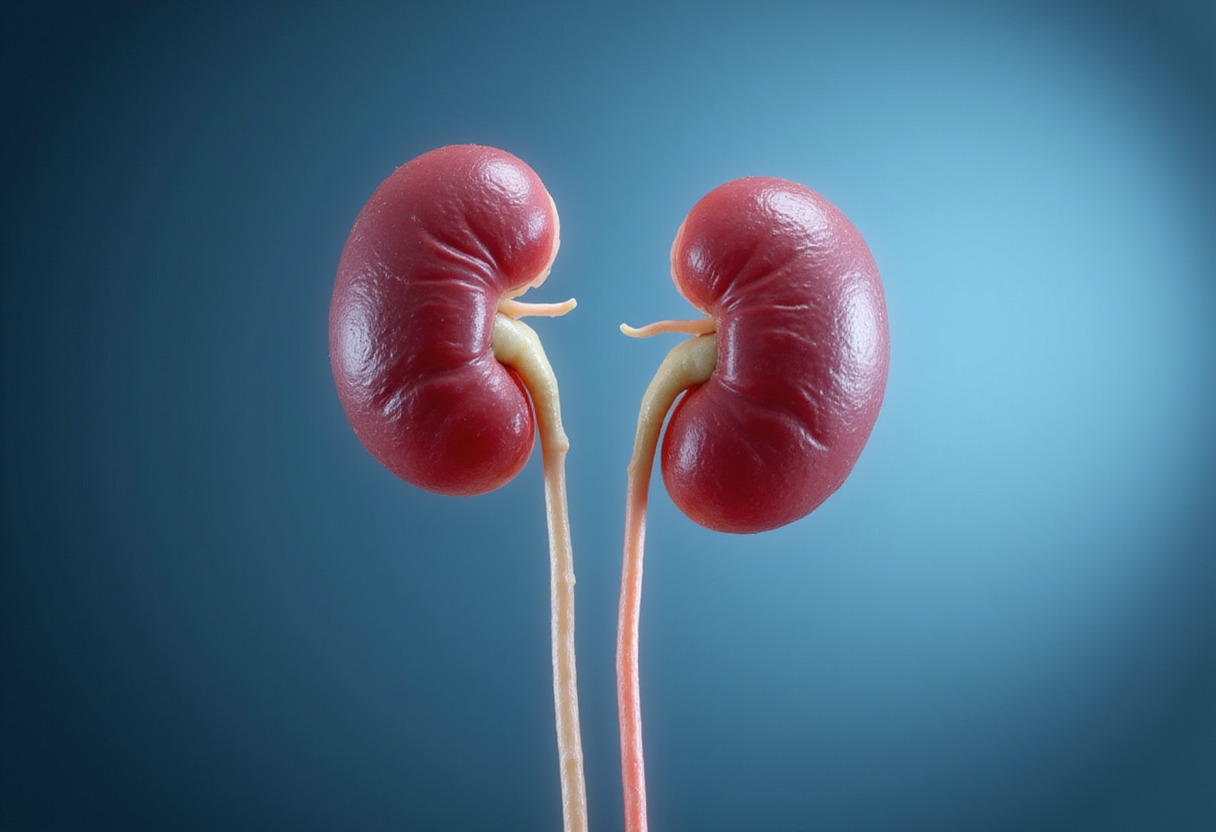
Patients with severe blunt kidney injuries faced roughly three and a half times the risk of dying in the hospital when surgeons removed the organ instead of treating it with a minimally invasive procedure, according to a new study published in the Journal of Vascular and Interventional Radiology.
The analysis of 849 trauma cases found in-hospital mortality of 17.1% after nephrectomy — surgical removal of the kidney — versus 4.9% after embolization, a technique in which interventional radiologists thread a catheter into the bleeding vessel and block it from the inside.
"Our findings show that embolization is safe, effective and associated with better outcomes than nephrectomy for this patient cohort in both the near- and long-term," said Waseem Wahood, MD, MS, the paper's lead author and an interventional radiology resident at the University of Miami Miller School of Medicine.
What did the researchers compare?
The team examined records from the American College of Surgeons-Trauma Quality Improvement Program (ACS-TQIP), a national trauma patient registry, covering 2017 through 2022.
They focused on the most severe injuries:
- 849 cases of grade III–V kidney trauma, the highest grades on the American Association for the Surgery of Trauma (AAST) scale
- 380 patients (44.8%) treated with nephrectomy
- 469 patients (55.2%) treated with embolization
All patients were hemodynamically stable — meaning their blood pressure and circulation held up — when they arrived for treatment. That distinction matters, because unstable patients often require immediate surgery regardless.
How large were the differences?
Acute kidney injury, a sudden loss of kidney function, occurred in 14.7% of the nephrectomy group compared with 4.1% of the embolization group. The surgical patients also had significantly higher rates of nearly every complication the registry tracks:
- Cardiac arrest requiring CPR: 8.5% vs. 2.3%
- Unplanned return to the operating room: 12.1% vs. 4.0%
- Severe sepsis: 2.6% vs. 0.9%
- Myocardial infarction: 1.0% vs. 0.0%
- Deep surgical site infection: 1.5% vs. 0.2%
- Superficial incisional infection: 1.6% vs. 0.2%
The pattern was consistent across every outcome measured: keeping the kidney and sealing the damaged vessel from within produced fewer complications and fewer deaths.
Why do the kidneys matter so much after trauma?
Genitourinary tract injury — damage to the kidneys, bladder, ureters or reproductive organs — occurs in about 10% of trauma cases. The kidney is the most commonly injured organ in that group.
The stakes extend well beyond the initial hospital stay. A substantial proportion of patients who develop acute kidney injury after trauma go on to develop chronic kidney disease. That condition carries long-term cardiovascular complications and the risk of end-stage renal disease, which requires dialysis or transplantation.
"By reducing the risks of acute kidney injury, embolization may help avoid chronic illness for these patients," Wahood said.
What are the study's limits?
The findings come from registry data, not from a randomized controlled trial. Researchers observed outcomes from 849 recorded cases rather than assigning patients to one treatment or another by chance, which leaves room for hidden differences between the two groups.
Wahood acknowledged this directly: "While additional prospective work is needed to validate these findings, our initial analysis demonstrates that a renal-preservation strategy with embolization should be considered for initial management of stable patients with high-grade renal trauma."
Prospective studies — which follow patients forward under planned protocols — would be needed to confirm that the outcome gap reflects the treatments themselves rather than differences in patient selection.
What could change in emergency care?
For stable patients with grade III–V blunt kidney injuries, the study suggests a shift toward preserving the organ whenever possible. Embolization already avoids the risks of open surgery, and these data indicate it also protects long-term kidney health.
The study appears as: Waseem Wahood et al., "Embolization versus Nephrectomy in Hemodynamically Stable Patients with AAST Grade III-V Blunt Kidney Injuries: Association with Lower Rates of Acute Kidney Injury and In-Hospital Mortality," Journal of Vascular and Interventional Radiology (2026), DOI: 10.1016/j.jvir.2026.109105.
via Medical Xpress (Source)
More from Elena Vasquez
Nearby plates
- Pediatric Kidney Injury Hospitalizations Rose Tenfold Since 1997
- Nearly half of injury patients in poorer countries die or face disability
- Nearly 1 in 3 Diabetes Patients Face Kidney, Heart Disease or Death
- Splitting Radiation Into Several Doses Cuts Brain Cancer Recurrence
- Kidney Disease of Unknown Origin Strikes Unexpected Groups