Plate Nº 79 · recorded October 10, 2026
Health & Medicine ResearchReported finding
Five Days of Vaping Leaves Lung Damage Lasting Ten Days
Ten days after a five-day e-cigarette exposure, human lung tissue still showed stress, damaged barriers, and weakened antiviral immunity, researchers report in JCI Insight.
By Elena Vasquez5 min read971 words
In brief
- Signs of lung stress persisted 10 days after a five-day e-cigarette vapor exposure ended.
- Damage to the distal lung barrier appeared within 24 hours of vapor exposure.
- Prior vaping exposure increased SARS-CoV-2 viral burden and suppressed antiviral genes.
- The study was led by National Jewish Health researchers and published in JCI Insight (2026), DOI: 10.1172/jci.insight.198757.
- The findings come from human cells and tissue in preclinical models and need confirmation in studies in people.
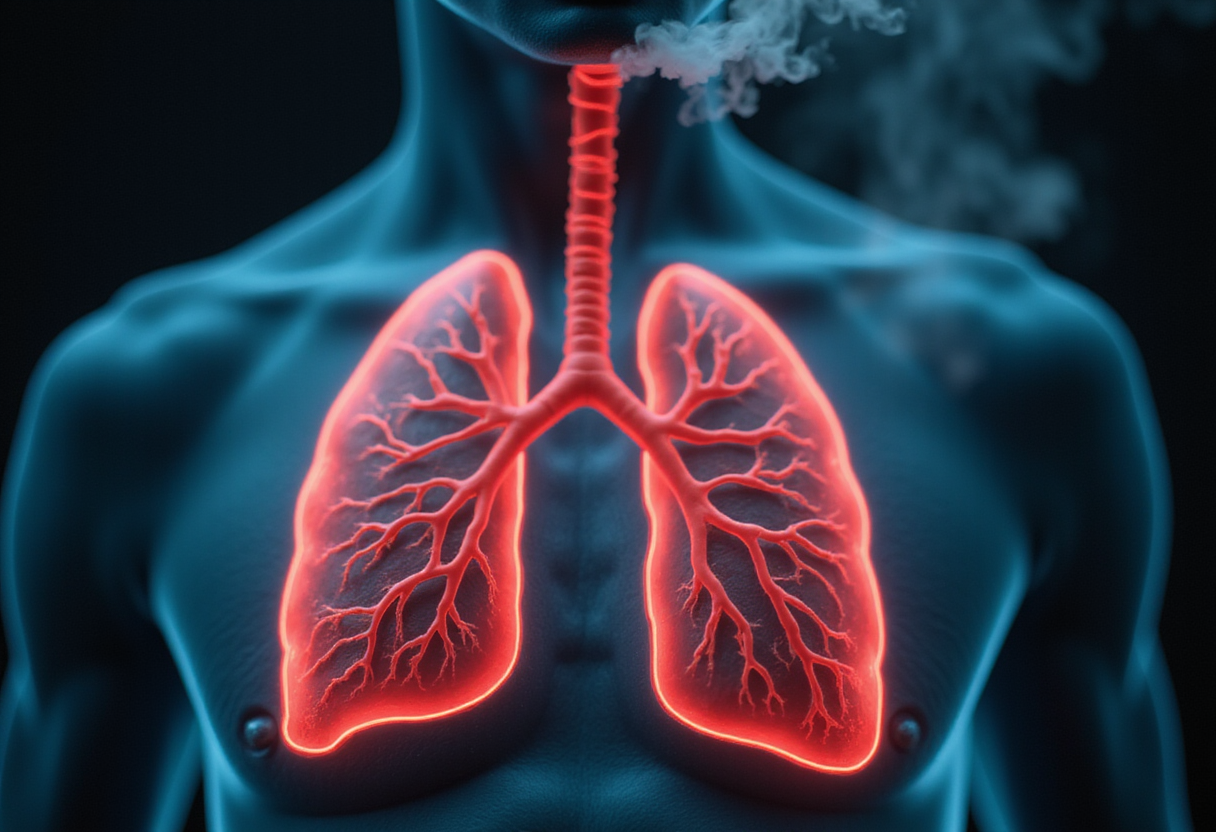
Signs of lung stress persisted for 10 days after just five days of e-cigarette vapor exposure, according to a new study led by researchers at National Jewish Health and published in JCI Insight. The same brief exposure also left lung tissue more vulnerable to respiratory viruses, including SARS-CoV-2.
The findings come from laboratory experiments on human lung cells and human lung tissue, not from studies in people. Still, they point to concrete biological mechanisms that may help explain why vaping has previously been linked to lung injury and greater susceptibility to respiratory infections.
What did the researchers actually do?
The team, led by pulmonologist Dr. Irina Petrache, chief of the Division of Pulmonary, Critical Care and Sleep Medicine at National Jewish Health, focused on the distal lung—the deep, delicate region of the lung where oxygen passes into the bloodstream. This is the part of the respiratory system where gas exchange happens, and its tissues are among the most fragile in the body.
The researchers worked with three types of biological material:
- Human lung epithelial cells, which line the airways and air sacs
- Human lung endothelial cells, which form the inner lining of blood vessels
- Precision-cut slices of human lung tissue, which preserve the structure of real lung in a laboratory setting
In preclinical models, the scientists exposed these tissues to e-cigarette vapor alone. In a separate set of experiments, they combined vapor exposure with infection by a respiratory virus, allowing them to test how prior vaping changes the lung's response to a subsequent infection.
How fast did the damage appear?
Very fast. Within 24 hours of vapor exposure, the researchers documented a cascade of harmful effects in the distal lung tissues:
- Damage to the protective barrier that normally shields the deep lung
- Cellular stress in the exposed tissue
- Impairment of autophagy—the internal housekeeping process cells use to clear out damaged components (in plain terms, the cells' recycling system started to fail)
- Slower cell growth and repair
- Increased cell death
These effects appeared after a single day. But the more striking result came later.
Did the damage last after exposure stopped?
Yes, and that is the study's central finding. The researchers exposed the tissues for five days and then stopped. Ten days after that exposure period ended, signs of lung stress were still detectable.
The lingering changes included:
- Altered barrier function, meaning the protective wall between lung tissue and the outside environment remained compromised
- Tissue remodeling, a restructuring process that can change how the lung works
- Lasting changes in Th1 immunity, a branch of the immune system that plays a critical role in fighting viral infections
In other words, the tissue did not simply bounce back once the vapor was removed. The biological aftermath continued well beyond the exposure window itself.
What happened when the virus arrived?
When the researchers infected the vapor-exposed tissues with SARS-CoV-2, the virus that causes COVID-19, prior vaping exposure had two clear consequences.
First, the viral burden increased—the tissues carried more virus than they would have without the vaping pre-exposure. Second, several antiviral genes were suppressed following infection. Genes are the instruction sets cells use to build defensive proteins, so suppressing them means the cells mounted a weaker fight against the invading virus.
This combination, more virus and fewer antiviral tools, suggests a mechanism by which vaping could make people more susceptible to severe respiratory infections. The changes to Th1 immunity, the immune branch targeted by the exposure, reinforce that picture.
What do the researchers say?
Dr. Petrache, the study's senior author, put the findings plainly.
"Our findings suggest that even short-term vaping exposure can initiate injury in the deepest and most delicate regions of the lung," she said. "Importantly, some effects persisted after exposure ended and altered the immune response to a subsequent viral infection."
The first author of the paper was Tanner C. Rivera, and the full study appears in JCI Insight (2026), DOI: 10.1172/jci.insight.198757.
What are the study's limits?
The researchers themselves emphasize the preliminary nature of the work. The experiments took place in cells and tissue samples in the laboratory—what scientists call preclinical models—not in living human vapers. The findings will need to be confirmed in future studies in people before anyone can say with confidence that a week of vaping produces the same lasting changes in a healthy lung.
Laboratory tissue models have real strengths. They allow researchers to isolate the effect of vapor alone, control the dose precisely, and observe cellular processes directly in human tissue. But they cannot capture everything a whole respiratory system does, including the role of immune cells circulating in the blood or the variability between individuals who vape different products at different intensities.
What could this mean for long-term vapers?
The study raises a concern about repetition. The researchers noted that repeated exposure could potentially contribute to chronic lung disease by sustaining cellular injury and disrupting normal repair. If each exposure period leaves stress signals that persist for days, and a regular vaper re-exposes the tissue before those signals fade, the damage could accumulate rather than resolve.
That idea remains a hypothesis for now. Testing it will require the long-term human studies the authors call for. What the current results do establish, in human tissue under controlled conditions, is that the deep lung responds badly and durably to even short bursts of e-cigarette vapor, and that the aftermath includes a weakened antiviral response at exactly the moment the lung needs it most.
For a product often marketed as a safer alternative to cigarettes, the study adds to a growing body of evidence that "safer" does not mean harmless—particularly for the most delicate real estate in the lung.
via Medical Xpress (Source)
More from Elena Vasquez
Nearby plates
- Gut microbes help set the body's inflammatory vaccine response
- Chronic Inflammation Raises Heart Attack Risk by 43%, Study Finds
- Common Mouth Bacterium Trains Lungs to Fight Pneumonia, Study Finds
- COVID-19 immunity may shield against other bat coronaviruses
- Nasal Vaccine Additive Kept Mice Alive Against Flu 100 Days Later