Recorded November 27, 2026
Earth & ClimateReported finding
Low Barents Sea ice boosts Eastern wheat yields, lowers Spanish output
Four decades of records link low Barents Sea ice to stronger Eastern European spring growth and higher Belarus wheat yields, but cooler springs and lower output in Spain.
By Marcus Bennett4 min read741 words
In brief
- Satellite records covered Barents Sea ice each February from 1982 to 2022.
- Low-ice years brought warmer springs to much of Eastern Europe and cooler springs to Western Europe.
- The team attributed nearly half of Eastern Europe's 40-year rise in spring photosynthetic activity to sea-ice loss.
- Belarus wheat yields were about 16.5% above its 20-year average in unusually low-ice years.
- Spanish wheat yields were about 5% lower in unusually low-ice years than in extensive-ice years.
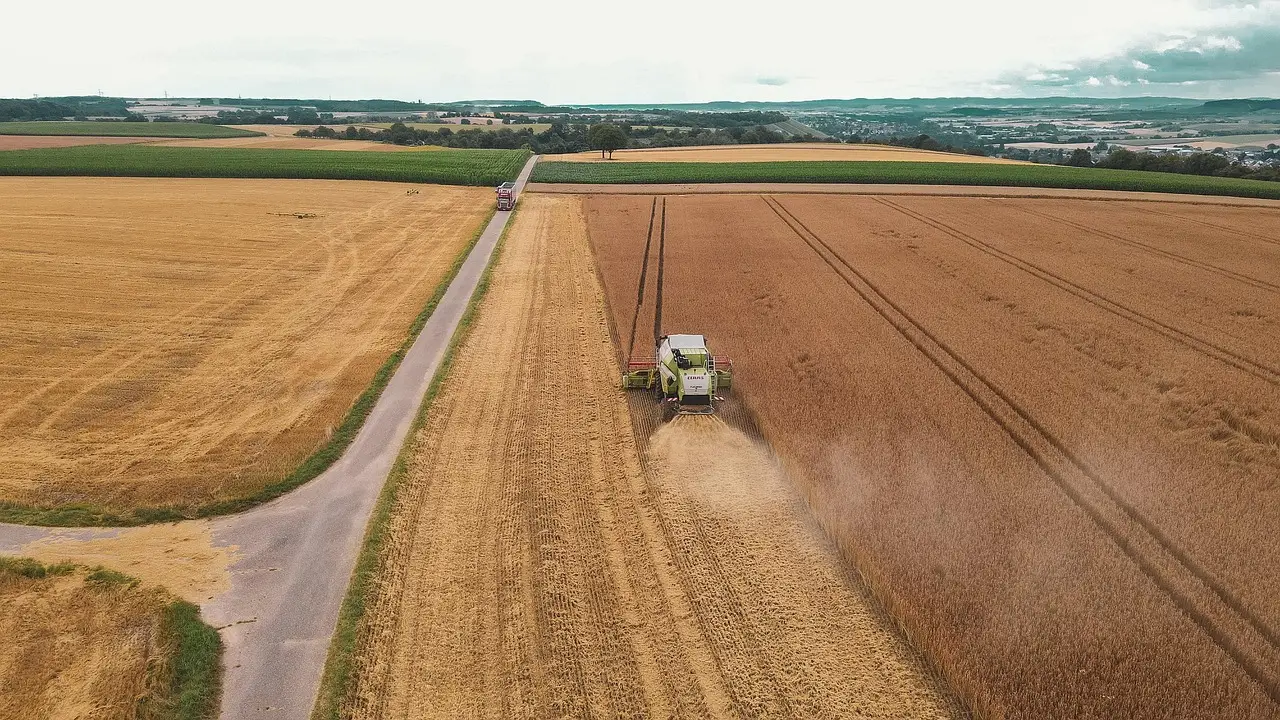
Wheat yields in Belarus ran about 16.5% above the country’s 20-year average in years with unusually little Barents Sea ice, while Spanish yields were roughly 5% lower than in extensive-ice years, according to a four-decade analysis led by Nanjing University researchers.
The study, published in Science Advances in 2026, found a sharp regional split: less ice was associated with warmer springs across much of Eastern Europe but cooler springs in Western Europe. The crop data followed the same pattern on either side of the continent.
The paper, “Arctic forcing of European spring productivity and agricultural yields linked to Barents Sea ice loss,” by Zhi Huang et al. appeared in Science Advances in 2026, DOI 10.1126/sciadv.aei1858.
What did four decades of records show?
Researchers from Nanjing University in China combined satellite records of Barents Sea ice cover with data on vegetation growth, wheat yields and weather across Europe. They examined ice cover each February from 1982 through 2022, a 40-year span.
The Barents Sea forms part of the Arctic Ocean north of Norway and Russia. Its ice has shrunk for decades as the Arctic warms. Such loss can alter weather patterns well beyond the polar region, but its effects on vegetation growth and agricultural production have remained less well understood.
The team focused on year-to-year variations, a choice intended to minimize the influence of long-term trends such as global warming and rising atmospheric carbon dioxide. Computer simulations then examined how changes in sea-ice cover alone could affect weather patterns across Europe.
In low-ice years, spring temperatures were higher across much of Eastern Europe and lower in Western Europe. Eastern plants began growing earlier and faced fewer frost days once growth began. The researchers estimated that nearly half of the increase in spring photosynthetic activity over the past 40 years came from sea-ice loss. Cooler conditions in Western Europe hampered spring vegetation growth.
The scientists summarized the split: “The response is heterogeneous: BSIA [Barents Sea ice area] loss significantly enhances spring GPP [gross primary productivity] and wheat yields across EE [Eastern Europe] yet suppresses them in Western Europe,” they wrote. Here, GPP means gross primary productivity, a measure of photosynthetic activity.
The observed split runs east versus west: less ice helped spring growth in one region and hindered it in the other.
What changed for wheat growers?
The crop results matched the vegetation pattern:
- Belarus: Wheat yields were higher in unusually low-ice years. The difference amounted to around 16.5% of the country’s average wheat yield, calculated over 20 years.
- Spain: Wheat yields were around 5% lower in unusually low-ice years than in years with extensive ice.
Those percentages describe historical regional associations. The researchers did not present them as guaranteed outcomes for a particular field, farm or future season.
For growers, low ice was a favorable signal in Belarus and an unfavorable one in Spain.
How can less sea ice alter European springs?
With less ice covering the sea, more heat escapes from the ocean into the atmosphere. The authors say this changes wind patterns, drawing warm air from the Mediterranean into Eastern Europe and cooler air from the North Atlantic toward the Iberian Peninsula.
The temperature contrast then alters plant conditions. Warmer eastern springs start the growing season earlier and reduce frost days after growth begins, while cooler western springs constrain vegetation growth.
The computer simulations addressed the narrower question of how sea-ice cover alone could affect European weather, separate from the broader year-to-year observations.
The mechanism is a circulation shift, not a blanket warming benefit for European agriculture.
How firm are the results?
The authors warned that Arctic sea-ice loss may have different effects as the region continues to warm. Much remains uncertain because the Arctic itself is changing.
“Looking ahead, the rapid transition of the Arctic toward a seasonally ice-free state is expected to alter, rather than necessarily intensify, the influence of Arctic forcing on midlatitude climate,” the authors concluded.
That wording leaves room for the relationship to change in strength or form as the Arctic moves toward a seasonally ice-free state. The percentages also describe an observed 1982-2022 pattern and a model-tested mechanism; they do not fix the yield of an individual farm or future season.
For now, the study points to opposite regional effects, not a Europe-wide gain or loss.
via phys.org/rss-feed/ (Source)
More from Marcus Bennett
Show full bio
News editor covering regulation, policy and their impact on general science news at SciBeat.
638 articles
Nearby plates
- Melting Arctic Winter Ice May Predict Eurasia's Summer Droughts
- Arctic winter sea ice loss may exceed forecasts by 1 million
- Arctic Melt Season Grew 40 Days Longer Since 1979—Then Stalled in 2010
- Arctic Sea Ice Ties for 10th-Lowest Minimum in 2026 Satellite Record
- Antarctic Sea Ice Falls to Record October Low, Satellite Data Show