Recorded November 22, 2026
Science Policy & FundingReported finding
Majority-Asian neighborhoods have 4.2 times the odds for a data center
A study of 5,291 U.S. facilities finds data-center odds ranging from 2.2 to 4.2 times those of majority-white areas; communities with recorded opposition average 79% white.
By Priya Raman4 min read781 words
In brief
- A U.S. study mapped 5,291 facilities against more than 81,000 census tracts.
- Majority-Asian neighborhoods had 4.2 times the data-center odds of similar majority-white areas.
- Majority-Latino and majority-Black neighborhoods had 2.6 and 2.2 times the odds, respectively.
- A June 2026 Reuters/Ipsos poll found 14% support for a local AI data center; one month later, opponents organized 142 protests across 42 states.
- Communities with documented opposition averaged 79% white, compared with 53% in communities without such records.
By Priya Raman
A study of 5,291 U.S. facilities found that the odds of having a data center located or proposed were 4.2 times as high in majority-Asian neighborhoods as in similar majority-white areas in the same state.
Researchers at George Washington University Law School and American University also reported odds 2.2 times as high in majority-Black neighborhoods and 2.6 times as high in majority-Latino neighborhoods. An odds ratio, a comparison of how likely an outcome is in one group than another, compared each neighborhood type with similar majority-white areas in the same state.
The team mapped the 5,291 facilities against more than 81,000 U.S. census tracts, small statistical areas used as proxies, or stand-ins, for neighborhoods. The analysis examined the demographics of neighborhoods where facilities operated or had been proposed. About 44% of residents in neighborhoods with data centers were people of color, compared with 38% in comparable neighborhoods without them, a six-percentage-point gap.
The disparities persisted after the team accounted for income, education, population density, property values and proximity to major electrical infrastructure. The results therefore could not be explained solely by measured differences in wealth or urban and rural location.
The researchers wrote: “We argue that data center development follows historical patterns of race-based infrastructure development, leading to disproportionately negative impacts on communities of color.”
Why do data centers follow this pattern?
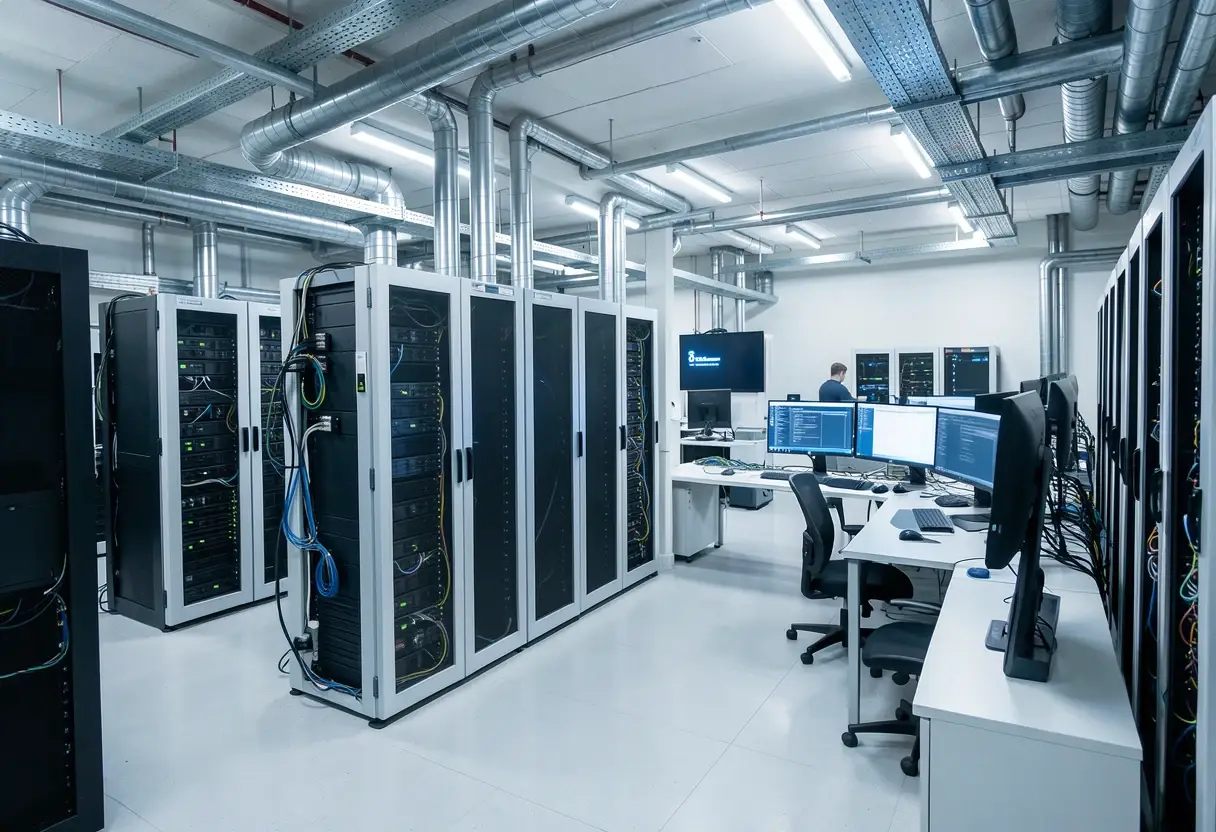
Data centers occupy enormous warehouses containing thousands of humming computers. They draw power from electrical substations and use water-intensive cooling systems. They are not new: for decades, they have kept websites running, stored images and videos, and processed financial transactions.
Artificial intelligence (AI) has intensified demand for the computing infrastructure that supports it. Training and operating advanced AI models require enormous quantities of electricity, processing power and cooling, prompting technology companies to pour hundreds of billions of dollars into new data centers.
Projects require suitable land, reliable grid connections, large electricity supplies and access to telecommunications infrastructure. That combination often points toward places already shaped by industry.
For much of the 20th century, American governments and financial institutions systematically disadvantaged Black communities through redlining, the practice of restricting access to mortgages and investment. Highways, factories, power plants and other industrial infrastructure frequently clustered in communities with less political and economic power.
Some neighborhoods inherited industrial corridors, major power infrastructure and land-use patterns that continue to influence what developers build. The new data-center pattern resembles adding another warehouse district to an old industrial corridor.
Yet the racial gap remained after researchers controlled for proximity to transmission infrastructure, the power network and related facilities that carry electricity from generators to users. Grid access shaped where developers built but did not explain the disparity on its own.
Who is resisting data-center projects?
Public resistance has grown as data centers spread. Residents across the United States have organized petitions, challenged zoning decisions and protested projects over electricity bills, water consumption, industrial noise, air pollution and the loss of farmland. The backlash has crossed political lines.
In a June 2026 Reuters/Ipsos poll, 14% of Americans said they would support an AI data center in their own community. One month later, opponents organized 142 protests across 42 states.
Recorded opposition also followed an uneven racial pattern. Communities with documented opposition were, on average, 79% white. Communities without such records were 53% white.
These averages do not show that white residents oppose data centers more, or that residents of color support them. Organizing a campaign requires time, money, access to information and political connections. Media attention also varies, and the dataset cannot distinguish among these explanations.
What can the study establish?
Systematic national research on the relationship between race and data-center locations had been limited. The study's central limitation is its design: it is observational, meaning researchers recorded existing patterns rather than assigning facilities to neighborhoods.
Such a study can identify correlation, a statistical association, but cannot establish causation, meaning it cannot prove that a factor caused the pattern. For that reason, the results do not prove that historical policies produced the observed disparities.
The researchers recommend:
- Racial impact assessments that examine how proposed projects may affect communities by race;
- Stronger zoning rules, which set conditions for where and how facilities may be built;
- Greater transparency about projects and decisions; and
- More meaningful opportunities for communities to participate in decisions about proposed facilities.
As hundreds of billions of dollars flow into AI infrastructure, the test is not only where the next data center goes, but who will live beside it, who will profit and who will have a say.
via zmescience.com (Source)
More from Priya Raman
Show full bio
Senior reporter covering people, launches and day-to-day practice in general science news at SciBeat.
549 articles
Nearby plates
- Pharmacy Closures Hit Minority Communities Hardest, Study Finds
- Detroit-area park visits halve at 2 miles, study of 20 metros finds
- Republicans in Democratic Neighborhoods Report Worse Mental Health
- The Data Centre Problem Bigger Than Water or Power: the Money
- Moving Out of Poverty Cuts Type 2 Diabetes Risk by Up to 57%