Plate Nº 41 · recorded November 9, 2026
Space & AstronomyReported finding
Mars Orbiter Finds Gas Leaks Hinting at Volcanoes Alive Today
Seasonal hydrogen chloride spikes near Alba Mons point to fresh fissures venting gas from a dormant magma chamber — the strongest hint yet that Mars may still be volcanically active.
By Elena Vasquez4 min read843 words
In brief
- Results published in Science Advances on Nov. 4 by Mège et al.
- Hydrogen chloride first detected in Mars's atmosphere by TGO in 2021; new spikes recur every early northern summer near Alba Mons
- Fissures imaged by CaSSIS at 4.5 m per pixel, spanning tens to hundreds of meters
- Winter temperatures of -120°C seal the fissures; gas escapes when ice melts in early summer
- TGO launched March 2016 and entered a 400×400 km Mars orbit in October 2016
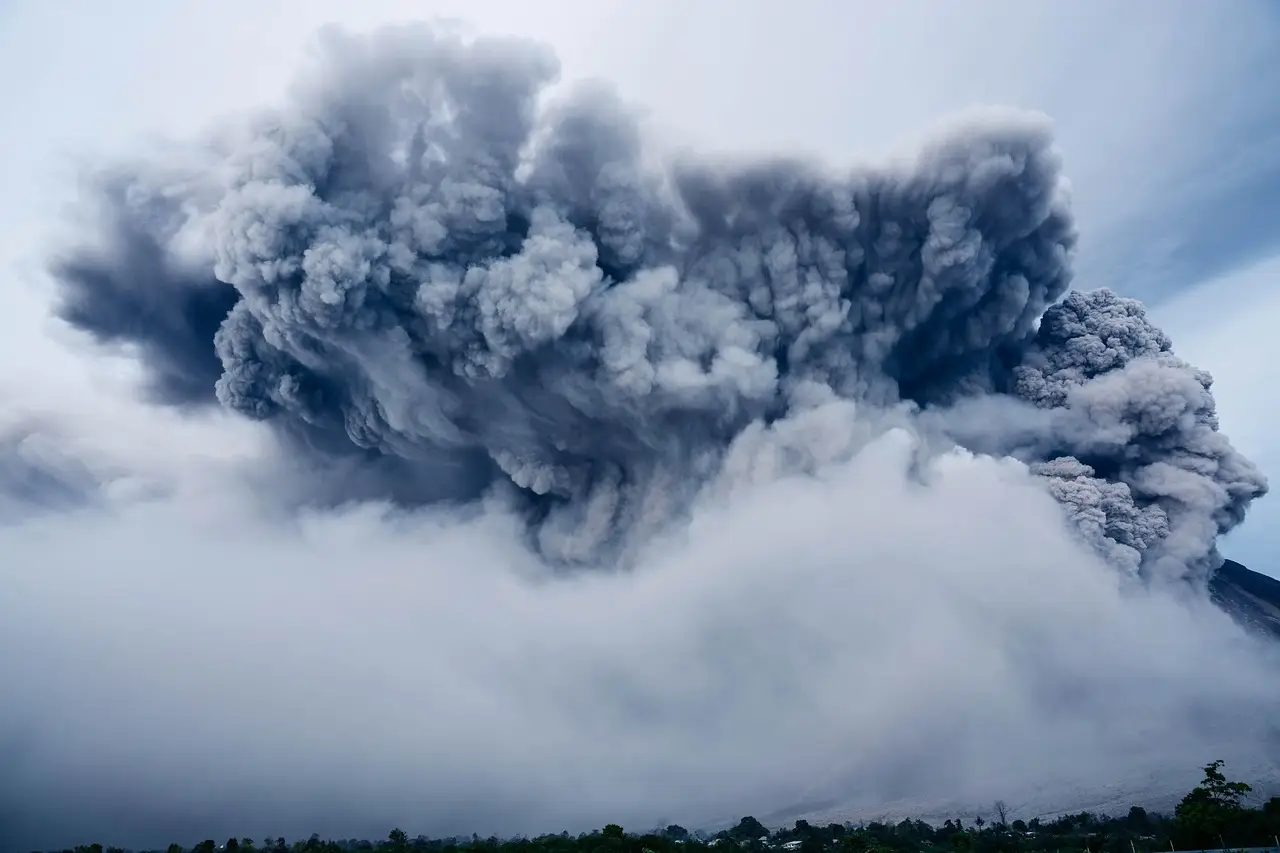
The ExoMars Trace Gas Orbiter has spotted what scientists call potential evidence that Mars is still volcanically active: hydrogen chloride gas leaking through fresh fissures near the Alba Mons volcano, according to results published in Science Advances on Nov. 4.
An international team led by Daniel Mège of the Polish Academy of Sciences traced seasonal spikes of the gas to young cracks in the Martian surface, which appear to let gases escape from a magma chamber hidden below. "Our findings suggest that Mars has retained enough internal heat to support volcanic activity until recently, and possibly still does," Mège said.
What did the orbiter actually see?
Hydrogen chloride is a gas made of hydrogen and chlorine. On Earth, it shows up in magmatic vents — openings where volcanic gases escape from hot rock underground. That's the key clue here.
The Trace Gas Orbiter (TGO), a joint European Space Agency and Roscosmos mission, first detected hydrogen chloride in the Martian atmosphere in 2021. Normally, the gas peaks during winter in Mars's northern hemisphere, fluctuating with the planet's dust and water cycles.
The new signal broke the pattern. Mège's team noticed sharp hydrogen chloride increases during early northern summer, centered around Alba Mons and its flanks — a region and season where the gas shouldn't be abundant. Digging through historical data confirmed it: the spikes came back, year after year, in the same place at the same time.
The team then imaged the area. TGO's Colour and Stereo Surface Imaging System (CaSSIS), a high-resolution camera resolving details as small as 4.5 meters per pixel, revealed narrow fissures tens to hundreds of meters long, with visible color changes in the surrounding soil — likely mineral deposits left by escaping gases, a phenomenon also seen at vents on Earth.
"Looking at the spatial distribution of the seeping, it became instantly obvious to me that there was something volcanic behind it, but it had to be demonstrated," Mège explained. "We needed to be rigorous, critical, and creative to explain the presence of hydrogen chloride. The data were complex, but also excellent brain food."
The gas localization itself came from TGO's Atmospheric Chemistry Suite (ACS), a set of three infrared spectrometers — instruments that identify gases by the fingerprints they leave in light.
Why does the gas arrive in summer?
The timing points to a seasonal plug. During winter, temperatures around the fissures drop to -120 degrees Celsius, freezing the openings shut. Hydrogen chloride rising from below gets trapped, and the pressure builds until early summer, when the ice melts and sublimates — turns directly to vapor — and the gas escapes in a burst.
The team's analysis links the emissions to a dormant magma chamber beneath Alba Mons, a kind of "volcanic plumbing system" that still channels gases toward the surface. The gas release happens just after winter frost disappears.
That's the mechanism. But no eruption has ever been observed, so the claim of present-day volcanism stays hedged for now.
Is Mars really still active?
The question has been open for years. Mars hosts the largest volcanoes in the solar system; Alba Mons alone, the biggest by surface area, rises 6.8 km at its peak, and some deposits around it are over three billion years old. Orbiter imagery suggests some volcanoes were active as recently as a few million years ago, and NASA's InSight lander recorded thousands of "marsquakes."
Yet nobody has seen an eruption. The hydrogen chloride fissures are the strongest atmospheric hint so far that the planet's interior still holds heat.
Mège credits the orbiter for catching it: "The Trace Gas Orbiter was able to find the smoking gun. It was like looking for a needle in a haystack. It's truly amazing that it spotted a handful of molecules from a perhaps intermittent source, whilst moving continuously along its orbit to monitor the whole Martian atmosphere."
Why habitability matters here
The findings carry more than geological weight. Millions of years ago, hydrogen chloride and other magmatic gases helped build a thick, warm Martian atmosphere — conditions under which liquid water flowed. If the fissures ever allow magma to reach groundwater, they could create small pockets of habitable conditions.
"Looking for Martian life in the seeping fissures of the Alba Mons region would make a lot of sense," Mège said. Active hydrothermal systems could supply the ingredients and energy microorganisms need, while shielding them from the harsh surface environment.
TGO launched on a Proton rocket from Kazakhstan in March 2016 and entered a 400-by-400-km circular orbit around Mars that October. It was built to study methane and other trace gases, and it has now shown it can flag potentially habitable regions just by sniffing the air. "These findings may prove to be TGO's greatest success yet," said ESA project scientist Colin Wilson.
The caveats are real: the evidence is indirect, and a dormant magma chamber is an interpretation, not a confirmed observation. But for now, the gas keeps leaking on schedule each Martian summer.
via nasaspaceflight.com (Source)
More from Elena Vasquez
Show full bio
Correspondent covering money, funding and market shifts around general science news at SciBeat.
384 articles
Nearby plates
- Hydrogen Chloride on Mars Hints at Continuing Volcanic Activity
- Mars Volcanoes Show Signs of Dormant Geological Activity
- Ancient Rain May Have Delivered Life's Building Blocks Across Mars
- Ancient Mars Rains May Have Delivered a Life-Starting Molecule
- Mars' Grand Canyon Is Still Tectonically Active, Study Finds