Plate Nº 42 · recorded November 10, 2026
Earth & ClimateReported finding
Maya Red Paint Left 1,800 Years of Mercury in Yucatán Lakes
Sediment cores from Yucatán lakes show mercury from the Maya's sacred red pigment peaked at 18 ppm — nine times the harm threshold — collapsing aquatic food webs for centuries.
By Marcus Bennett4 min read807 words
In brief
- Mercury at Cenote Xcach peaked at 18 ppm around A.D. 720, nine times the 2 ppm severe-effect threshold.
- Sediment cores collected in 2023 record more than 2,000 years of pollution history.
- At Xcach, mercury stayed above the severe-effect threshold for roughly 275 years.
- A 2022 review found toxic mercury levels at seven of ten studied Maya sites.
- The study was published in the journal Science Advances.
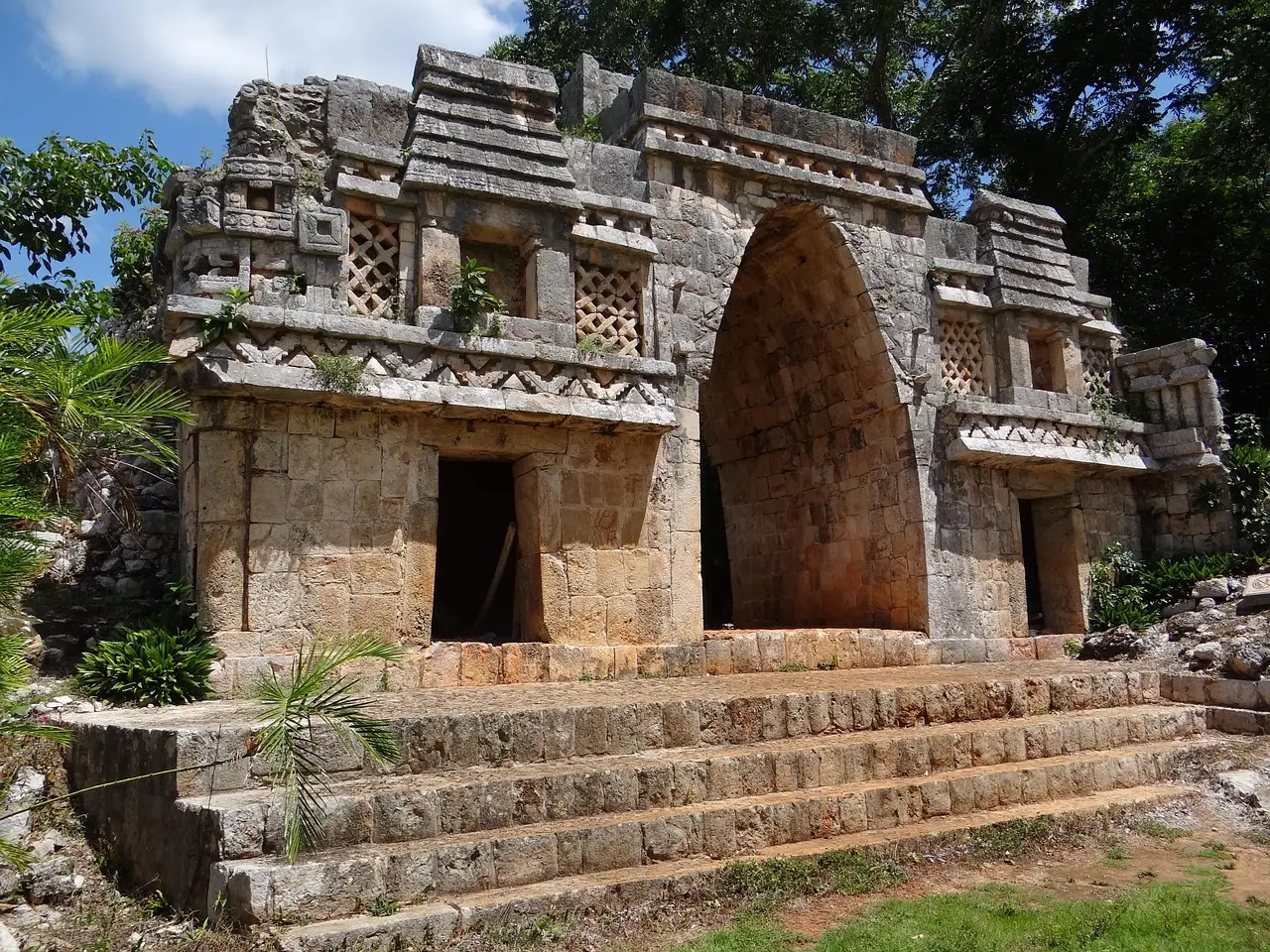
Mercury concentrations in a Yucatán sinkhole lake reached 18 parts per million around A.D. 720 — nine times the level at which severe harm to sediment-dwelling organisms is expected. The likely source, according to a new study in the journal Science Advances, was the brilliant red pigment the ancient Maya prized for walls, sacred objects, and even their dead.
A team led by Matthew Neal Waters of Auburn University extracted sediment cores in 2023 from two water bodies: Lago Cobá, beside a major Maya city, and Cenote Xcach, a sinkhole lake near a little-excavated settlement. The mud layers, deposited over more than 2,000 years, acted as a time capsule. The researchers dated them using charcoal and wood fragments, then tested each layer for mercury.
What did the cores show?
At Cobá, mercury concentrations began rising around A.D. 40, reached about 2.3 parts per million between A.D. 250 and 300, and returned near natural levels by roughly A.D. 520.
Xcach told a much worse story. After two earlier pollution episodes, mercury surged again between approximately A.D. 535 and 820, peaking around A.D. 720 at 18 parts per million. For roughly 275 years, concentrations there stayed above the severe-effect threshold of 2 parts per million.
Two other lakes the team sampled showed no comparable spikes, ruling out a region-wide atmospheric source from some natural phenomenon. The researchers suspect mercury used on land during Maya activities washed into the lakes with eroded soil — though they could not determine whether cinnabar, liquid mercury, or both were responsible.
Where did the mercury come from?
Cinnabar, a brilliant red mineral made of mercury sulfide, is scarce in the northern Yucatán and likely arrived through long-distance trade. The Maya also occasionally used liquid mercury.
For the Maya, red was the color of life. They painted walls, decorated sacred objects, and covered the dead with red pigment — unaware, the study suggests, that the color carried poison.
The wider ancient world shared the blind spot. European, Asian, and Mediterranean artists prized cinnabar, also called vermilion, since ancient times. Roman emperors painted their faces with it during triumphs, and wealthy Romans used it for lavish frescoes like those preserved in Pompeii. Rome mined cinnabar at Almadén in Spain with forced labor, and enslaved workers there routinely died of acute mercury poisoning. Ancient Europe also used red lead, or minium, a synthetic lead oxide pigment that exposed painters, scribes, and artisans to chronic lead toxicity.
What happened to life in the lakes?
The chemical readings were startling, but the biological evidence disturbed the researchers more:
- At Cobá, an entire section of polluted sediment contained no preserved shells from ostracods — tiny crustaceans — or freshwater snails, though their shells were abundant in other layers.
- Researchers had noticed this unexplained disappearance in a core collected in the 1990s, but only the new mercury measurements give a plausible explanation.
- At Xcach, fossil remains of nonbiting midge larvae declined sharply; a once-dominant type, Goeldichironomus, nearly vanished, replaced by another, Beardius.
- Pigment markers of algae, cyanobacteria, and purple sulfur bacteria also fell dramatically when mercury reached toxic levels.
Phosphorus, a nutrient that normally fuels algal growth, kept entering the lakes throughout. Some microorganisms flourished at first, but as mercury accumulated, their traces collapsed despite the nutrient supply.
"The biological community completely changed," Waters said.
Could mercury have harmed the Maya themselves?
The Maya drank from and fished these waters. Mercury accumulates in aquatic food chains, and chronic exposure damages the brain, nervous system, kidneys, and other organs. That raises an obvious question for archaeologists: did pollution contribute to the Classic Maya collapse, the decline of southern lowland cities like Tikal between roughly A.D. 750 and 900?
The evidence does not support that leap. "This research does little to link mercury directly to the demise of Classic-era Maya cities. But it does add one more stressor to the growing list of environmental and climatic pressures documented to have co-occurred with the Classic Period Maya," co-author Savanna Wooten told Reuters.
The timing complicates any simple story. Contamination at Cobá subsided centuries before the end of the Classic Period, while at Xcach it persisted into the eighth and ninth centuries, when many cities were changing profoundly. Researchers already link the upheavals to prolonged droughts, warfare, environmental degradation, and political instability.
The pattern extends beyond this study. A 2020 study at Tikal, in Guatemala, found mercury and toxin-producing cyanobacteria in ancient water reservoirs. A 2022 review found mercury concentrations meeting or exceeding modern toxicity benchmarks at seven of ten studied Maya sites.
A humble red paint almost certainly did not bring down Maya civilization. But the findings reveal a quieter collapse: a substance cherished for its beauty and sacred significance degraded the waters and food resources entire communities depended on.
via zmescience.com (Source)
More from Marcus Bennett
Show full bio
News editor covering regulation, policy and their impact on general science news at SciBeat.
449 articles
Nearby plates
- Two West Coast Faults May Rupture Hours Apart, Study Finds
- Ultrasensitive Radiocarbon Method Reveals Hidden Quake Layers Off Japan
- Mercury's Surface Has Far Less Silicon Dioxide Than Expected
- A Famous 2-Billion-Year-Old Signal From Early Earth May Be Local, Not Global
- Arctic ice reveals century-old copper pollution across North America