Plate Nº 95 · recorded November 11, 2026
PhysicsReported finding
Medieval Bones Dated Hundreds of Years Too Old by Fish Diet
Six of 27 medieval Danish skeletons carry radiocarbon dates off by centuries because the people ate freshwater fish rich in old carbon, researchers warn in npj Heritage Science.
By Marcus Bennett4 min read734 words
In brief
- Six of 27 reexamined medieval skeletons from Danish monasteries have demonstrably wrong radiocarbon dates.
- Svendborg's Franciscan monastery was founded in 1236, but skeleton III9B was radiocarbon-dated to 1100–1155.
- A Viborg burial was dated at least 200 years before its monastery existed; a Rhine fish can appear up to 1,300 years too old.
- The North Sea saltwater reservoir effect is a predictable ~400 years; the freshwater effect ranges from zero to 1,000 years.
- The warning was published in npj Heritage Science (2026), DOI: 10.1038/s40494-026-02958-x.
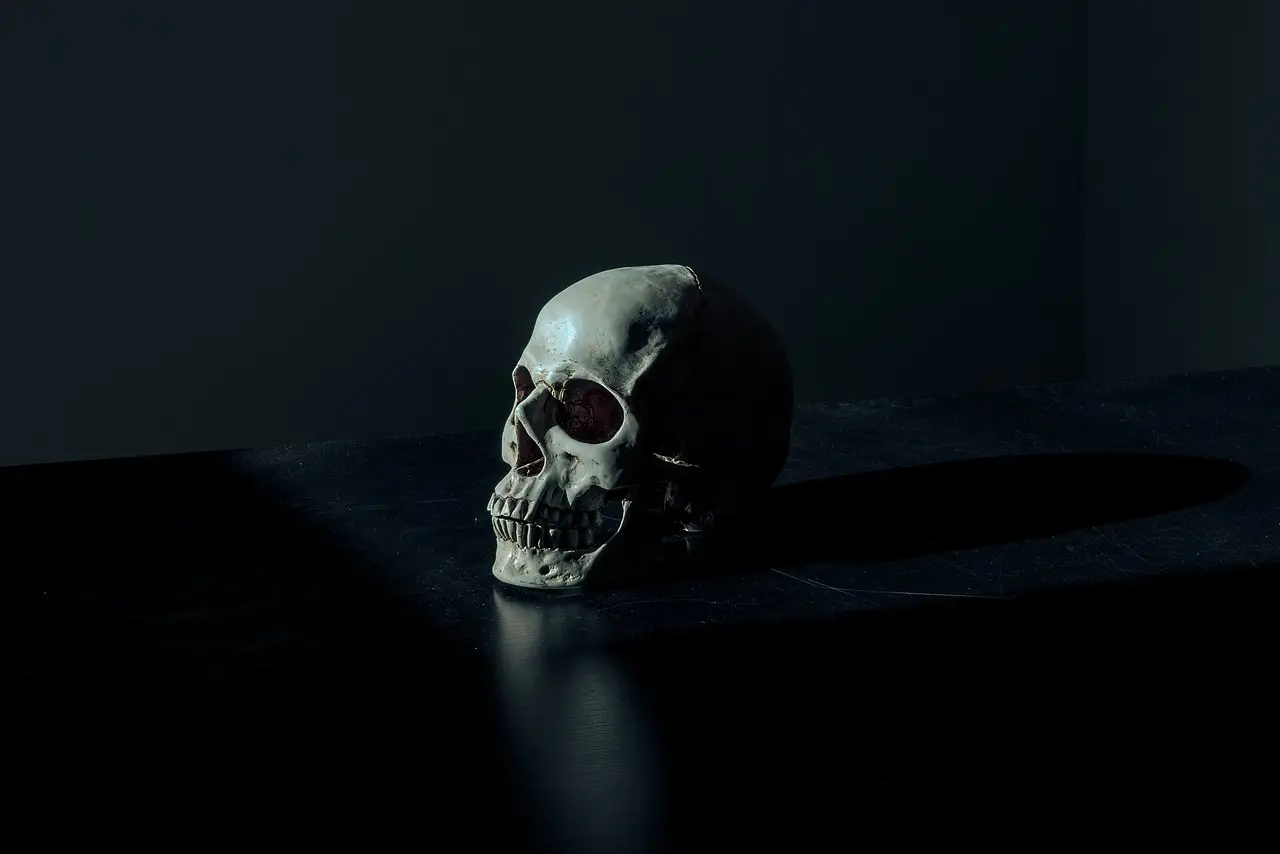
Six of 27 medieval skeletons from Danish monasteries carry radiocarbon dates that are demonstrably wrong — in one case off by more than 200 years — because the people ate freshwater fish. A Danish-Dutch research team published the finding as a "word of warning" in the journal npj Heritage Science, urging archaeologists everywhere to correct for what they call the freshwater trap.
The problem surfaced in skeleton III9B, excavated from a Franciscan monastery in the Danish town of Svendborg. Radiocarbon dating placed the person's death between A.D. 1100 and 1155. The monastery, however, was not founded until 1236 — nearly a century later. Both dates cannot be right.
What does the reexamination show?
Professor emeritus Kaare Lund Rasmussen of the Cultural Heritage and Archaeometric Research Team at the University of Southern Denmark reexamined the remains together with Johannes van der Plicht of the Center for Isotope Research in Groningen, Netherlands, and Jesper Lie Boldsen of the Department of Forensic Medicine at the University of Southern Denmark.
The 27 people in the study were all buried at some of Denmark's roughly 140 medieval monasteries — either in monastic cemeteries or inside the churches themselves, a placement reserved for the prestigious. Burial inside a church means the person must have died after construction began, which gives archaeologists an independent check on the radiocarbon dates. That check failed repeatedly.
"We can say with certainty that another five of the 27 skeletons we reexamined have also been incorrectly dated. The results make it abundantly clear that this is a major problem. And not just in Denmark, but probably across the rest of Europe too," Rasmussen said.
The six misdated skeletons include:
- III9B from Svendborg, dated to 1100–1155 despite the monastery's 1236 founding.
- One burial from the Monastery of Our Lady in Viborg, whose latest possible radiocarbon date, A.D. 976, precedes the monastery by more than 200 years.
- Three burials at the Cistercian monastery at Øm, showing the same discrepancy.
Takeaway: where burial context and radiocarbon dates disagree, the fish on the medieval dinner table is a prime suspect.
Why does fish distort radiocarbon dating?
Radiocarbon dating, used worldwide for almost 75 years, measures carbon-14 in once-living material to estimate its age. Freshwater fish, however, can contain less carbon-14 than food from land. Old carbon seeps into lakes and rivers from sediments along their shores and banks, enters the aquatic food chain, and ends up on the plate. People who eat that fish incorporate some of this ancient carbon into their own bones. Centuries later, laboratories read those bones as older than they are.
"If someone ate a lot of freshwater fish during their lifetime, their bones can appear older than they really are. The difference can amount to several hundred years and can vary considerably," Rasmussen said.
The scale of the effect is striking.
"In extreme cases, a fish from the Rhine, for example, can appear up to 1,300 years older than a land-based organism that lived at exactly the same time. But that does not mean you can simply subtract 1,300 years from the date of a person who ate freshwater fish. Quite the opposite. The particular problem with freshwater is that the effect varies enormously. It can range from zero to 1,000 years," he explained.
That variability is the core difficulty: there is no single correction factor an archaeologist can apply.
Takeaway: freshwater reservoir effects shift dates unpredictably, so each site needs its own correction rather than a fixed subtraction.
Is saltwater fish a problem too?
Yes, but a manageable one. Saltwater fish also makes human bones appear older, and the marine effect varies geographically across the world's oceans. It is, however, considerably more predictable than the freshwater effect. In the North Sea, the researchers note, the effect is well established at around 400 years, so a date for an organism that drew all its carbon from the marine food chain can be corrected with confidence.
The study is published as Kaare Lund Rasmussen et al., "Words of warning about radiocarbon dating medieval human bones," npj Heritage Science (2026), DOI: 10.1038/s40494-026-02958-x. The findings are preliminary in scope — 27 skeletons from one country — but the mechanism applies wherever fish formed a major part of the diet.
The message for practitioners is one line: check the diet before you trust the date.
via phys.org/rss-feed/ (Source)
More from Marcus Bennett
Show full bio
News editor covering regulation, policy and their impact on general science news at SciBeat.
370 articles
Nearby plates
- Freshwater Fish Diet Makes Medieval Skeletons Look Centuries Older
- Scientists digitally reconstruct face of 315,000-year-old Homo sapiens
- No Male Markers in 20 Homo naledi Fossils: Was This Cave Women-Only?
- Zero Indigenous Ancestry Found in 45 Montreal Colonial-Era Skeletons
- A Famous 2-Billion-Year-Old Signal From Early Earth May Be Local, Not Global