Recorded November 27, 2026
Health & Medicine ResearchReported finding
MIT Revives Toxic Antibiotic Candidates with a Drug-and-Antidote Strategy
MIT paired the toxic cancer drug calicheamicin with an albumin-binding carrier and a circulating antidote protein, clearing pneumonia in mice while shielding the liver from damage.
By Marcus Bennett5 min read927 words
In brief
- The study appears in Nature Communications, led by Tahoura Samad and senior author Sangeeta Bhatia of MIT.
- Calicheamicin was approved for acute myeloid leukemia in 2000, withdrawn over toxicity, and reapproved in 2017 at lower doses.
- In mice infected with Pseudomonas aeruginosa or Staphylococcus aureus pneumonia, the drug-antidote pair cleared infection and prevented liver damage.
- The conjugate also killed MRSA, E. coli, and Klebsiella pneumoniae in lab-dish tests.
- Results are preliminary: all evidence so far comes from mouse and in-vitro studies.
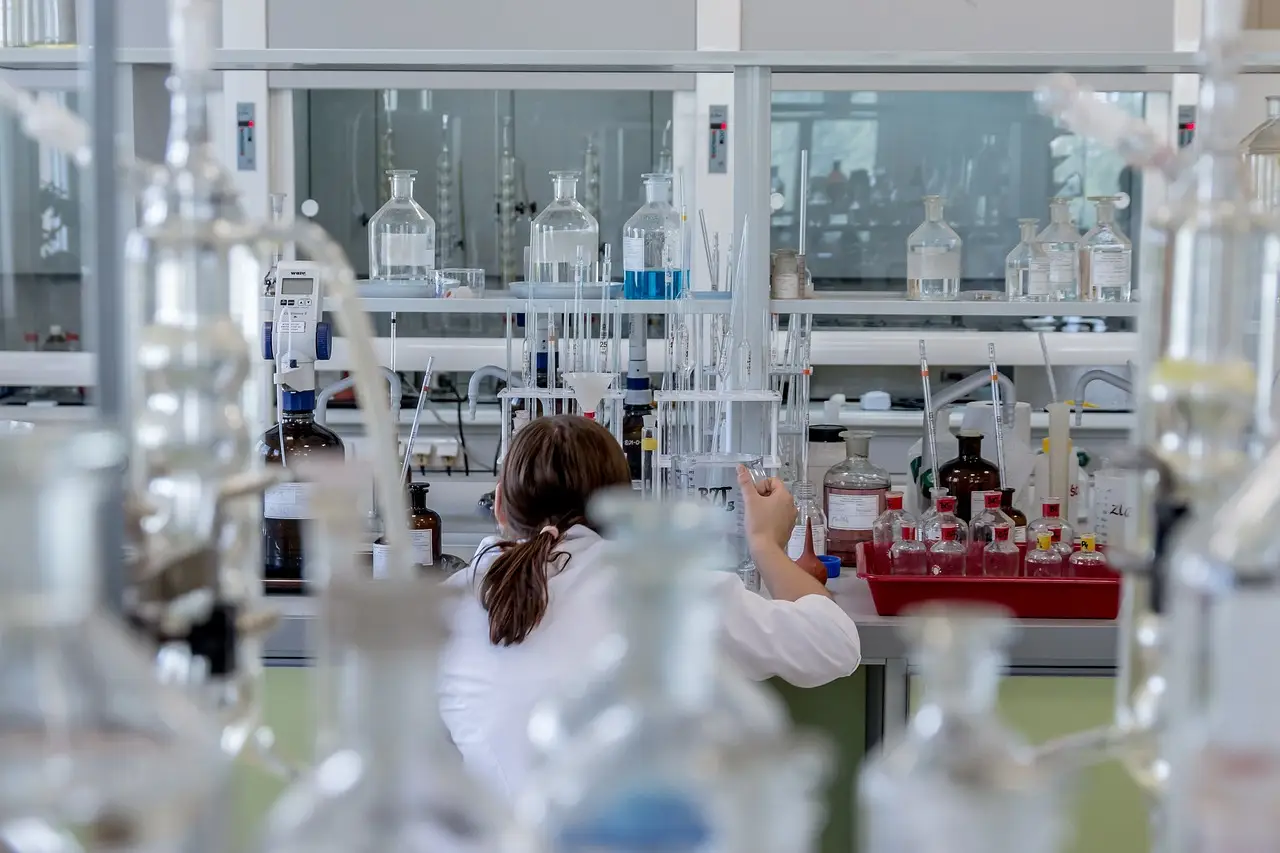
MIT researchers have demonstrated a way to rescue antibiotic candidates previously discarded as too toxic: pair the drug with a delivery protein that releases it only at the infection site, and circulate an "antidote" protein that intercepts any drug that escapes. In mouse tests, the approach cleared bacterial pneumonia caused by two dangerous pathogens while preventing liver damage — the organ that typically suffers most from the drug they chose, calicheamicin.
The study, published in Nature Communications and led by MIT research scientist Tahoura Samad, marks a potential shortcut for a field under pressure: as resistant bacterial strains multiply, the pipeline of new antibiotics has struggled to keep pace.
Why does toxicity sideline so many candidates?
Many compounds that kill bacteria also harm human cells, which rules them out as antibiotics. Scientists have scoured the genomes of microbes and plants and used artificial intelligence algorithms to find compounds with antimicrobial activity. These searches have produced plenty of candidates, but many were abandoned over safety concerns.
"Increasingly, we're seeing more work focused on antimicrobial discovery and the identification of new compounds," Samad says. "We see this work as saying: How can we make the best use of this enhanced discovery capacity, so that more of these candidates are reasonable to develop?"
The MIT team started with a specific subset of castoffs: drugs too toxic for infection treatment but already accepted in cancer therapy, where doctors and patients tolerate harsher side effects in exchange for killing tumor cells.
"If we could find compounds like that, then the development time would be much faster for those antibiotics because all the preclinical studies and regulatory conversations have already happened," says Sangeeta Bhatia, the John and Dorothy Wilson Professor of Health Sciences and Technology and of Electrical Engineering and Computer Science at MIT, a member of MIT's Koch Institute for Integrative Cancer Research and the Institute for Medical Engineering and Science, and senior author of the study.
In short: the chemistry is already known; only the safety problem needs solving.
What drug did they test, and how does the delivery work?
The first test case was calicheamicin, a compound originally isolated from the bacterium Micromonospora echinospora that kills cells by damaging their DNA. The U.S. approved it in 2000 as part of a drug conjugate for acute myeloid leukemia, but regulators later pulled it from the market, partly over toxicity. In 2017 it returned, at lower doses and on a different dosing schedule.
The team borrowed a formulation already proven in cancer medicine: the antibody-drug conjugate, which attaches a drug to an antibody that targets a tumor protein, concentrating the payload where it is needed. For an antibiotic version, the researchers attached calicheamicin molecules to an albumin-binding domain — a small protein that grabs onto albumin, a blood protein whose job includes transporting other molecules through the bloodstream.
The tether between drug and carrier is a linker that only one enzyme can cut: neutrophil elastase, produced by neutrophils, a type of immune cell that gathers at infection sites. When the conjugate arrives, the linker is cleaved and the drug starts killing bacteria.
That worked — the conjugated drug cleared infections in mice with less liver toxicity than the free drug — but the damage levels were still too high. So the researchers added the second half of the strategy.
What is the antidote, and where did it come from?
They went back to the source bacterium. Micromonospora echinospora protects itself from its own weapon by manufacturing enzymes that neutralize calicheamicin. The researchers selected one, called CalU19, and engineered it to bind albumin so it circulates in the bloodstream.
"We thought that having this antidote stay in circulation would be a great way to intercept the drug before it gets to the liver. You have this 'security guard' waiting for any drug that escapes from the infection environment, and it can soak up the drug before it can do damage," Samad says.
In mice infected with Pseudomonas aeruginosa or Staphylococcus aureus — both causes of pneumonia — the drug-antidote combination cleared the infections and prevented signs of liver damage.
In lab-dish tests, the conjugate also killed several other bacterial species, including methicillin-resistant Staphylococcus aureus (MRSA), Escherichia coli, and Klebsiella pneumoniae.
What happens next — and what are the limits?
The results so far come from mice and cell cultures, so any clinical application remains years away and will need human trials to confirm the safety gains hold.
The team is now searching for antidotes that could accompany other compounds, including existing antibiotics rarely prescribed because they harm the kidneys or other organs. The same approach, they say, could soften the side effects of cancer drugs already on the market.
"We're excited about how we can keep building out this approach where you can deliver a drug along with its antidote," Samad says.
Bhatia frames the broader stakes plainly: "The discovery pipeline is advancing at an extraordinary pace, but safety concerns can bring even the most promising programs to an immediate halt. This strategy could offer a chance to let really promising drugs keep going."
Funding came from the National Institute of Allergy and Infectious Diseases, the Virginia and D.K. Ludwig Fund for Cancer Research, the Koch Institute Support (core) Grant from the National Cancer Institute, the National Institute of Environmental Health Sciences, the Koch Institute's Marble Center for Cancer Nanomedicine, Joel and Meredith Gantcher, and a postdoctoral fellowship from the Ludwig Center at the Koch Institute.
A circulating antidote may turn yesterday's discarded toxins into tomorrow's antibiotics.
via nature.com (Original)
More from Marcus Bennett
Show full bio
News editor covering regulation, policy and their impact on general science news at SciBeat.
638 articles
Nearby plates
- One Protein Family Lets Microbes Make Drugs Without Self-Harm
- Evolved Enzymes Build TB Antibiotic Ingredient Without the Waste
- Two MIT Scientists Win 2026 Pritzker Prize for AI-Discovered Antibiotics
- Scientists identify first PLP-dependent tRNA-modifying enzyme
- How Oxford researchers caught penicillin being built — atom by atom