Recorded November 20, 2026
Space & AstronomyReported finding
Moon's Largest Impact Basin Dated at 4.34 Billion Years in HKU Study
HKU-led team dates the South Pole–Aitken basin to 4.34 billion years using Chang'e-6 far-side samples, identifying two magnesium-rich rock types and timing the Apollo and Orientale impacts.
By Marcus Bennett3 min read690 words
In brief
- SPA basin formed approximately 4.34 billion years ago, per new dating in Science Advances
- Chang'e-6 returned the first lunar far-side samples in 2024; HKU analyzed a share of them
- Apollo basin dated to ~4.2 billion years ago; Orientale basin to ~3.87 billion years ago
- Two magnesium-rich rock types traced to the SPA melt sheet and magnesium-suite magmatism
- Chang'e-4 achieved the first far-side landing in 2019, enabling prior SPA studies
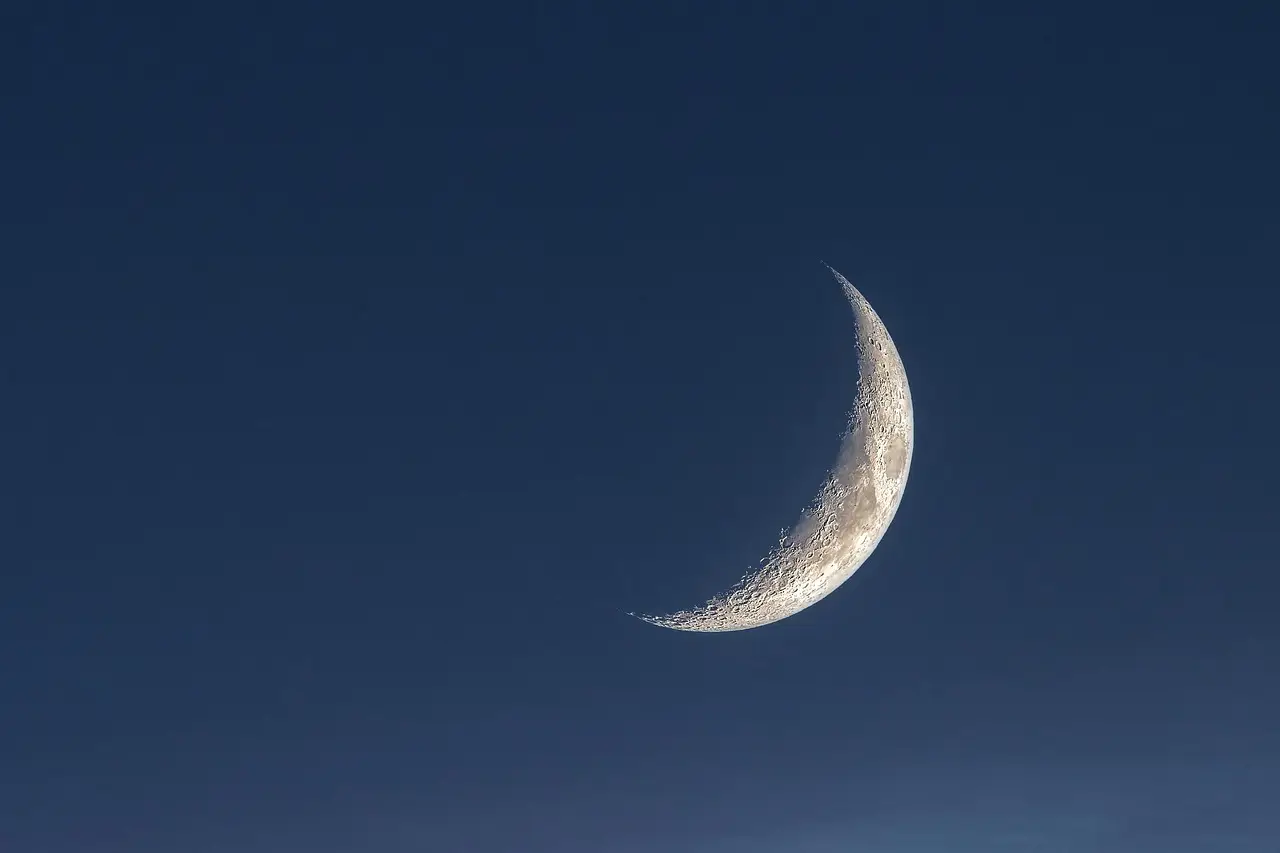
The moon's largest impact basin, the South Pole–Aitken (SPA) basin, formed roughly 4.34 billion years ago, according to an international team led by geologists at The University of Hong Kong (HKU). The study, published in Science Advances, reconstructs for the first time the sequence and timing of the giant collisions that shaped the basin using actual rock samples from the lunar far side.
Led by Professor Guochun Zhao, Mok Sau-King Professor in HKU's Department of Earth and Planetary Sciences (DEPS), with Dr. Yuqi Qian as first author, the team analyzed lunar samples returned by China's Chang'e-6 mission in 2024 — the first ever collected from the moon's far side — and allocated to HKU for research. The researchers combined these samples with surface measurements from Chang'e-4 and Chang'e-6, satellite remote sensing, and numerical simulations to extend their conclusions across the wider basin.
Takeaway: this is the first direct, on-site evidence from the two far-side landing sites, not remote inference alone.
What did the rocks reveal?
The analysis identified two distinct types of magnesium-rich rocks with different geological origins.
- Moderately magnesium-rich norites. These formed when the original SPA impact melted enormous quantities of rock, producing a thick sheet of molten material that cooled and differentiated over time. The rocks were later exposed at the central peaks of large impact craters. Some were excavated by the Finsen impact and carried to the Chang'e-4 landing site inside Von Kármán crater.
- Highly magnesium-rich rocks. These likely formed through a separate process called magnesium-suite magmatism — volcanic activity that produces rocks unusually rich in magnesium — associated with the SPA impact. They were exposed along the western peak ring of the Apollo basin and later transported to the Chang'e-6 landing site by the Chaffee S impact.
In plain terms: each rock type carries a fingerprint of a specific chapter in the basin's violent history.
When did the big impacts happen?
The researchers pinned dates on three basin-forming collisions:
- SPA basin: approximately 4.34 billion years ago
- Apollo basin: around 4.2 billion years ago
- Orientale basin: approximately 3.87 billion years ago
Together, these events built the structure of the largest impact basin on the moon, giving planetary scientists a clearer timeline of its geological evolution.
Why the far side matters
The SPA basin sits on the moon's far side and ranks among the oldest and largest impact structures in the solar system. Scientists believe a single massive collision billions of years ago carved it out. Studying it could answer fundamental questions: why the moon's near and far sides differ so dramatically, what lies beneath the surface, and when major impacts punctuated the moon's early evolution.
Until recently, the basin stayed largely unexplored. Chang'e-4 achieved the world's first far-side landing in 2019; Chang'e-6 followed in 2024 by returning the first far-side samples. Those missions gave researchers physical material to test hypotheses previously built on orbital data alone.
Building on earlier HKU work
The same HKU-led team previously found evidence of prolonged volcanic activity and previously unrecognized magma activity in the SPA region. Its earlier work also suggested that ilmenite-bearing cumulates — accumulations of titanium-rich minerals — contributed to the contrasting volcanic histories of the moon's near and far sides. The new study shifts the focus from volcanism to impact history, examining how successive collisions excavated and scattered rock fragments across the region.
The researchers caution, as with any reconstruction of early solar system chronology, that the dates depend on the modeling assumptions behind the simulations and on the two landing sites sampled so far — a limited window into a basin spanning much of the far side.
Still, the study marks a step change: dated rock samples now anchor the timeline of the solar system's largest confirmed impact basin.
The paper appears as Yuqi Qian et al., "Postimpact evolution of the South Pole–Aitken basin revealed by Chang'e-4 and Chang'e-6," Science Advances (2026), DOI: 10.1126/sciadv.aeh9798.
via phys.org/rss-feed/ (Source)
More from Marcus Bennett
Show full bio
News editor covering regulation, policy and their impact on general science news at SciBeat.
584 articles
Nearby plates
- Chang'e-6 Rocks Point to Earth's Gravity as the Cause of the Moon's Two Faces
- NASA's Moon Orbiter Spots 728-Foot Crater That Formed in 2024
- New Simulations: The Moon May Have Formed Intact in Five Hours
- 3.95-Billion-Year-Old Rocks in China Hint at Early Plate Tectonics
- Chang'e-6 Lunar Soil Hides a Microscopic Magnetic Time Capsule