Recorded November 25, 2026
Space & AstronomyReported finding
Muhammad Zeeshan Ali becomes Tiangong’s first foreign astronaut
Muhammad Zeeshan Ali became Tiangong’s first foreign astronaut on Nov. 25, beginning a one-week stay with joint Chinese-Pakistani experiments and a crew handover.
By James Calloway4 min read776 words
In brief
- Ali entered Tiangong on Nov. 25 as its first foreign astronaut and plans a one-week stay.
- The reported Shenzhou-24 launch time was 00:18 GMT on Nov. 25; it reached Tiangong a little over six hours later.
- China signed its space-cooperation agreement with Pakistan in February 2025; four joint projects and a cyanobacteria experiment are planned.
- Tang and Wu will stay six months; Zhu Yangzhu is set to become China’s first astronaut to spend a full year in low Earth orbit.
- Valeri Polyakov’s 437-day Mir stay from January 1994 to March 1995 remains the continuous-spaceflight record.
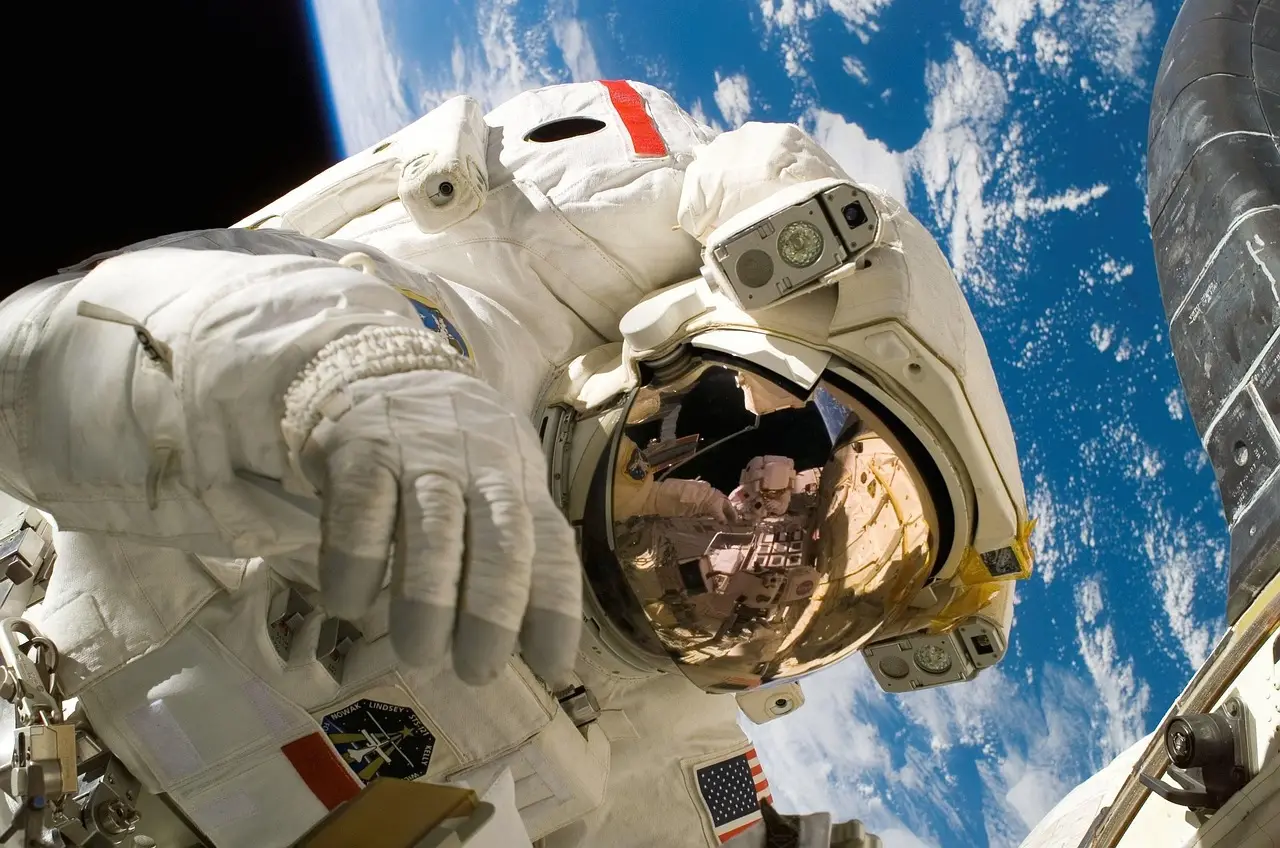
Muhammad Zeeshan Ali became the first foreign astronaut to enter China’s Tiangong space station on Nov. 25, according to the mission report. He is a payload specialist aboard Shenzhou-24 and plans to spend one week there, giving the three-module outpost its first international visitor.
The trip turns a bilateral agreement into an orbital mission, but the announcement does not establish routine access for foreign crews.
Ali’s payload-specialist role concerns mission payloads and experiments rather than command. Commander Tang Hongbo and flight engineer Wu Yi joined him for a short, smooth ride after Shenzhou-24 lifted off atop a Long March 2F rocket.
The report lists the launch at 7:18 p.m. EST on Tuesday, Nov. 24, equal to 00:18 GMT on Nov. 25. Shenzhou-24 reached Tiangong a little over six hours later. The item does not give a flight year, so the exact calendar date still needs confirmation from the China Manned Space Agency (CMSA).
The China Manned Space Agency wrote in a Mandarin update, translated by Google: “The Chinese space station is always something to look forward to!” It added: “China’s ‘Tiangong’ welcomes partners from all over the world to visit!” The language sounds broad, but one passenger does not establish a standing invitation for every foreign astronaut.
What does this change for Tiangong and Pakistan?
Most immediately, the trip turns a bilateral agreement into an actual orbital visit. China signed the space-cooperation deal with Pakistan in Islamabad in February 2025, and Ali’s place on the mission came through it. Tiangong now has one demonstrated international visitor and a joint research program.
For Pakistani astronauts, the concrete gain is orbital experience and access to joint experiments; the announcement promises no follow-on seat.
For other countries, this report announces one visitor for one week, not a quota or schedule for future guests. It gives no dates, seat numbers or eligibility rules for later missions.
That is a working channel, not yet an open station.
Four experiments, with no results yet
The Times of India reported: “Four collaborative projects in biotechnology and materials are planned, with Ali also scheduled to conduct an in-orbit experiment involving photosynthetic cyanobacteria.” Biotechnology means using living organisms or their components; materials science examines how substances perform under different conditions. Cyanobacteria are bacteria that gain energy through photosynthesis, the sunlight-driven process that makes their own food.
Those details describe intent, not outcome. The report gives no test procedures, success criteria, sample sizes or publication timetable for the projects, and it does not explain what the cyanobacteria experiment will measure beyond taking place in orbit. A planned experiment is not a scientific result.
A one-week visitor in a six-month handover
Tang and Wu will remain aboard for the usual six-month stint. Ali will return after roughly a week with two of the three Shenzhou-23 astronauts, who reached Tiangong in May. The third, Zhu Yangzhu, will stay until Shenzhou-24 comes home, extending his time in low Earth orbit, an orbital path relatively close to Earth.
Zhu will become the first astronaut from China to spend a full year in low Earth orbit, according to the report. Soviet and American astronauts had already made long-duration flights before him. The global record for the longest continuous stay in space is 437 days, set by cosmonaut Valeri Polyakov aboard Mir from January 1994 to March 1995.
Ali is not Pakistan’s first person in space. Namira Salim reached suborbital space, a trip high enough to count as space but not a full orbit around Earth, on a Virgin Galactic tourism flight in October 2023. Ali’s journey differs because he traveled to and entered an orbiting station with a Chinese crew; the distinction matters when headlines flatten different kinds of spaceflight.
A station that is not quite finished
Shenzhou-24 is the 12th crewed mission to Tiangong, a three-module, T-shaped outpost that China finished assembling in late 2022. Calling the build finished would be premature because China plans to expand it. The station currently has about 20% of the International Space Station’s mass, a comparison the report gives without absolute tonnage or a timetable for expansion.
Taken together, the report supports a narrow conclusion: Ali broke a first for Tiangong, is due to conduct joint work, and will take part in a short crew handover. It cites no published findings and commits no one to broader access. Future international missions, not this launch alone, will show whether this opening becomes a program. One visit is evidence. A program requires commitments the report does not provide.
via space.com (Source)
More from James Calloway
Show full bio
Staff writer covering regulation, policy and their impact on general science news at SciBeat.
602 articles
Nearby plates
- China to launch its first foreign astronaut to Tiangong on Nov. 24
- Shenzhou 24 sends first foreign astronaut to China’s space station
- First Foreign Astronaut Set to Visit China's Tiangong Station
- China Readies Shenzhou-24 for First Foreign Astronaut to Tiangong
- Pakistani astronaut to become Tiangong’s first international visitor