Plate Nº 18 · recorded November 11, 2026
Space & AstronomyReported finding
NASA Chief Maps SLS Through the 2030s: Cheaper Flights, No Second Launcher
NASA's Isaacman says flying SLS more often will shake its $4 billion-per-launch label, defends the Centaur V switch and the ML-2 shutdown, and sees the rocket flying into the 2030s.
By Elena Vasquez4 min read760 words
In brief
- Isaacman says SLS will fly into the 2030s; industry RFI responses offered no end-to-end replacement for 2028-2029
- SLS has carried a $4 billion disposable-rocket label, which NASA aims to cut through higher flight rates
- Stretched Centaur V, first flown in base form on Vulcan in January 2024, replaces the canceled EUS as SLS upper stage option
- ML-2 work has stopped; NASA targets at least one crewed flight per year, ideally under 12 months apart, with two launches possible in 2028
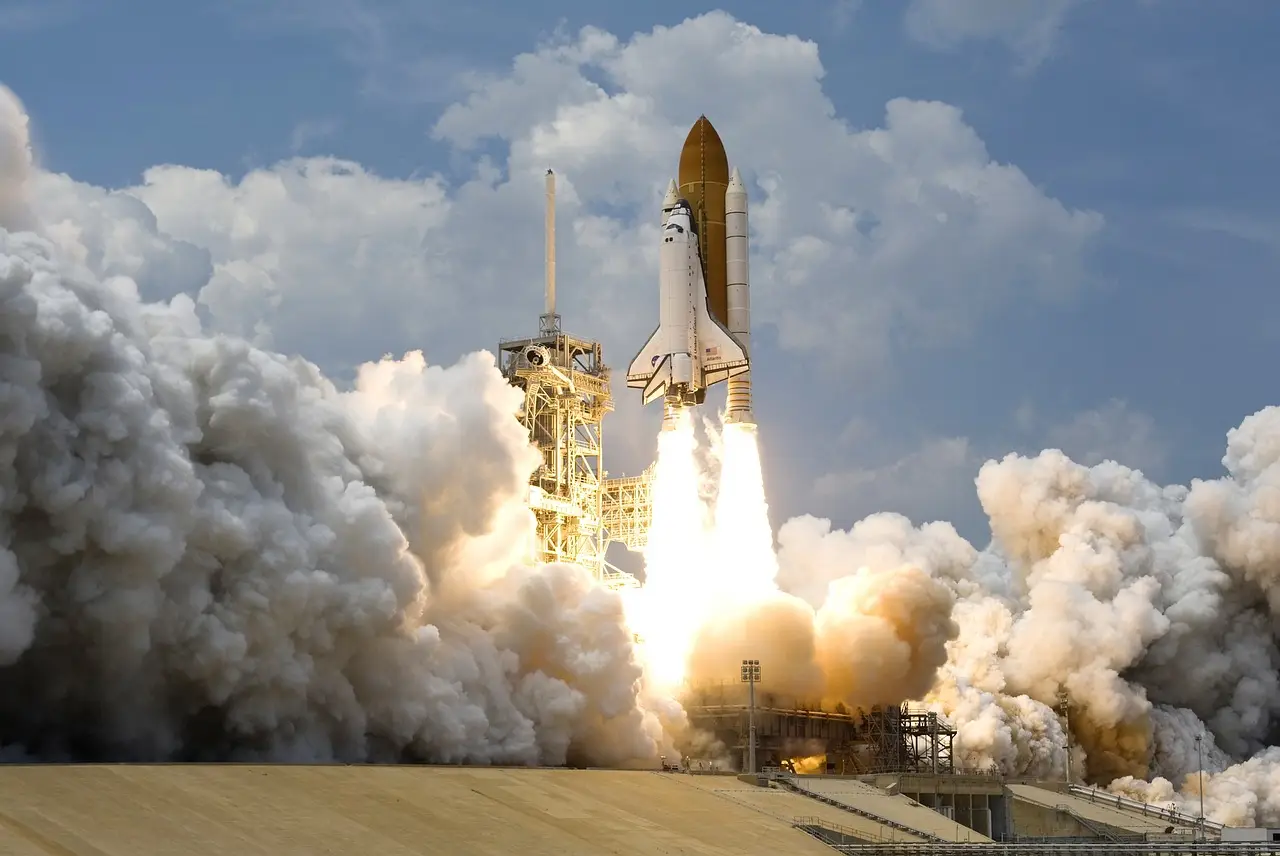
NASA Administrator Jared Isaacman says the Space Launch System will stay in service into the 2030s, arguing that flying the $4 billion rocket more often — not replacing it — is the fastest way to cut costs. His comments came in an interview on NSF's The Flame Trench show and flesh out a string of decisions NASA has made since March.
"There are a lot of ways to shake the $4 billion disposable rocket label that SLS has carried and one of which is launch more frequently," Isaacman said. On schedule slips, he was blunt: "There is nothing about pushing it off into next year that makes anything cost less."
Why did NASA pick a new upper stage?
Isaacman's explanation builds on NASA's earlier decision to abandon SLS Block 1B and its Exploration Upper Stage, or EUS — a dedicated upper stage that would have debuted on Artemis IV. Instead, NASA is moving to a standardized SLS flown with a stretched version of Centaur V, an upper stage already in production for United Launch Alliance's Vulcan rocket. Centaur V first flew on Vulcan's Cert-1 mission in January 2024, and the broader Centaur family has decades of flight heritage behind it.
The stretched variant itself is still in development. Isaacman said NASA originally planned to use the existing Centaur configuration but chose the higher-performance version to push Orion closer to the Moon, simplifying the job of the lunar landers. He also expects the stretched stage to fly on Vulcan for Department of Defense missions, not just SLS.
Work is moving in parallel. Material testing is progressing, and NASA and ULA are running development activities simultaneously where practical. NASA is helping ease production constraints by finding personnel and equipment across its centers.
Which mission flies the new stage first?
That remains undecided. Artemis III's revised low-Earth-orbit mission won't need an upper stage at all, which leaves the final Interim Cryogenic Propulsion Stage (ICPS) — the current SLS upper stage — available for Artemis IV. NASA's November 4 update confirms both ICPS and a stretched Centaur V remain options for that flight.
Modifications to Mobile Launcher 1 are being designed and hardware ordered. Work that doesn't affect Artemis III can proceed in parallel, while changes that would remove the ability to fly ICPS will be deferred as long as practical.
What happens to Mobile Launcher 2?
Isaacman acknowledged the disappointment around halting ML-2, the partly built second launch tower at Kennedy Space Center, but said visible construction progress doesn't equal operational readiness.
"If you're going to launch even on an eight-month cadence, you do not need the second mobile launcher," he said. "I know that's heartbreaking for some out there and believe me that was nowhere near as ready as people believe it to be." His advice: NASA should get very good at operating a single mobile launcher.
The structure sits outside for now, though NSF understands it will eventually move into the Vehicle Assembly Building. "We've been using parts for it," Isaacman said. Components from ML-2 and the canceled EUS have gone to Blue Origin as government-furnished equipment for its pad rebuild and landers. NASA is also using the hardware to give younger engineers and technicians hands-on experience. Reviving ML-2 isn't formally ruled out, but Isaacman called that prospect highly unlikely.
Can industry replace SLS sooner?
Not yet, according to the responses NASA received. The agency's request for information on commercial lunar transportation, issued in March with responses due in April, sought industry input on future systems for a sustained lunar presence. Isaacman said the answers did not offer an end-to-end solution for 2028 or 2029 — which points any transition to the 2030s. The RFI was not a contract award.
The long-term goal is two transportation pathways supporting crewed lunar missions every six months. In the meantime, NASA wants crews flying at least once a year, ideally with under 12 months between missions, and Isaacman said improved production and ground operations keep two launches in 2028 possible. He framed the work as rebuilding operational experience for harder missions ahead — Orion, transfer stages, and a lunar base.
Orion itself, he said, will likely stay part of the architecture into the 2030s, potentially flying on other launch vehicles and transfer stages. The transition won't be an abrupt replacement. For now, NASA presses on with Artemis III preparations while developing the upper-stage and ground-system changes the later missions need.
via nasaspaceflight.com (Source)
More from Elena Vasquez
Show full bio
Correspondent covering money, funding and market shifts around general science news at SciBeat.
384 articles
Nearby plates
- SpaceX Aims for First Starship Orbital Flight on 14th Test
- ULA Vulcan Rocket Cleared to Launch 40 Amazon Leo Satellites Friday
- Blue Origin Unveils Northstar Engine and Glenn Stage 3 for New Glenn
- NASA Reworks Moon Lander Plans for 2028 Crewed Landing
- Starship reaches Earth orbit for the first time — with 26 satellites and an engine failure