Plate Nº 79 · recorded November 4, 2026
Space & AstronomyReported finding
NASA Targets 2028 Moon Landing With Overhauled Artemis Plan
NASA outlined plans on Oct. 23 for a 2027 Earth-orbit test flight and a 2028 Moon landing, with SpaceX and Blue Origin both developing landers for the Artemis IV mission.
By Nathan Brooks4 min read873 words
In brief
- NASA aims to return Americans to the lunar surface in 2028 with Artemis IV.
- Artemis III in 2027 will fly four astronauts on a 14-day Earth-orbit mission testing docking with lander test vehicles from SpaceX and Blue Origin.
- NASA cut Artemis III processing timelines by about half and built a critical fuel-line component in-house in five months at roughly a tenth of a vendor's estimate.
- Axiom Space's new 'Sortie suit' for moonwalks weighs roughly half of its primary suit.
- Both SpaceX and Blue Origin are targeting the ability to support a crewed lunar landing in 2028.
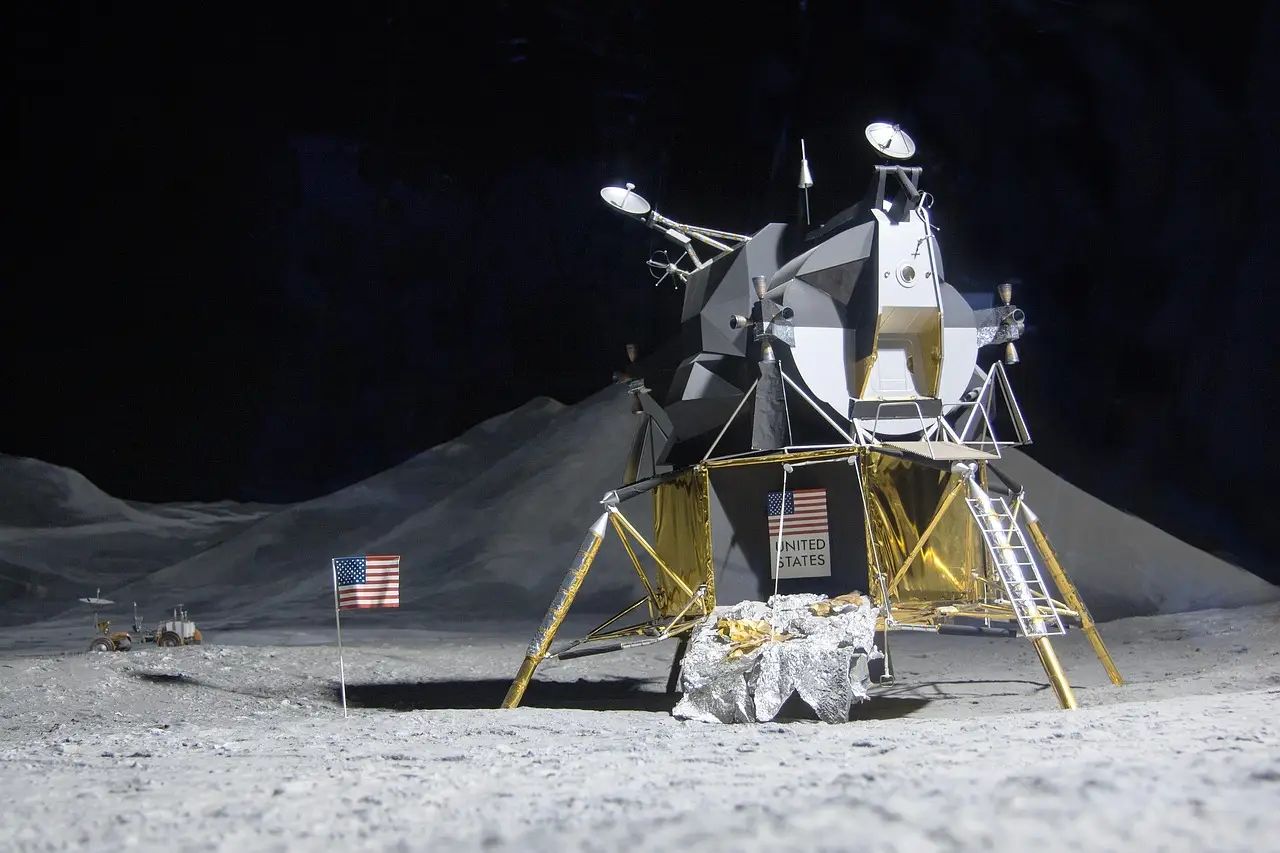
NASA says Americans will walk on the Moon again in 2028, and on Oct. 23 the agency laid out exactly how it plans to get there. Administrator Jared Isaacman and other agency leaders detailed an accelerated Artemis schedule: a crewed test flight, Artemis III, in 2027, followed by the Artemis IV Moon landing in 2028.
The Oct. 23 briefing built on priorities NASA announced earlier this year at an event called Ignition. Agency leaders also published a progress report showing how NASA and its industry partners are testing critical capabilities and cutting risk on the way to what they call a sustained American presence on the Moon.
"This is a very energized NASA, and these updates are only a small part of that story," Isaacman said. "We are bringing extreme focus to the mission to ensure delivery of world-changing outcomes as quickly, safely, affordably, and successfully as possible."
He added a competitive edge to the framing: "NASA is driving outcomes to make Moon missions a reality, and we're not waiting for others to bring their plans to us — the campaign must move with urgency as strategic competitors pursue a permanent presence beyond Earth."
What will Artemis III actually do?
Artemis III is now a rehearsal in Earth orbit, not a landing. Four astronauts will fly aboard NASA's Orion spacecraft, launched on the agency's SLS (Space Launch System) rocket, for a planned 14-day mission — about two weeks — to test systems needed for future lunar landings.
The goal is to practice rendezvous, docking and joint operations between Orion and lunar lander test vehicles from SpaceX and Blue Origin. The sequence runs like a relay:
- Blue Origin launches a Blue Moon lander test article into Earth orbit.
- SLS launches Orion and its crew, which docks with the Blue Moon test article.
- SpaceX launches a Version 3 Starship lander test article.
- Orion undocks from Blue Moon and docks with Starship.
That gives NASA hands-on experience with both companies' hardware before lives depend on a lunar touchdown.
How is NASA speeding things up?
The Oct. 23 update follows other recent progress reports, including one on Oct. 13 about Artemis booster stacking. Hardware for Artemis III is on track, and NASA says processing timelines have been cut roughly in half.
One example stands out for budget watchers. NASA redesigned, built and tested a critical fuel-line component in-house in five months, at roughly a tenth of the cost an outside vendor had estimated. If a vendor quoted $10 million, the in-house work came in near $1 million — that's the scale of the savings.
"NASA should be expected to do this kind of work, and we have some of the best technical knowledge in the world on rocket hardware and operations to do it," said Jeremy Parsons, the agency's Artemis program manager. "It's an example of how we are rebuilding our core competencies and developing centers of excellence in technical functions instead of continuing to outsource expertise."
What routes lead to the 2028 landing?
For Artemis IV in 2028, astronauts will launch aboard Orion on the SLS rocket from NASA's Kennedy Space Center in Florida. NASA is working with both SpaceX and Blue Origin to develop lunar landers, and both companies have redesigned their approaches to make the missions simpler, more efficient and more flexible than earlier designs.
The two paths differ sharply:
- SpaceX: Starship refuels in Earth orbit, rendezvous with Orion, then carries the spacecraft toward the Moon.
- Blue Origin: Transfer stages in Earth orbit push its Blue Moon Mark 2 lander toward the Moon, where it meets Orion in a closer lunar orbit before descending to the surface.
Both companies are targeting the ability to support a crewed lunar landing in 2028 — a deliberate doubling-up that gives NASA two shots at the deadline.
The redundancy extends to the rocket itself. NASA is pursuing two upper-stage options for SLS: its current interim cryogenic propulsion stage, and a stretched version of ULA's Centaur V that can carry more propellant. Keeping both options alive, the agency says, preserves flexibility and prevents single-point dependency on one supplier.
Who's building the suits?
NASA also announced plans with spacesuit provider Axiom Space to develop a second, lighter design called the "Sortie suit" for the first moonwalks. The Sortie suit weighs roughly half as much as Axiom's primary suit, which lets NASA move faster on the earliest surface missions. The primary suit isn't going away, though — NASA will keep it for longer, more demanding missions in the future.
What comes after the landing?
NASA frames Artemis as more than a flag-planting exercise. The agency plans to send astronauts on increasingly difficult missions to the lunar South Pole, exploring more of the Moon than ever before. Beyond the science and economic benefits, NASA says a lasting human presence on the lunar surface will serve as the foundation for the first crewed mission to Mars.
The 2027 and 2028 dates are, as always with lunar programs, targets rather than guarantees. But with two lander providers, two rocket upper stages and a lighter suit in the pipeline, NASA has built redundancy into nearly every link of the chain.
via x.com (Original)
More from Nathan Brooks
Show full bio
Market editor covering companies, deals and strategy in general science news at SciBeat.
271 articles