Plate Nº 75 · recorded November 17, 2026
Space & AstronomyReported finding
New Radio Map Reveals Nearly 63,000 Hidden Cosmic Sources
A 20-times-sharper LOFAR radio map of the ELAIS-N1 region reveals nearly 63,000 cosmic sources, from black hole jets to dust-hidden star-forming galaxies.
By Priya Raman3 min read571 words
In brief
- The new LOFAR radio map reveals nearly 63,000 sources in the ELAIS-N1 region.
- It is about 20 times sharper than the previous most sensitive LOFAR view and contains roughly eight billion pixels.
- The survey required about 200 hours of observations and generated roughly 400 terabytes of data.
- Processing costs were cut by more than a factor of ten using the Spider platform at SURF in the Netherlands.
- The paper, led by Leiden University, has been accepted by Astronomy & Astrophysics.
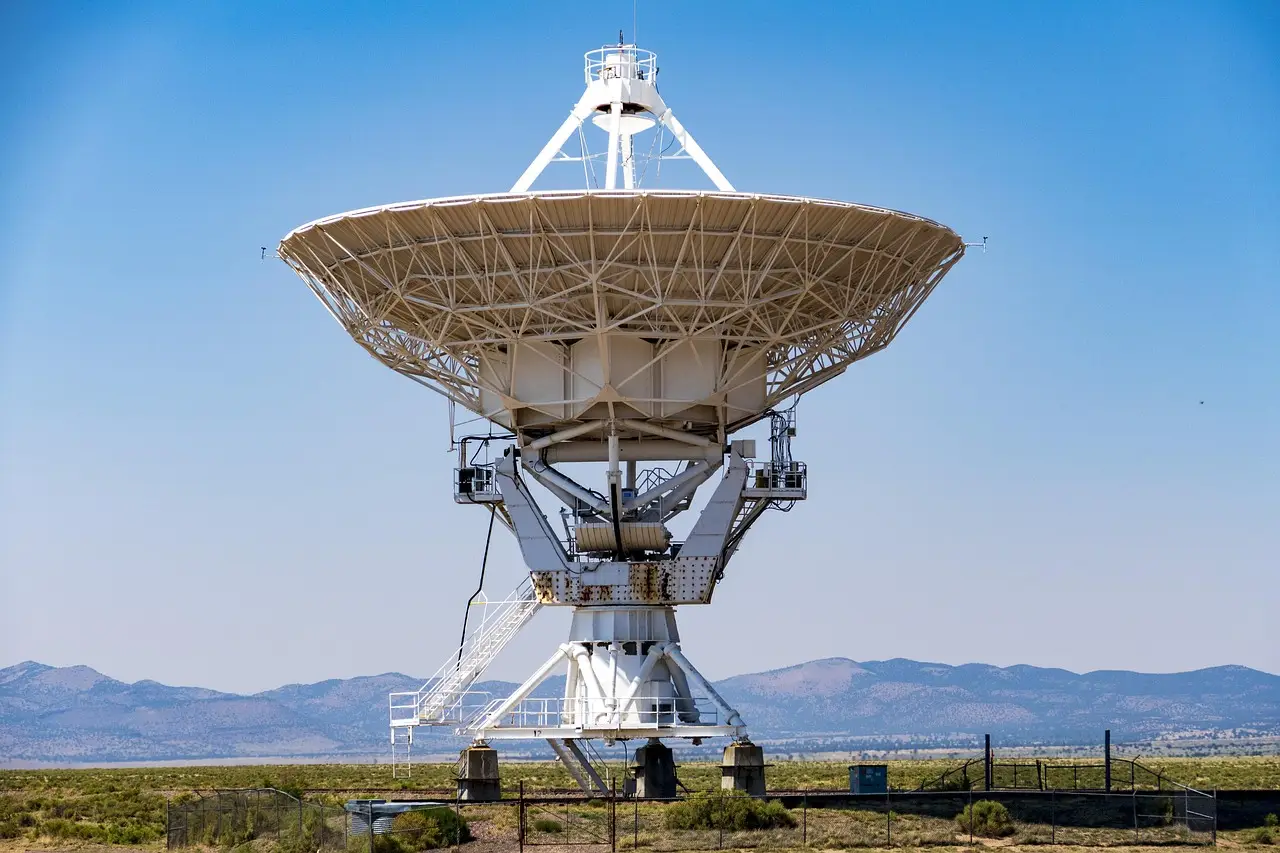
Nearly 63,000 previously unresolved cosmic sources now appear as distinct objects in the sharpest radio map astronomers have ever made of a northern patch of sky. An international team led by Leiden University produced the image using the Low Frequency Array, or LOFAR (a distributed radio telescope network spread across Europe), and the journal Astronomy & Astrophysics has accepted the resulting paper, which is available on arXiv.
The observations target a region called ELAIS-N1, and they cover an area roughly 25 times the apparent size of the full moon. The new map is about 20 times sharper than the previous most sensitive LOFAR view of the same region and contains approximately eight billion pixels.
For radio astronomers, that jump in detail changes what a single point of light can tell them.
Why does sharpness matter so much?
A fuzzy radio signal can hide several different objects or processes at once. Researchers often struggled to determine whether stars, a black hole or neighboring galaxies were responsible for a given blob of emission. The new map separates details that previously blurred together, giving scientists a much clearer starting point for distinguishing star-forming galaxies from jets powered by giant black holes.
That distinction is essential to understanding how galaxies change over time, because the two phenomena represent fundamentally different engines of cosmic activity.
One important group of sources in the map consists of active galactic nuclei, the bright central regions of galaxies powered by matter falling toward supermassive black holes. These systems can launch long jets, which produce radio emission that LOFAR can trace. Sharper images reveal separate components within those jets and show how they bend or interact with their surroundings. Researchers can now investigate the influence of black holes on their host galaxies rather than treating each distant source as a single featureless spot.
Another major population consists of galaxies actively making stars. Radio waves can pass through dust that obscures visible light, providing a complementary way to investigate star formation in galaxies that might look very different through an ordinary telescope.
How was the map made?
The project required about 200 hours of observations and generated roughly 400 terabytes of raw data — a volume comparable to a large research library rendered in digital form. Turning those measurements into a useful image demanded improved methods for correcting telescope signals and combining information from across the array.
The researchers and their collaborators reduced the processing cost by more than a factor of ten compared with earlier methods. They processed the observations over several months using the Spider computing platform hosted by SURF in the Netherlands.
The much larger pixel count also matters scientifically: it preserves fine spatial information that a lower-resolution map would combine into fewer, less informative measurements.
What are the limits, and what comes next?
The image alone does not supply every source's distance or mass, so observations at other wavelengths remain important. The team has made its observations publicly available, allowing other groups to combine the radio measurements with data from other telescopes and extract more information about the distant universe.
The map also demonstrates what improved processing can achieve ahead of the LOFAR2.0 upgrade, which is intended to support wider and more sensitive high-resolution surveys and extend this view of cosmic activity.
For now, nearly 63,000 sources that once blurred into the radio haze have names, shapes and structures of their own.
via knowridge.com (Source)
More from Priya Raman
Show full bio
Senior reporter covering people, launches and day-to-day practice in general science news at SciBeat.
476 articles
Nearby plates
- First 'Quadruple-Double' Radio Galaxy Found with Four Jet Bursts
- NASA’s 16-image gallery maps black holes, star births and collisions
- Simons Observatory Goes Fully Online With 63,000-Sensor Camera
- Twelve dying radio galaxies spotted fading faster than expected
- Chandra Solves the 'Treble Clef': A Black Hole Blast Plus Cluster Crash