Recorded November 20, 2026
Biology & EvolutionReported finding
One Gene Deletion Makes Male Mosquitoes Better Mates — and Females Better Malaria Carriers
A 5-kilobase deletion in the clock gene timeless gave male malaria mosquitoes up to 4.7x mating success in heat, while making females more susceptible to Plasmodium, a Cell study finds.
By Nathan Brooks4 min read719 words
In brief
- Study published in Cell on Nov. 19 by CEMPS, Chinese Academy of Sciences
- Heterozygous males achieved 3.6–4.7x higher mating success than wild-type males at high temperatures
- Malaria caused an estimated 282 million cases and 610,000 deaths in 2024
- Anopheles stephensi first detected in Djibouti in 2012 has spread to several African countries
- Heterozygous females showed reduced LRIM15 and PGRP-LD immune gene expression and higher sporozoite loads
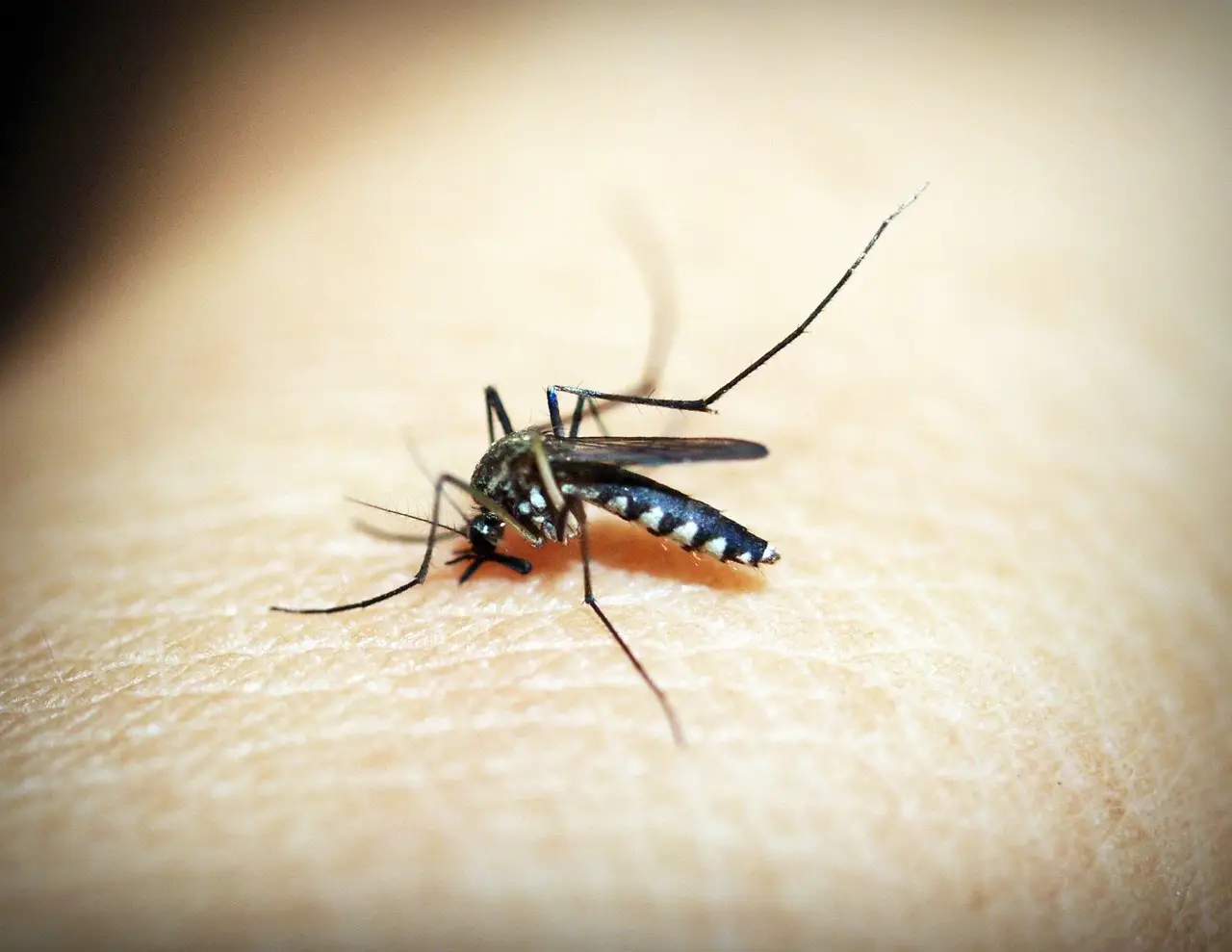
A single 5-kilobase deletion in a mosquito clock gene gives male Anopheles stephensi mosquitoes up to 4.7 times higher mating success in hot conditions — while making females carrying the same variant significantly more susceptible to malaria parasites.
That's the central finding of a study published in Cell on Nov. 19 by researchers at the Center for Excellence in Molecular Plant Sciences (CEMPS), part of the Chinese Academy of Sciences. The work, led by Wang Sibao and colleagues, connects mosquito adaptation to rising temperatures with the mosquito's capacity to transmit one of the world's deadliest diseases.
The stakes are large. Malaria caused an estimated 282 million cases and 610,000 deaths in 2024. The parasites responsible, of the genus Plasmodium, pass from person to person through the bites of infected female Anopheles mosquitoes.
Why does this particular mosquito matter?
Anopheles stephensi is native to South Asia and parts of the Arabian Peninsula, but it's on the move. First detected in Djibouti in 2012, it has since spread to several other African countries, and public health officials worry it could undermine malaria control across the continent.
Unlike many other malaria vectors, An. stephensi thrives in cities. It breeds readily in human-made water storage containers and tolerates extremely high temperatures. As global temperatures climb, Wang's team asked a pointed question: does the mosquito's heat adaptation also change its ability to spread malaria?
What does the deletion actually do?
The researchers focused on a naturally occurring 5-kilobase deletion in the gene timeless (tim), a core component of the circadian clock — the internal molecular machinery that regulates daily rhythms of physiology and behavior.
The variant's effects split sharply by sex and by genotype:
- Mosquitoes homozygous for the deletion (carrying two copies) showed disrupted daily activity rhythms and reduced mating success.
- Heterozygous males (carrying one copy) achieved 3.6–4.7 times higher mating success than wild-type males under high temperatures. The advantage largely disappeared at standard temperatures.
- Heterozygous females became significantly more susceptible to Plasmodium infection than wild-type females.
The team confirmed the mating edge through direct competition experiments, using fluorescently labeled sperm to tell one male's sperm from another's. Semi-field experiments run over the summer backed the lab results: across three consecutive generations, the frequency of the heterozygous genotype and the deleted allele rose beyond what neutral genetic drift would predict.
How can one variant help males and hurt females?
In males, the mechanism runs through heat-stabilized gene expression. The heterozygous tim mutation stabilizes expression of per, another clock gene, at high temperatures. That in turn boosts three downstream genes: AKH1, which encodes a neuropeptide that mobilizes energy, and FAR3 and FAR5, which encode enzymes that build cuticular hydrocarbons — waxy compounds on the insect's outer shell.
More AKH1 means better energy mobilization and flight activity. More FAR3 and FAR5 means more heptacosane, a cuticular hydrocarbon involved in mating chemical communication. The combined effect makes heterozygous males tougher competitors in the heat.
In females, the same genetic change weakens antimalarial immune defenses. Infection experiments showed increased parasite prevalence and intensity in the midgut, plus substantially higher loads of Plasmodium sporozoites — the stage transmitted to humans during a bite — in the salivary glands.
Gene-expression analysis explained why. Heterozygous females showed reduced expression of several antimalarial immune genes, including LRIM15 and PGRP-LD. When the researchers dialled down either gene experimentally, parasite burdens rose, confirming their protective role.
What are the implications for malaria control?
The study establishes a previously unrecognized genetic link between thermal adaptation and pathogen transmission. It also widens the known job description of circadian-clock genes, which now appear to shape environmental adaptation and evolutionary change, not just daily rhythms.
The findings are preliminary in one sense — they come largely from laboratory and semi-field settings, and real-world population dynamics could differ. But the variant itself isn't a lab artifact: the researchers identified naturally occurring tim variants in both laboratory-selected and wild populations.
That makes the deletion a potential molecular marker for surveillance. As An. stephensi continues its expansion across Africa, monitoring the mosquito's genetic variation may matter as much as tracking its geographic spread — especially if hotter climates simultaneously favor the variant's carriers and sharpen malaria transmission.
via phys.org/rss-feed/ (Source)
More from Nathan Brooks
Show full bio
Market editor covering companies, deals and strategy in general science news at SciBeat.
563 articles
Nearby plates
- Climate Change and Mosquitoes: Why Malaria Falls While Dengue Climbs
- Antimalarial Drugs Linger Inside Mosquitoes for Days, Yale Study Finds
- Rainfall Predicts Lassa Fever Outbreaks, 30-Year Rodent Study Finds
- Scientists Capture Hidden Molecular Machine Parasites Can't Live Without
- AI Tool Counts Mosquito Eggs From Smartphone Photos With 91.7% Detection