Recorded November 23, 2026
Science Policy & FundingReported finding
Phone Ban in Classrooms Lifts College Grades, 16,683-Student Trial Finds
A 16,683-student randomized trial in India found locking phones in boxes during lectures lifted grades modestly, mainly for first-years and weaker students — with no attendance or well-being gains.
By James Calloway4 min read814 words
In brief
- 16,683 students across 10 colleges in Odisha, India, February–May 2024, published in Science
- Phone ban raised GPA by 0.073 standard deviations; gains concentrated among first-years and below-median students
- No effect on attendance, well-being, total phone use, or online harassment
- Roughly 1,000 wooden deposit boxes used; 198 of 420 department-grade units randomized to the ban
- Students in ban classrooms became more supportive of phone restrictions by semester's end
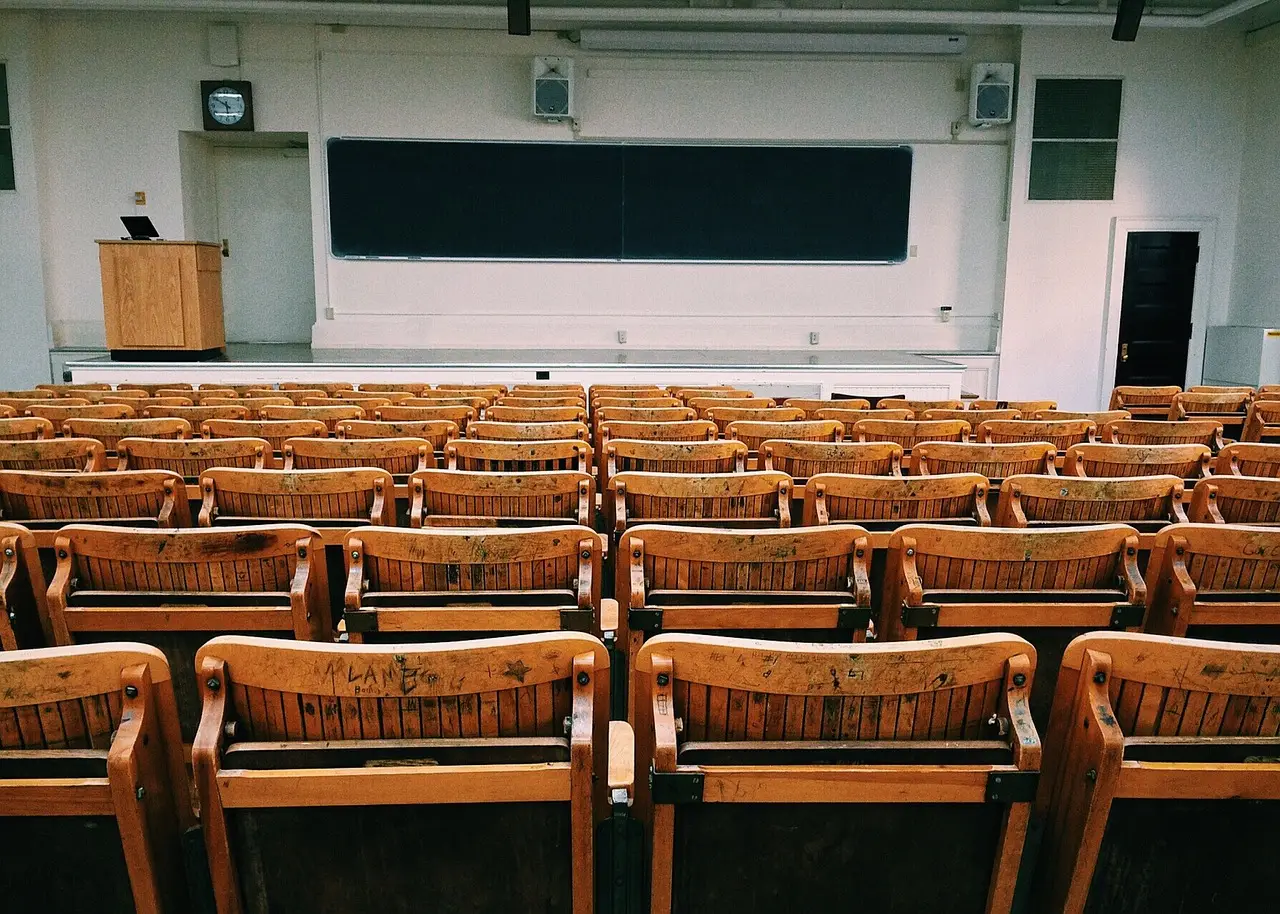
A semester-long experiment with 16,683 college students found that making students deposit their phones in wooden boxes during lectures modestly improved end-of-semester grades. The gains, published in Science, amounted to 0.073 standard deviations — small, real, and concentrated among students who needed the help most.
The randomized controlled trial ran from February to May 2024 across 10 higher education institutions in Odisha, an eastern Indian state of more than 40 million people. It involved 742 teachers and 2,305 courses, with students averaging 19.4 years old; 35.5 percent were female.
"Phone bans are among the fastest-spreading education policies in the world. Today, about half of the world's schools have imposed some phone restrictions," co-authors Alp Sungu of the Wharton School and Andreas Bjerre-Nielsen of the University of Copenhagen told PsyPost. "Yet, there has been a marked scarcity of causal evidence."
How the experiment worked
The researchers, working with Pradeep Kumar Choudhury of Jawaharlal Nehru University, commissioned roughly 1,000 wooden phone deposit boxes and installed them in classrooms on all 10 campuses. They randomized at the department-and-grade level: 198 of 420 units got the ban, the rest served as controls.
In ban classrooms, students placed phones in the box at the start of every lecture. Exceptions were rare — documented emergencies or caregiving duties only. Because every shared classroom received a box, the real difference between groups was enforcement, not hardware.
Grades came largely from externally written, blind-graded exams — 60 to 80 percent of each course grade under Odisha's centralized system. That matters. It makes biased teacher grading an unlikely explanation for the gains.
Is 0.073 standard deviations big?
Not transformative. Across randomized education trials, meta-analyses find a median gain of roughly 0.10 standard deviations, while large-scale trials typically produce about 0.05. Major curriculum reforms and teacher training programs yield 0.05 to 0.20; the yearly gap between an average teacher and a very good one sits near 0.20.
The phone ban landed below the overall median but above typical large-scale trials. "The effect sizes on learning outcomes are sizable, but not transformative. Hence, treating phone bans as a silver bullet to the challenges in education will be misleading," the researchers said. "However, it's potentially a low-cost intervention and it helps students who might need it the most."
One statistical wrinkle deserves mention. The overall gain was evaluated with a one-sided test, which only checks for an effect in one expected direction, and the lower edge of the margin of error sat very close to zero. Promising, not bulletproof.
Who gained — and who didn't
Improvements concentrated among students with below-median prior grades and first-year undergraduates, with a marginal gain outside STEM fields. For above-median students, postgraduates, and STEM majors, differences were near zero and not statistically significant.
Attendance did not change. The effect, whatever it is, points toward classroom attention rather than showing up more often. The authors propose that removing phones frees up working memory — the mental workspace for processing lecture material — and acts as a commitment tool against digital temptation.
Students also warmed to the rule. In surveys of 2,557 students, those in phone-free courses became more supportive of bans and more likely to see them as beneficial, shifting most toward full-day bans. "We expected students to resent it. Observing an increase in support for the policy was a surprise," the researchers said. Teachers in ban classrooms also cut their own in-class phone use and appeared more engaged.
What didn't change
Plenty. Perceived distraction, perceived learning, subjective well-being, academic motivation, total phone use, bringing phones to campus, and online harassment all showed no significant differences. Treated students reported a mild uptick in fear of missing out; male students specifically reported small increases in fear of missing out, screen time, and perceived distraction. And in an odd reversal, outside observers rated students in phone-free rooms as appearing more distracted — possibly because attention shifted to ambient noise that's easier to spot through a window.
What does this change for policy?
Less than headlines suggest. The trial covered academically selected college students in eastern India, not the primary and secondary schools where most debates rage. Students regained phones between classes, so bell-to-bell bans — which could affect socializing and well-being — remain untested. And results might differ in wealthier countries full of laptops, tablets, and smartwatches.
The researchers couldn't fully rule out subtle shifts in the smaller internal grading portion, and spot-check observers could infer which rooms had bans simply by seeing the boxes.
"The most likely misreading is that 'screens are the enemy,'" the researchers cautioned. Next up, they plan to study school-wide restrictions and the emerging debate over banning AI tools in classrooms.
via psypost.org (Source)
More from James Calloway
Show full bio
Staff writer covering regulation, policy and their impact on general science news at SciBeat.
570 articles
Nearby plates
- School Phone Bans Add a Week or Two of Learning, Study Finds
- Locked phone pouches recover 1-2 weeks of learning per year, study says
- Common ADHD Classroom Accommodations Fail Clinical Trial Test
- Report: Argentina Nearly Halved Education and Science Spending
- Early social media use linked to lower Italian school test scores