Plate Nº 66 · recorded November 17, 2026
PhysicsReported finding
Physicists Directly Observe Photonic Spin Hall Shift for First Time
Skoltech-led team first to directly observe the photonic spin Hall shift from a single small particle, boosting the key signal nearly a hundredfold using microwaves.
By Elena Vasquez4 min read722 words
In brief
- First direct experimental observation of the photonic spin Hall shift for light scattered by a single optically small particle, published in Advanced Photonics (2026).
- The team boosted scattering efficiency at the maximal shift by nearly two orders of magnitude, enabling direct observation without indirect techniques.
- Validation used a specially shaped ceramic particle illuminated with microwave radiation; the approach extends to the optical spectrum.
- The idea was first conceived and theoretically confirmed for a silicon nanoparticle interacting with visible light.
- Potential applications include advanced radar and lidar, spin-controlled light routing, nanoantennas, and integrated photonic circuits.
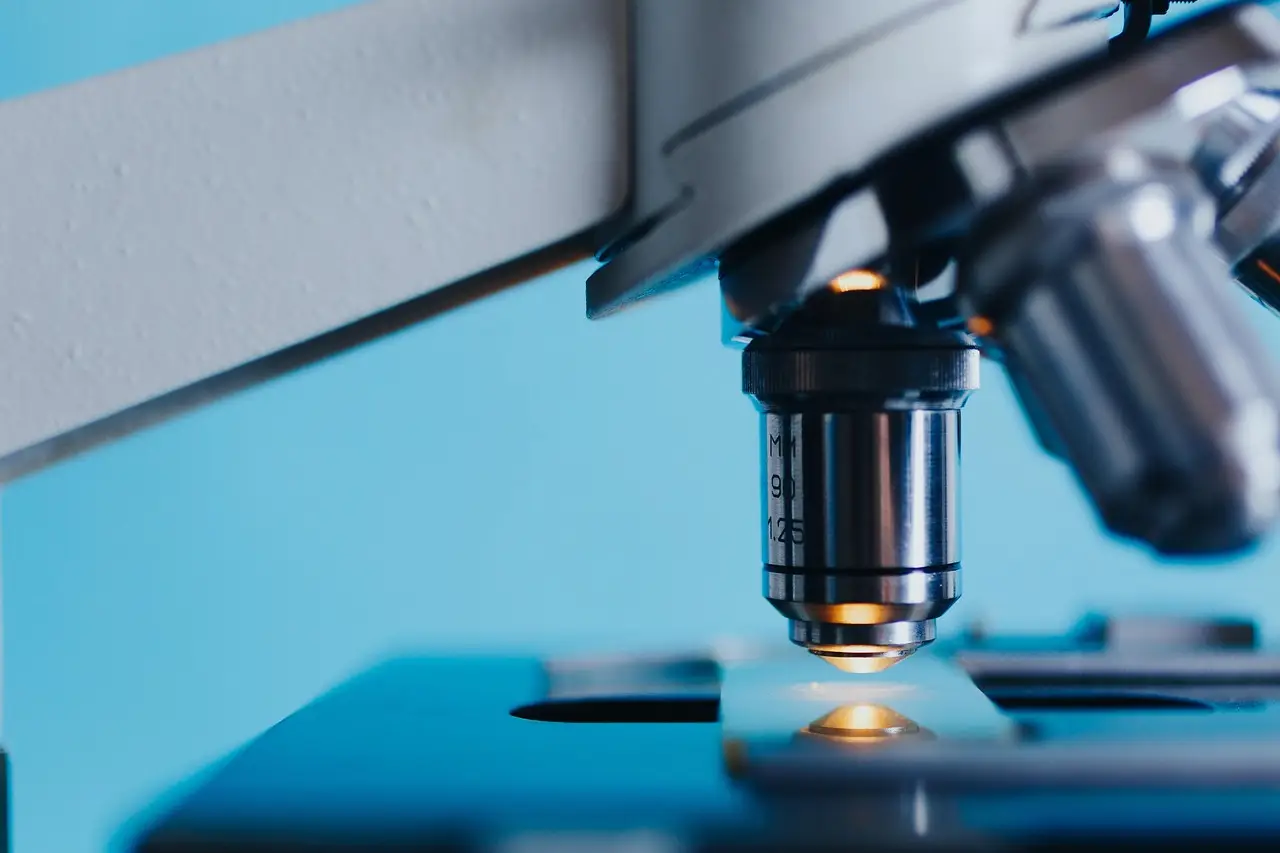
An international team led by Skoltech has experimentally demonstrated, for the first time, the photonic spin Hall shift for light scattering off a single optically small particle. The study, published in the journal Advanced Photonics (2026), tackles a long-standing challenge in optics and could feed into next-generation lidar, radar, and nanophotonic devices.
The effect sounds strange, but the physics is plain. Light carries polarization, and depending on that polarization, a beam can undergo a tiny sideways shift when it interacts with matter. Researchers call this the photonic spin Hall effect. Scientists have studied it in many optical settings. Yet observing it directly for light scattered by one isolated, optically small particle — an object smaller than the wavelength of the light hitting it — stayed out of reach.
The scattering version has an extra twist. It doesn't just bend the light. It shifts where the particle appears to be located.
How did the team make a tiny shift visible?
Two things made the experiment brutally hard. The shift itself is minuscule. And the scattered light that reveals the shift is typically a very small portion of the total, traveling in what one researcher calls an awkward direction.
Skoltech professor Vasily Fedotov, head of the SPARQ laboratory at the Skoltech Photonics Center and a co-author of the work, said: "The most important achievement of our work is that we have finally been able to directly observe the photonic spin Hall shift for a single optically small particle."
The team's solution combined two phenomena:
- Superscattering, which boosts how strongly a small particle scatters light
- Strong spin–orbit interaction of light, the coupling between a light wave's polarization and its direction of travel
Together, these raised the scattering efficiency at the maximum shift and at an experimentally convenient observation angle by nearly two orders of magnitude. That's roughly a hundredfold gain. It let the researchers see the effect directly, without the indirect measurement techniques or the pre- and post-selection routines that such experiments normally demand.
The validation used a ceramic particle of a specially designed shape, illuminated with microwave radiation. The team says the approach can be readily extended into the optical part of the spectrum — the visible and near-infrared light relevant to real photonic technologies.
Takeaway: a hundredfold boost in the right signal turned a famously unobservable effect into something you can watch directly.
Why start with microwaves instead of visible light?
The idea, it turns out, was born in the optical domain. Principal research scientist Alexander Shalin of the Skoltech Photonics Center, the author of the idea, explained: "The idea of enhancing the so far elusive scattering form of the photonic spin Hall effect was first conceived and theoretically confirmed by our team for a silicon nanoparticle interacting with visible light."
So why pivot to microwaves? Convenience. Recent nanophotonic concepts have often had their first experimental demonstrations in the microwave domain, and the team adopted the same tactic.
There's a deeper justification, too. "It is also accepted and widely adopted by the scientific community because all electromagnetic phenomena across different spectral domains are governed by exactly the same Maxwell's equations," Shalin said. In plain English: the same physics governs microwaves and visible light, so a microwave proof of concept carries over.
The paper's first author is Lei Gao. The study appears as "Direct observation of photonic spin Hall shift in Mie scattering," Advanced Photonics (2026), DOI: 10.1117/1.ap.9.1.016003.
What could this be used for?
Applications remain prospective, and the authors frame them as opportunities rather than products. The ability to observe and control spin-dependent shifts in scattered light matters wherever light must be steered with high precision. Potential directions include:
- Advanced radar and lidar systems
- Spin-controlled routing of light
- High-performance nanoantennas
- Integrated photonic circuits
- Precision optical measurements
The microwave demonstration, while a clean proof, involved one specially shaped ceramic particle under controlled conditions. Extending the method to the optical spectrum, where silicon nanoparticles operate, is the stated next frontier rather than a finished result.
Still, the milestone stands: a shift once considered too small and too dim to catch has now been measured directly. That gives physicists a working handle on light–matter interaction at the nanoscale — the scale where future photonic chips will live.
via phys.org/rss-feed/ (Source)
More from Elena Vasquez
Show full bio
Correspondent covering money, funding and market shifts around general science news at SciBeat.
503 articles
Nearby plates
- Physicists Spot the Optical Magnus Effect at the Atomic Scale
- Light Twists Itself in Empty Space, No Lenses Required
- Spinning Light Pattern Measures Laser Frequency in a Single Image
- Laser 'Nuisance' Speckle Powers Record 6-Femtometer Spectrometer
- Laser-Shaped Light Switches Magnetism 1,000 Times Faster Than Drives