Plate Nº 56 · recorded November 13, 2026
Biology & EvolutionReported finding
Plants Can Smell Insect Spit — And Now We Know How
A Nature study reveals how rice senses molecules in stink bug saliva, triggering defense. Spraying the molecules could protect crops, though field tests remain ahead.
By James Calloway3 min read694 words
In brief
- Study published in Nature on Nov. 12 by CEMPS, Chinese Academy of Sciences, led by Chen Xiaoya
- Rice green stink bug secretes enzyme NVR1, producing 2',3'-cNMP fragments that rice detects via protein NIB1
- NIB1 forms nuclear condensates that recruit immune regulator EDS1, activating defenses
- T2 ribonucleases are common in pests including rice leaf folder, green mirid and cotton bollworm
- Spraying the RNA fragments externally triggers defense responses, suggesting crop-protection potential
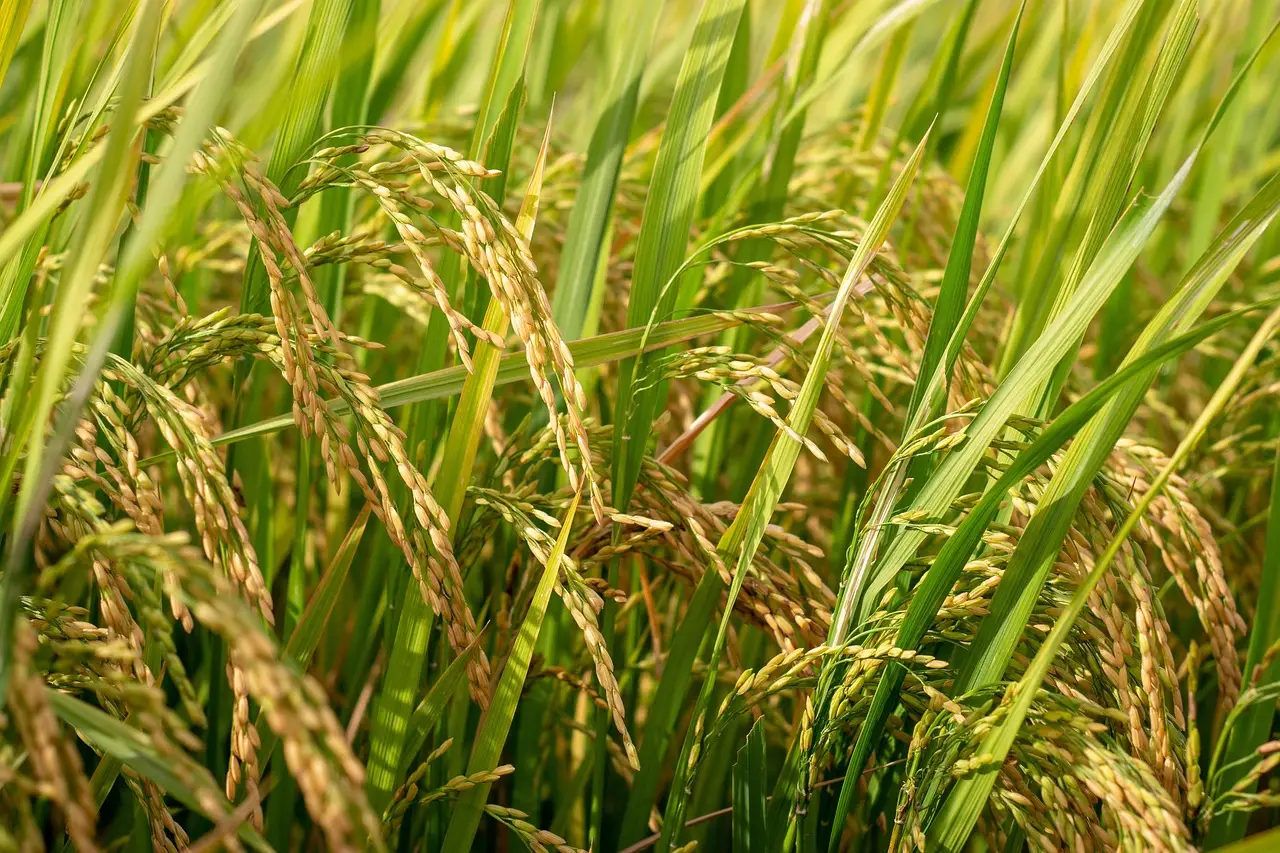
Plants have no noses, yet a study published in Nature on Nov. 12 shows they can effectively "smell" insect saliva — and switch on their defenses within minutes of the first bite.
Researchers at the Center for Excellence in Molecular Plant Sciences (CEMPS) of the Chinese Academy of Sciences, led by Chen Xiaoya and working with Wan Li's team, identified a previously unknown sensing mechanism in rice. It starts in the bug's mouth and ends in the plant's nucleus.
Here's what that means in plain terms.
How does a plant know it's being eaten?
When herbivorous insects feed, they release oral secretions — essentially spit full of digestive enzymes — into the plant tissue. Those enzymes break down the plant's large molecules so the insect can absorb the nutrients.
The breakdown products were suspected to double as alarm signals. But how plants actually perceived them had, until now, largely been a mystery. That gap is what this study fills.
The researchers found that the rice green stink bug secretes an enzyme called NVR1, a T2 ribonuclease, into plant tissue while feeding. Ribonuclease simply means an enzyme that chops up RNA, the molecule that carries genetic instructions inside cells.
NVR1's chopping produces small fragments called 2′,3′-cyclic nucleotides, or 2′,3′-cNMPs. Rice then detects these fragments with a protein named NIB1, a glycine-rich RNA-binding protein.
So the signal chain reads: bug bites, enzyme cuts RNA, fragments appear, plant sensor catches them. Clean logic. But the study goes one step further.
What happens after the alarm goes off?
Once NIB1 binds those fragments, something unusual happens. The protein undergoes what chemists call liquid–liquid phase separation — the same physics that makes oil droplets form in water. Inside the cell, NIB1 clumps into tiny gel-like blobs, called nuclear condensates, within the nucleus.
Those condensates then recruit EDS1, a well-known core regulator of plant immunity. EDS1's arrival activates the downstream defense responses — the plant's counterattack.
That's the mechanism. A molecular meeting point, assembled on demand, that switches immunity on.
Is this just rice and stink bugs?
Probably not, and that's the interesting part.
T2 ribonucleases, the enzyme family NVR1 belongs to, show up commonly in herbivorous insects. The study names the rice leaf folder, the green mirid and the cotton bollworm as carriers.
Meanwhile, NIB1-like RNA-binding proteins are widely distributed across land plants. Put those two facts together and this could be a broadly deployed strategy in plant–insect interactions — one lineage of sensing that plants have quietly used for ages.
I'll hedge here, because the researchers themselves frame it as "may be." Widespread parts suggest a widespread machine, but demonstrating it in each species takes years of follow-up work. This paper proves the mechanism in rice. The rest is a strong, unproven hypothesis.
What does this change for farmers?
The practical hook is this: the researchers showed that applying the RNA degradation products from outside — spraying them onto plants — also elicits defense responses.
In principle, that makes these molecules candidate immune activators for crop protection. Sprinkle on the alarm signal, and the plant arms itself.
But hold the champagne. The study demonstrates the effect, not a product. There is no formulation, no field-trial data, no cost figure and no yield number in the paper. Whether sprayed 2′,3′-cNMPs survive weather, stick to leaves and make economic sense on a farm is entirely unanswered. Treat this as a door opening, not a shipment arriving.
Why biologists care beyond pest control
The study's authors call it a conceptual advance, and they're not overselling that part. It opens the door to exploring RNA-centered networks in plant immunity and adaptation — the idea that RNA, best known as a messenger molecule, also works as a front-line danger signal.
If that framework holds up across species, it could reshape how plant scientists think about defense signaling generally.
The paper, by Xiao-Xiang Guo et al., appears in Nature (2026), DOI: 10.1038/s41586-026-11259-z.
Solid lab science. Real mechanism. Now let's see it survive a field.
via phys.org/rss-feed/ (Source)
More from James Calloway
Show full bio
Staff writer covering regulation, policy and their impact on general science news at SciBeat.
361 articles
Nearby plates
- Scientists Identify Protein Cascade That Lets Plants Feel Touch
- Five Plant-Enzyme Mutations Rewired a Mirror-Image Sensor
- Black and Green Rice Digest More Slowly Than White Rice, Study Finds
- Why the Same Chemical Harms One Species and Spares Another
- Yeast Identified in Rutgers Lab Repels Invasive Blueberry Pest