Plate Nº 10 · recorded November 13, 2026
Biology & EvolutionReported finding
One Newt Species Turns Out to Be Five — and One Is Brand New to Science
Leiden genetic research splits the Alpine newt into five cryptic species, including Mesotriton similis from the Serbia-Bulgaria border — the rarest of them all.
By Priya Raman3 min read578 words
In brief
- Genetic research by Leiden biologists splits the Alpine newt into five distinct species.
- The newly described species, Mesotriton similis, was named in Zootaxa on Tuesday (2026; DOI: 10.11646/zootaxa.5897.4.8).
- Three of the five species occur in the Netherlands due to introduced Balkan and Italian animals.
- Mesotriton similis is the rarest Alpine newt in Europe, found only on the Vlasina Plateau between Serbia and Bulgaria.
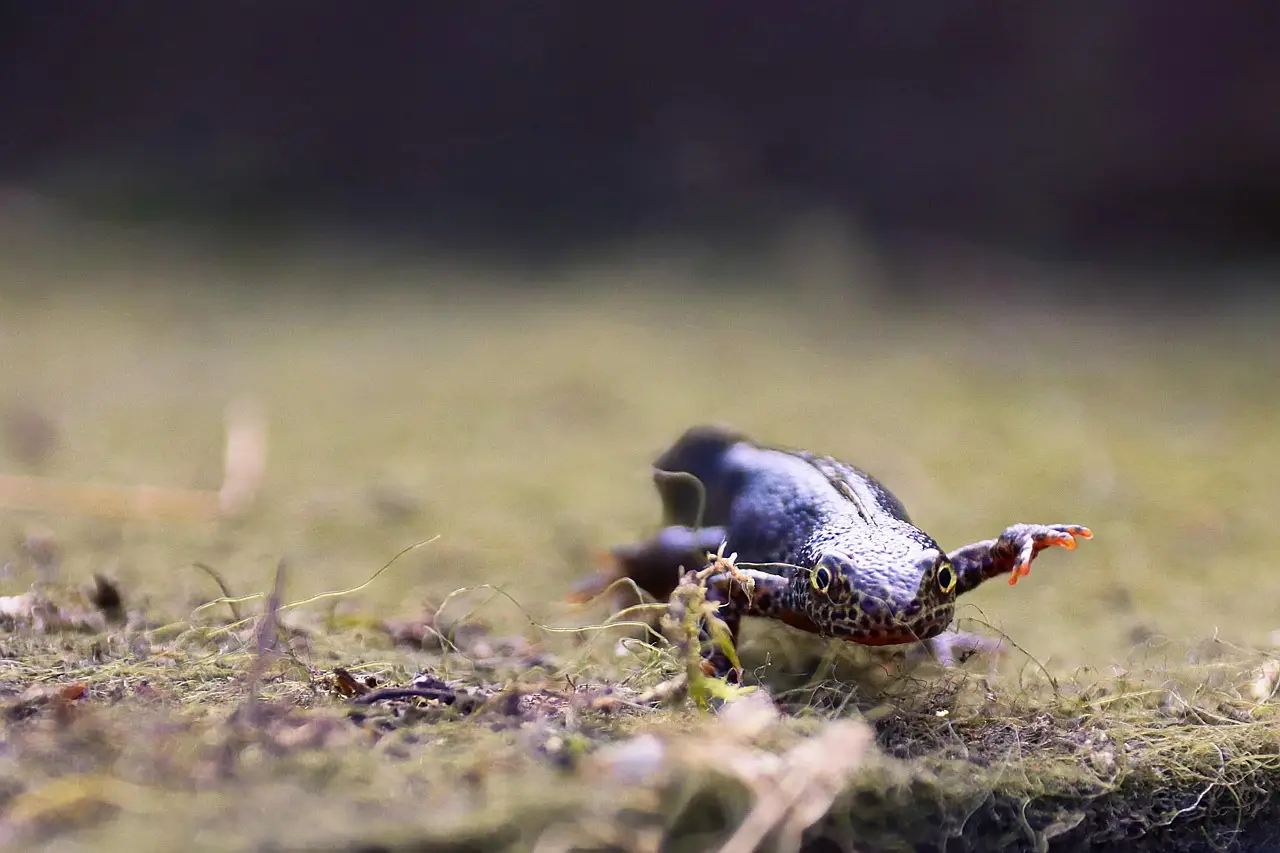
Five species, not one: that is the true count behind what scientists until recently called the Alpine newt, according to genetic research by biologists at Leiden University. One of the five had never been described before, and it received an official scientific name this week: Mesotriton similis, proposed in English as the Vlasina Alpine newt.
How can five species hide in plain sight?
To the untrained eye — and even to the trained one — all of these animals look the same. Yet their DNA tells a different story. The Leiden researchers uncovered a complex of five cryptic species (animals that look almost identical but can be clearly distinguished by their genetic makeup).
The differences are far from trivial. Biologist Ben Wielstra of Naturalis and Leiden University puts the genetic distance in stark terms.
"'Similis' means 'similar,' which also neatly describes the new species' appearance: it looks just like an Alpine newt. But genetically, it is at least as different from the original Dutch newts as you are from a chimpanzee," Wielstra said.
Appearance, in other words, is a poor guide. The animals may look identical to us, but the biology beneath the skin has diverged considerably. When individuals from different Alpine newt species mate, Wielstra explains, they produce offspring that are much less likely to survive.
Where do the five species live?
The split reshuffles the map of European amphibians. Three of the five species occur in the Netherlands alone — a result of animals from the Balkans and from Italy having been introduced there over time.
The newly described species has a far narrower home. Researchers found it on the Vlasina Plateau, on the border between Serbia and Bulgaria. Its formal description appeared Tuesday in Zootaxa, a specialist taxonomic journal.
The name Mesotriton similis carries a quiet joke at its own expense. "Similis" is Latin for "similar" — a nod to the fact that, once again, the animal looks just like every other Alpine newt.
Why does the smallest range matter most?
The Vlasina Alpine newt is not merely new. It is also the rarest Alpine newt in Europe.
"Because of its limited range and small population, it is highly vulnerable to pollution, habitat degradation and the introduction of fish," Wielstra and his Serbian colleagues write in Zootaxa.
That vulnerability follows from simple arithmetic. A species confined to one plateau cannot fall back on populations elsewhere if its habitat degrades. Fish introductions pose a particular threat to newts, which share ponds with predators that eat their eggs and larvae.
Is the name final?
Not necessarily. The authors have left open the possibility that the species may be renamed, because amphibian experts disagree about the correct genus for the group to which the five Alpine newts belong.
"That question has not yet been settled," the researchers note. Some experts argue the group should be called Mesotriton; others prefer Ichthyosaura. Until that debate resolves, the new name stands with an asterisk attached.
What changes for conservation?
Cryptic species carry real consequences. A single widespread "Alpine newt" was easy to regard as common and secure. Five distinct species, one of them restricted to a single plateau and already the rarest of the group, present a different picture.
The finding follows publication of the formal description: Ben Wielstra et al., "A new alpine newt species from the Vlasina region of Serbia and Bulgaria," Zootaxa (2026), DOI: 10.11646/zootaxa.5897.4.8.
One plateau, one name, and a creature that fooled Europe for centuries.
via phys.org/rss-feed/ (Source)
More from Priya Raman
Show full bio
Senior reporter covering people, launches and day-to-day practice in general science news at SciBeat.
365 articles
Nearby plates
- Scientists name five new freshwater mussel species in southern U.S.
- Genome study identifies two new Amazon howler monkey species
- Seven New Diamond Frog Species Found Under Madagascar's Forest Floor
- 120-Million-Year-Old Mammal Fossil Had Three Sets of Teeth
- Forgotten Museum Fossil Reveals New European Clawed Dinosaur