Plate Nº 30 · recorded October 10, 2026
Biology & EvolutionReported finding
Scientists name five new freshwater mussel species in southern U.S.
Researchers have described five new freshwater mussel species in rivers across six southern U.S. states. Published in Zootaxa, the findings give conservationists a clearer map of the most imperiled animal group in North America.
By Nathan Brooks3 min read545 words
In brief
- Five new Obovaria mussel species were described in a 2026 paper in the journal Zootaxa
- Specimens came from rivers in six states: Missouri, Arkansas, Mississippi, Alabama, Louisiana and Texas
- Lead author Dr. Kentaro Inoue is a research biologist at Shedd Aquarium; co-author Nathan Johnson works at the USGS Wetland and Aquatic Research Center
- Freshwater mussels are the most imperiled group of animals in North America, according to the researchers
- Field surveys spanned more than 20 years, with researchers wading rivers wearing masks and snorkels to collect samples
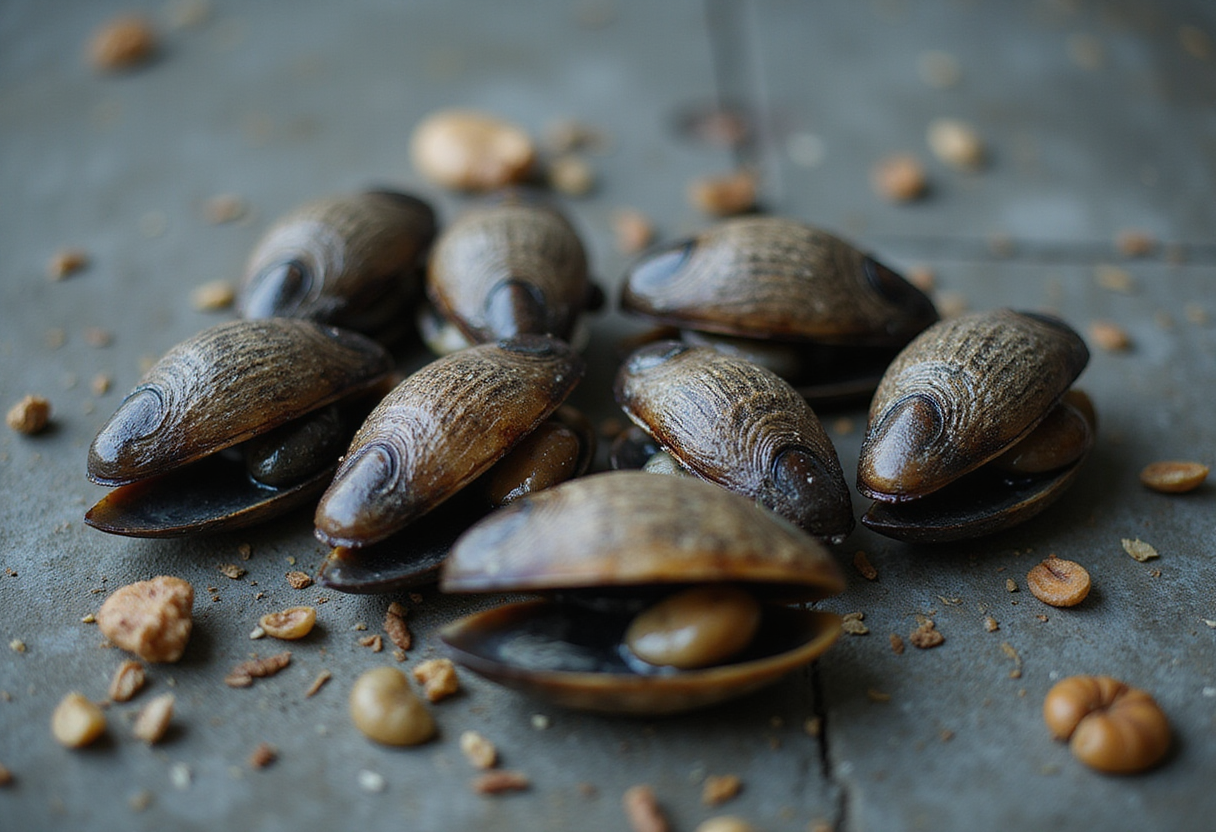
Scientists have formally described five new species of freshwater mussels living in rivers across six southern U.S. states, publishing the findings in 2026 in the journal Zootaxa. All five belong to the genus Obovaria, a group of mollusks whose shells look nearly identical to the human eye but whose DNA tells a different story.
The new species carry the common names Mobile hickorynut, White River hickorynut, Big Thicket hickorynut, Tallahatta hickorynut and Acolapissa hickorynut. Each inhabits a narrow geographic range in rivers of Missouri, Arkansas, Mississippi, Alabama, Louisiana or Texas.
How did researchers separate look-alike mussels?
A research team led by Dr. Kentaro Inoue of Shedd Aquarium, working with Arkansas State University and the U.S. Geological Survey, tested the DNA of mussels collected over more than 20 years of field surveys. Researchers waded through rivers wearing masks and snorkels, scraping muddy stream bottoms for specimens, then brought tissue samples back to laboratories for genetic analysis.
Shell shape alone had long confused the picture. Many museum records lumped distinct evolutionary lineages into a single species, and incomplete sampling across the South left gaps. Genetic testing exposed those hidden divisions.
"Identifying new species is the foundation of biodiversity conservation," Inoue said. "Conservation efforts can only protect what we recognize, and without this work, we risk certain species going extinct before they're even known to science."
Why does recognizing new species matter?
Researchers describe freshwater mussels as the most imperiled group of animals in North America. Sorting out which populations belong to which species lets scientists score extinction risk more accurately and target habitat protection where each species actually lives. Region-specific conservation plans can then replace one-size-fits-all approaches.
The discovery also highlights the practical role mussels already play. Half-buried in stream sediment for most of their lives, the animals filter algae and bacteria from the water, improving conditions for fish, wildlife and human communities that draw drinking water from the same rivers.
What do the new species reveal about southern rivers?
Each of the five mussels occupies a limited stretch of the Mississippi Embayment or Gulf coastal drainages, a geography that helps explain why the animals escaped notice. Surveys in earlier decades simply missed some populations, and where shells were found, misidentification kept them in the wrong species bin.
Co-author Nathan Johnson, a research biologist at the U.S. Geological Survey Wetland and Aquatic Research Center, framed the work in broader terms. "Our discovery and descriptions of these new freshwater mussel species demonstrate how much we still have to learn about the biodiversity in our rivers," he said. Johnson also credited partnerships among federal agencies, state universities, nonprofits and natural history museums for making the work possible.
What happens to conservation now?
With the species formally described, wildlife managers can begin ranking each one against extinction criteria and, where needed, listing them for legal protection. The authors plan to keep mapping the ranges of all five hickorynuts and to revisit older museum collections, which may harbor additional cryptic species.
The paper appears in Zootaxa under the title "Description of multiple cryptic species of Obovaria Rafinesque, 1819 (Bivalvia: Unionida) from the Mississippi Embayment and Gulf coastal rivers of North America." Its DOI is 10.11646/zootaxa.5881.4.1.
via Phys.org Biology (Source)
More from Nathan Brooks
Nearby plates
- Ancient DNA reveals extinct yak relative hidden in Siberian bones
- 32.2-Centimeter 'Colossogiant' Isopod From Puerto Rico Is a New Species
- Gobi Desert Fossil Rewrites 40-Year Mammal Evolution Theory
- First global genome atlas maps hidden microbial life in 362 lakes
- 94.5 Million Years Ago, the Tibetan Plateau Was a Hot-Tub Sea