Plate Nº 65 · recorded October 13, 2026
Biology & EvolutionReported finding
Polluted Air Cuts Pollinators' Flower-Finding Ability by Up to 68%
Ozone and diesel-derived NOx cut pollinators' flower-finding performance by up to 68% on average, a University of Reading review of 22 studies finds.
By Elena Vasquez3 min read550 words
In brief
- Combined ozone and NOx pollution reduced pollinator performance by an average of 68%.
- Ozone alone cut performance by 42%; nitrogen oxides alone cut it by 46%.
- The analysis covered 22 experimental studies, published in Frontiers in Ecology and the Environment (2026).
- Ozone levels are projected to keep rising until around 2050 even as NOx emissions fall.
- The U.K. delayed its ban on new petrol and diesel cars from 2030 to 2035.
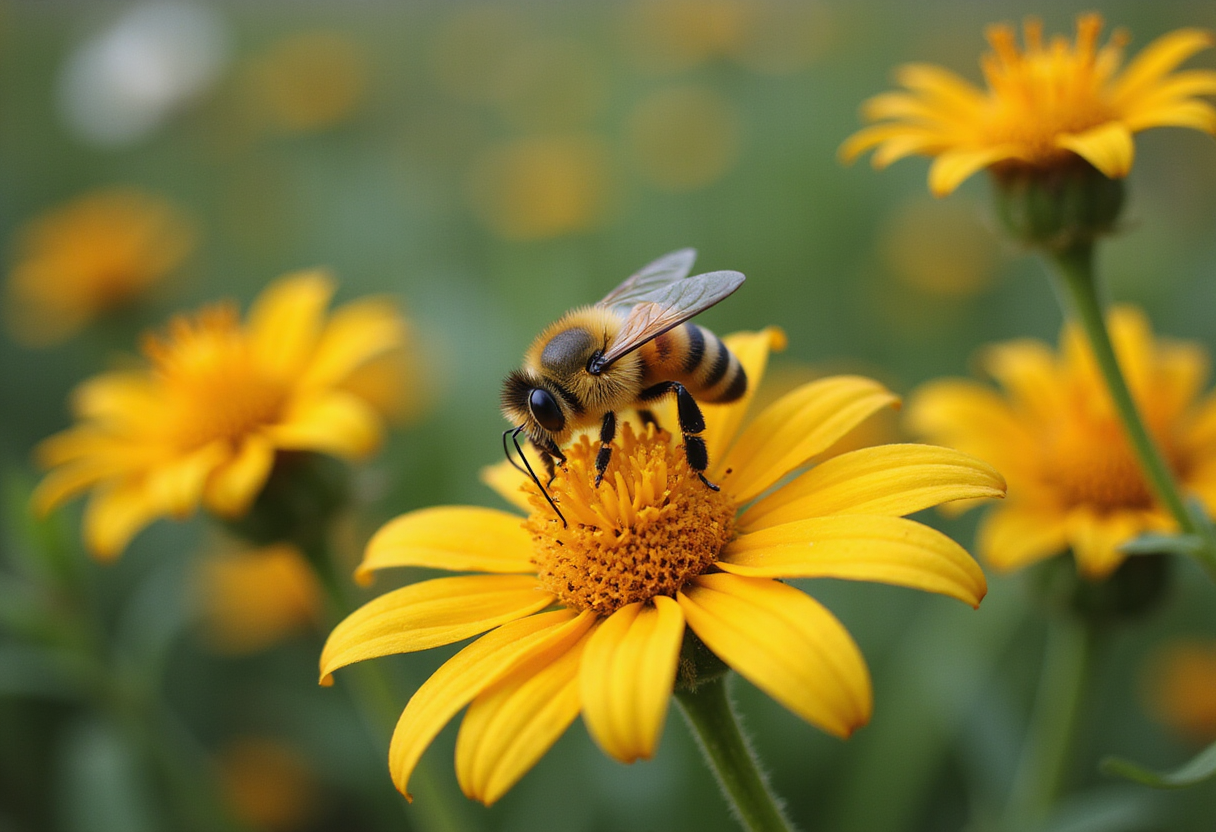
Air pollution cuts pollinating insects' ability to find flowers by an average of 68% when two common pollutants combine, according to new research from the University of Reading.
The study, published in the journal Frontiers in Ecology and the Environment in 2026, pulled together 22 experimental studies on how ozone and nitrogen oxides (NOx) affect bees, moths and other pollinators. Both pollutants break down or alter the scents flowers release. That leaves insects following a broken trail.
On its own, elevated ozone reduced pollinator performance by 42%. NOx, the gas family produced mostly by diesel vehicles, cut performance by 46%. Together, the average drop was 68%.
Is the combined effect really that bad?
Not quite. Only a handful of the 22 studies tested both pollutants at once, and in those experiments the extra harm from pairing them was smaller than the headline averages suggest.
The reason is chemistry. Ozone and nitrogen oxides react with each other in the air and partly cancel each other out. So the real-world double hit is serious, but not simply the sum of its parts.
The findings are still preliminary in one respect: researchers caution that most of the evidence comes from Europe. Heavily polluted regions, including parts of Asia, remain largely unstudied. Nobody yet knows whether the effects there are worse.
Why diesel matters for decades
Diesel vehicles produce most NOx pollution, and they linger. Cars already on the road can keep running for more than 20 years after the last new one is sold.
That timing worries the researchers. The U.K. delayed its ban on new gasoline and diesel cars from 2030 to 2035, a shift that risks stretching the damage to pollinators well into mid-century.
Dr. James Ryalls, lead author of the study at the University of Reading, laid out the timeline: "Ozone levels are projected to keep rising until around 2050, even as NOx emissions begin to fall as the world moves away from fossil fuels. This creates a difficult period for pollinators over the next two to three decades."
Cleaner fuels should eventually bring ozone down and give pollinators room to recover. But the pace is political, not automatic.
"How quickly that recovery happens depends on the choices governments make now," Ryalls said. "Cutting NOx emissions faster, especially from diesel vehicles, could shorten the difficult period and speed up recovery."
The stakes reach beyond insects. "Most of the food we grow depends on healthy pollinators, so protecting them from pollution cannot wait until 2050," he said.
Which insects face the biggest risk?
The analysis found sharp differences between pollinator types:
- Specialists — insects that rely on a single plant's scent, such as some moths — face greater risk than generalists like many bees.
- Day-active pollinators, including bees and butterflies, run into higher ozone levels.
- Night-active pollinators, including many moths, encounter more nitrogen oxides.
Both groups need protection, the authors conclude. A policy that targets only one pollutant would leave half the insect clock uncovered.
In short: pollution doesn't just dirty the air, it scrambles the chemical signals pollinators depend on, and the cleanup schedule governments choose now sets how long that confusion lasts.
The paper appears as "Pollinator risks and recovery from air pollutant interactions during the fossil fuel transition," DOI: 10.1002/fee.70076.
via Phys.org Biology (Source)
More from Elena Vasquez
Show full bio
Correspondent covering money, funding and market shifts around general science news at SciBeat.
229 articles
Nearby plates
- Climate, not latitude, drives global plant-pollinator specialization
- Native Nature-Strip Gardens Multiply Urban Insects Sevenfold
- Small Air Pollution Spikes Tied to Asthma Emergencies in Singapore
- Over 80% of Insect Species Live in the Tropics. Science Keeps Missing Them
- Ozone From Amazon Wildfires Weakens Rainforest Carbon Uptake