Plate Nº 28 · recorded November 13, 2026
Health & Medicine ResearchReported finding
Potassium-Enriched Salt Could Prevent 3 Million Deaths a Year
A Nature Health modeling study estimates a global switch to potassium-enriched salt would avert 2.96 million deaths and 10.17 million disease cases each year.
By Nathan Brooks4 min read815 words
In brief
- A global switch to potassium-enriched salt could prevent an estimated 2.96 million deaths per year, per a Nature Health study published November 4, 2026.
- Replacing home-added salt alone would prevent 1.85 million deaths annually; processed and restaurant salt, 1.56 million.
- Average global sodium intake of 4.3 g/day is more than double the WHO limit of 2 g; potassium intake of 2.3 g falls short of the 3.5 g minimum.
- The model projects more than seven deaths prevented for every death caused by hyperkalemia risk.
- In 133 of 193 countries analyzed, at least 10% of cardiovascular deaths would be prevented.
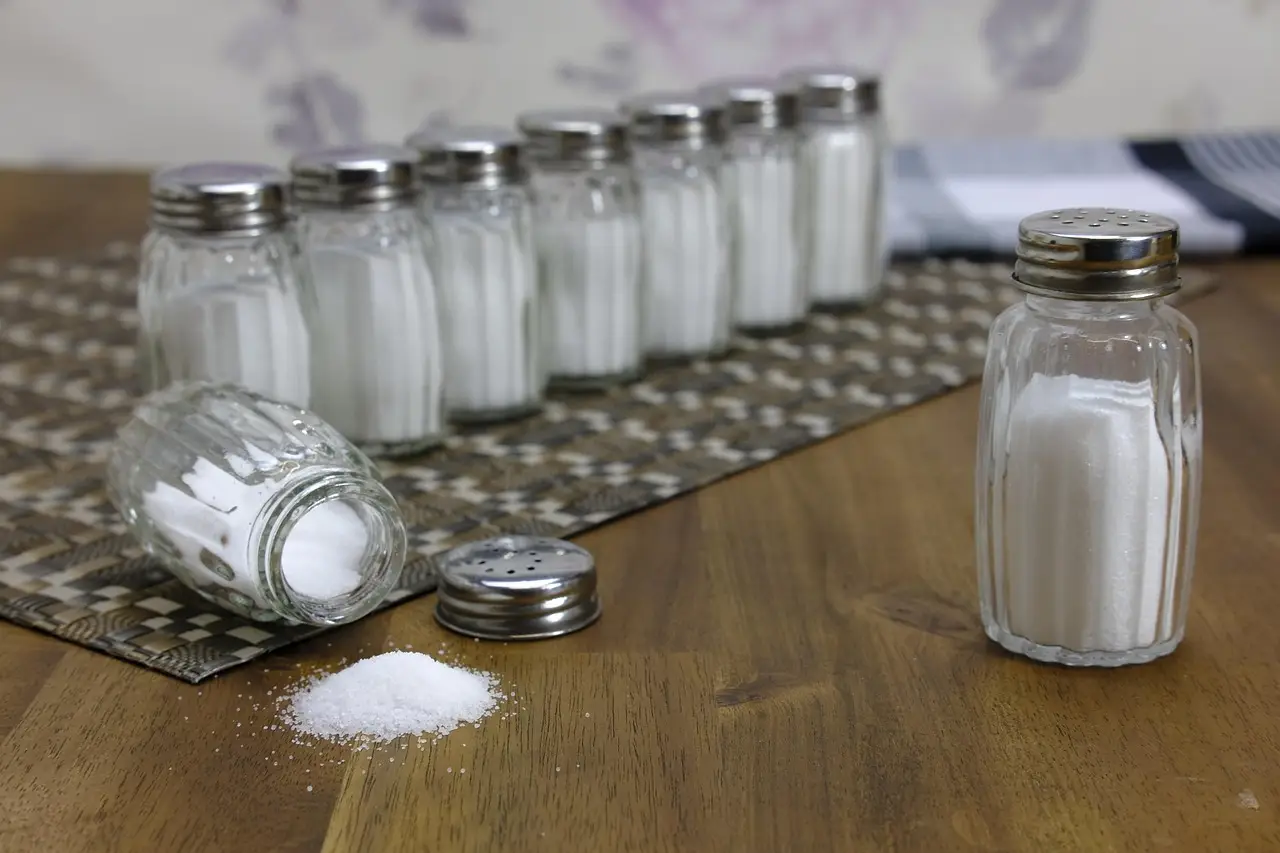
A simple swap of regular table salt for a potassium-enriched substitute could prevent roughly 3 million deaths from heart and kidney disease every year worldwide, according to a modeling study published online November 4, 2026, in the journal Nature Health.
The research team, led by Dr. Liping Huang of the George Institute for Global Health at the University of New South Wales, estimated that a complete global switch would avert 2.96 million deaths annually. It would also prevent 10.17 million new cases of disease and save 69.4 million years of healthy life that would otherwise be lost to disability or early death.
How does potassium-enriched salt work?
The substitute, typically a blend of 75% sodium chloride and 25% potassium chloride, tackles two dietary problems at once. "Consuming too much sodium and not enough potassium are well established causes of high blood pressure — a major risk factor for life threatening conditions like strokes, heart attacks and kidney disease," Huang and colleagues said.
The world's eating habits run in exactly the wrong direction on both counts. Average global sodium intake sits at 4.3 grams a day — more than double the World Health Organization's recommended limit of 2 grams. Average potassium intake, at 2.3 grams, falls well short of the recommended minimum of 3.5 grams.
"Switching to potassium-enriched salt addresses both these dietary issues at the same time, with substantial health benefits," the researchers said.
The approach also sidesteps the central weakness of traditional salt-reduction campaigns. Cutting sodium requires people to accept less salty food, a hurdle the study authors call "largely insurmountable" for consumers and the food industry. Potassium-enriched salt, by contrast, has no detectable effect on taste for most people.
Where would the gains be largest?
China and India would see the biggest absolute benefits, thanks to their large populations and high salt consumption. In 133 of the 193 countries analyzed, at least 10% of cardiovascular deaths would be prevented — mostly in Asia, North America and Latin America.
The researchers broke the numbers down by where the salt comes from:
- Replacing only salt that people add at home, in cooking and seasoning, would prevent an estimated 1.85 million deaths a year.
- Replacing salt in processed and restaurant foods would prevent 1.56 million.
Home use currently accounts for more salt consumption worldwide, which is why targeting it yields more benefit. But the team expects processed foods to grow in importance as economies develop, and in the United States the processed-food route is especially significant.
A narrower strategy — offering the substitute only to people already diagnosed with hypertension — would prevent an estimated 0.59 million deaths, about one-fifth of the full benefit. That option may be more immediately achievable, the authors note, because those patients are already under clinical care.
What about the risks?
The main potential harm is hyperkalemia — dangerously high blood potassium — which can occur in people with advanced chronic kidney disease whose bodies struggle to clear the mineral. The model estimated that a universal switch could cause about 100,000 deaths a year from this effect among people with kidney disease stages 3 to 5.
That same group, however, would see about 750,000 deaths prevented through blood pressure reduction. Overall, the scientists calculated more than seven deaths prevented for every one caused.
The harm estimate is likely "substantially overestimated," the team adds, because it assumed no one with advanced kidney disease would avoid the product. In reality, such patients are often diagnosed and advised to limit potassium. Suggested safeguards include better kidney disease screening, standardized warning labels and listing potassium-enriched salt as a food ingredient.
"People with serious kidney disease and those taking medications that significantly raise blood potassium levels need to take precautions," said Professor Vivek Jha, a nephrologist at the George Institute. "Risks for this group can be managed effectively through patient education, product labeling, and clinical oversight."
What would it take to scale up?
The biggest obstacle may be industrial. "To realize the maximum benefits from switching to potassium-enriched salt, we need to see the food industry in Europe and North America — where over 70% of salt intake comes from processed and restaurant foods — get on board," said Professor Bruce Neal of the George Institute. "This would also require investigating ways to scale up the production of potassium chloride to meet demand."
"While a global shift from regular salt to a potassium-enriched substitute is aspirational, this is a starting point to get countries thinking about the opportunity — with much greater potential and at much lower cost than many drug-based treatments," the authors said.
The findings come from modeling rather than a clinical trial, so real-world results could differ. But with a seven-to-one ratio of lives saved to lives lost, the numbers make the swap hard to ignore.
via sci.news (Source)
More from Nathan Brooks
Show full bio
Market editor covering companies, deals and strategy in general science news at SciBeat.
338 articles
Nearby plates
- Salt-Cutting Alone Won't Fix Blood Pressure, Experts Argue
- Eight Common Food Preservatives Linked to Heart Disease Risk
- Too Little Salt May Harm Memory Just as Much as Too Much
- Two-Year Trial Finds Diet Drinks Match Water for Weight Management
- Heart-Healthy Eating Shifts Focus from Nutrients to Whole Diet