Recorded November 23, 2026
Biology & EvolutionReported finding
Prickly Pear Cactus Grows Temporary Leaves That Boost Growth 20%
Prickly pear cacti sprout centimeter-long leaves that photosynthesize by day, supplying a fifth of a young pad's carbon. Remove them, and pads grow a third smaller, an Israeli study finds.
By Elena Vasquez3 min read580 words
In brief
- Temporary leaflets supply about one-fifth of the carbon a young prickly pear pad needs to grow
- Pads stripped of leaflets or with pores sealed grew about a third smaller and nearly 40% lighter after three weeks
- The ephemeral leaves are about 1 cm (0.4 in) long and fall off after roughly six weeks
- Prickly pear is cultivated on about 2.6 million hectares (6.4 million acres) worldwide
- The study, led by Patrick Mdemba, is published in the Journal of Experimental Botany (2026)
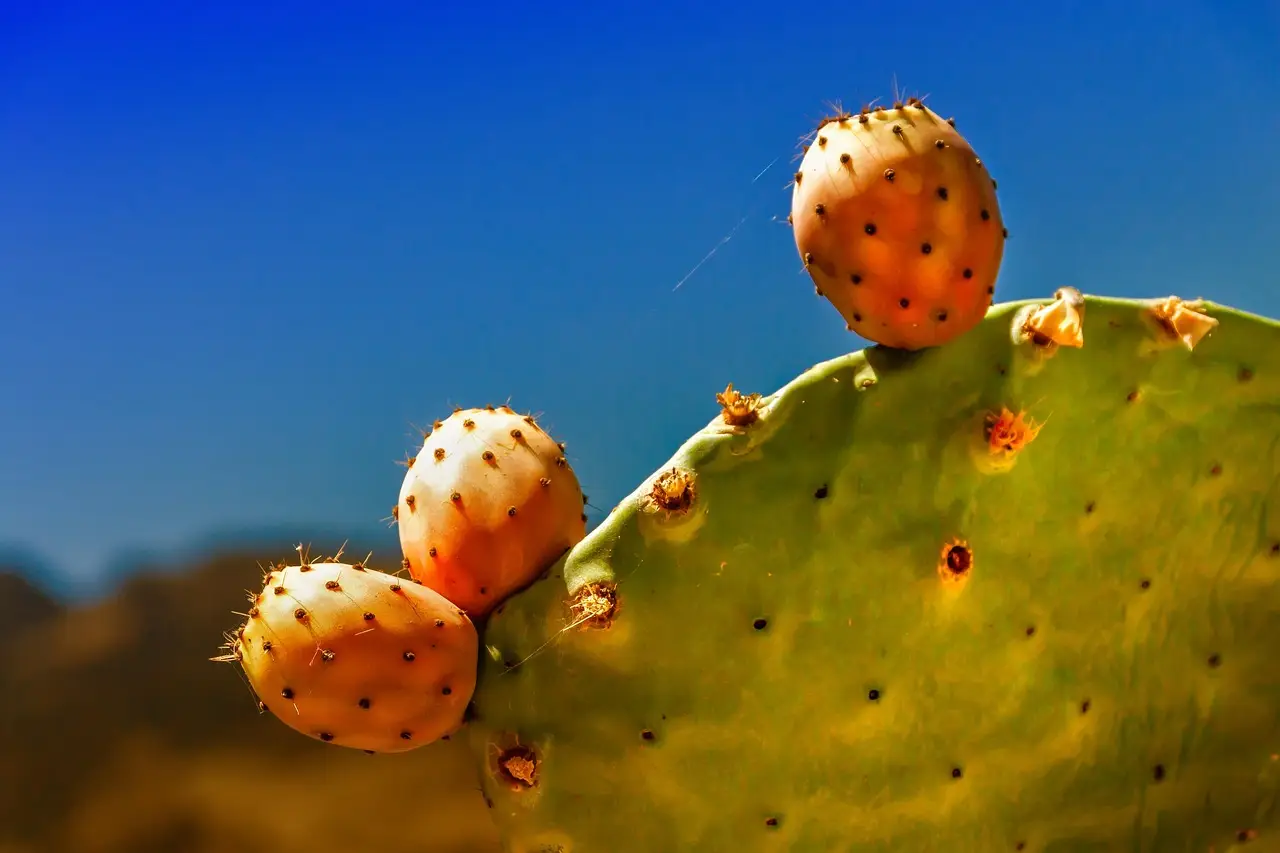
Prickly pear cacti sprout tiny temporary leaves that supply about one-fifth of the carbon a young pad needs to grow, according to a new study from Ben-Gurion University of the Negev and the Volcani Institute published in the Journal of Experimental Botany.
The finding solves a small botanical puzzle. Desert water doesn't arrive steadily — it comes in short pulses, a winter storm or a few rainy days followed by months of drought. A desert plant needs two skills to survive: enduring the long dry spells and making full use of brief wet windows.
The prickly pear (Opuntia ficus-indica) is famous for the first skill. Its thick green pads keep their pores shut through the heat of the day and take in carbon dioxide only at night, when cool air means little water evaporates. That's an excellent survival strategy, but a slow one for growing.
The new study shows how the cactus covers the second skill — and the answer has been hiding in plain sight.
Why does a desert cactus bother growing leaves?
When water is available, the cactus grows new pads. For a short time, each young pad is covered with tiny cone-shaped leaves about a centimeter (0.4 inches) long. After roughly six weeks, they fall off, and most people never notice them.
The BGU and Volcani team found these little leaves work in a completely different way from the rest of the cactus. Like the leaves of an ordinary garden plant, they open their pores during the day and take in carbon dioxide in sunlight. In plain terms: the mature pads work the night shift, and the leaflets work the day shift.
Together, the leaflets supply about one-fifth of the carbon a young pad needs to grow.
The researchers tested the effect directly. When they removed the leaflets or sealed their pores with clear nail polish, the new pads ended up about a third smaller and nearly 40% lighter after three weeks.
"The cactus effectively has two gears," says professor Ilya Gelfand of BGU's Jacob Blaustein Institutes for Desert Research. "Most of the year it runs in saving mode and breathes at night to hold on to every drop. When water arrives, it switches on a second, faster gear: temporary leaves that work by day like a regular plant. When the good times end, it simply drops them."
That, Gelfand says, lets the cactus grow quickly whenever the desert briefly allows it, without giving up its ability to survive drought.
Why does this matter beyond botany?
The stakes go beyond one curious plant. Farmers grow prickly pear on about 2.6 million hectares (6.4 million acres) worldwide for fruit, livestock feed and the fight against desertification, mostly in drought-prone parts of Africa and Latin America.
Understanding how the plant accelerates growth during short wet periods could help farmers and plant breeders as the climate gets hotter and drier.
The study was led by doctoral student Patrick Mdemba, working with Dr. Udi Zurgil, professor Noemi Tel-Zur, Dr. Sofia Bouchebti and Gelfand of the Jacob Blaustein Institutes for Desert Research at BGU, together with Dr. Eran Raveh of the Gilat Research Center at the Volcani Institute. The paper appears in the Journal of Experimental Botany (DOI: 10.1093/jxb/erag490).
The takeaway: a cactus famous for thrift turns out to carry a short-lived sprint mode — disposable leaves that burn bright, then drop off when the rain runs out.
via phys.org/rss-feed/ (Source)
More from Elena Vasquez
Show full bio
Correspondent covering money, funding and market shifts around general science news at SciBeat.
612 articles
Nearby plates
- More Than a Quarter of Cacti Could Lose 80% of Habitat
- Severe droughts could push a quarter of cactus species toward critical decline
- Cattail roots leak the most oxygen while actively growing
- Droughts Can Flip Forests From Carbon Sinks to Carbon Sources
- Seven Years of Drought Rewire Grasslands Toward Fast-Living Plants