Recorded November 23, 2026
Earth & ClimateReported finding
Seven Years of Drought Rewire Grasslands Toward Fast-Living Plants
Seven years of 66% rainfall cuts shifted grassland plants toward fast-growing acquisitive traits, and the changes persisted through three years of recovery, an Ecology study finds.
By Elena Vasquez3 min read685 words
In brief
- Researchers cut growing-season precipitation by 66% for seven consecutive years using rainout shelters, followed by a three-year recovery period.
- Prolonged drought reduced perennial grass dominance and favored annual species and forbs in two semiarid grasslands: the Great Plains and the Chihuahuan Desert.
- Communities with more acquisitive strategies and greater functional dispersion showed smaller declines in aboveground net primary productivity during drought.
- The study, led by Dr. Song Lin of the Chinese Academy of Sciences' Institute of Applied Ecology, was published in Ecology on Nov. 9 (DOI: 10.1002/ecy.70595).
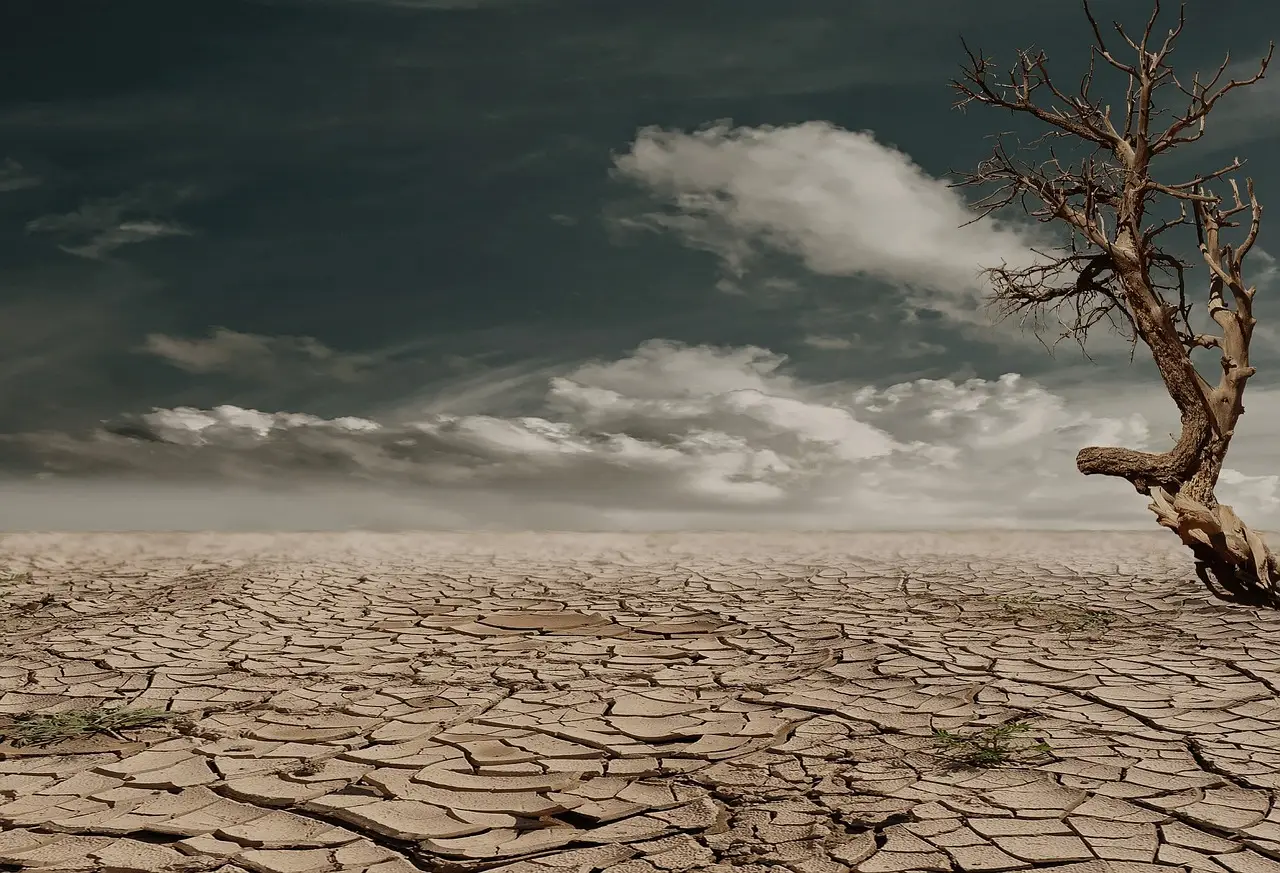
Seven years of experimentally induced extreme drought pushed semiarid grassland plant communities toward "acquisitive" strategies — fast-growing, resource-hungry species — and those shifts persisted through a three-year recovery period, researchers report.
The findings, published in Ecology on Nov. 9, come from Dr. Song Lin of the Institute of Applied Ecology (IAE) of the Chinese Academy of Sciences and international collaborators. Their long-term field experiments covered two semiarid grasslands: the Great Plains and the Chihuahuan Desert.
How do you make a seven-year drought?
The team used rainout shelters — structures that block rainfall over study plots — to cut growing-season precipitation by 66% for seven consecutive years. Then they let the land recover under normal rainfall for three years.
Along the way, the researchers tracked plant community composition, six functional traits across leaves, stems and roots, and aboveground net primary productivity (ANPP), a standard measure of how much plant material an ecosystem produces.
Functional traits are measurable plant characteristics — leaf thickness, root structure, nitrogen content — that reveal how species capture and use resources. Scientists often sort them into two broad strategies.
What changed in the plant communities?
Prolonged drought progressively reduced the dominance of perennial grasses while annual species and forbs — broad-leaved herbaceous plants other than grasses — gained ground in both grasslands.
That shift moved the communities from conservative strategies toward acquisitive ones. In plain terms: plants that build tough, carbon-heavy tissue and grow slowly gave way to plants that invest less carbon in structure and more nitrogen in fast growth.
Functional dispersion, or FDis — a measure of how spread out species are in their trait values, indicating ecological variety — also increased over time during drought.
The acquisitive shift stuck. It persisted throughout the full three-year recovery period.
Did the two grasslands recover the same way?
No, and that's one of the study's most interesting results. Differences in community-weighted mean (CWM) traits — essentially the average trait profile of the community — between formerly droughted plots and control plots gradually diminished after rainfall returned.
FDis behaved differently. During recovery it rose above ambient levels in the Great Plains grassland but fell below them in the Chihuahuan Desert grassland. Same drought treatment, divergent recovery trajectories.
Which communities handled drought best?
Communities with more acquisitive strategies and greater FDis suffered smaller declines in aboveground productivity during the drought itself. The researchers suggest two possible mechanisms:
- Annual species use a drought-escape strategy — rapid growth and reproduction whenever conditions allow.
- Functional insurance and niche complementarity — species with contrasting resource-use strategies buffer each other, so the community as a whole tolerates stress better.
But the pattern broke during recovery. Neither community trait composition nor FDis was significantly linked to drought legacy effects on ANPP, meaning the relationship between functional composition and productivity differs between drought and recovery periods.
What are the caveats?
The study covers two semiarid grasslands, so the results may not transfer directly to wetter or more arid systems. The proposed mechanisms for reduced drought sensitivity — drought escape and niche complementarity — are described by the authors as possible explanations rather than proven causes. And the recovery window was three years; longer-term trajectories remain unknown.
Still, the experimental design is unusually strong. A 66% precipitation cut sustained for seven years, with a measured recovery phase, is far beyond the scope of most drought studies, which typically run for one or two growing seasons.
Why does this matter?
Extreme droughts are becoming more frequent and severe as the climate warms, and they threaten the structure and functioning of grassland ecosystems worldwide. The study shows those droughts don't just dent productivity temporarily — they can drive lasting changes in which plants dominate and how communities use resources, even after normal rainfall resumes.
The results also highlight acquisitive resource-use strategies and functional diversity as keys to understanding how grassland productivity responds to drought. That gives ecologists a trait-based framework for predicting how ecosystems will handle future climate extremes.
The takeaway: prolonged extreme drought doesn't merely stress grasslands — it reorganizes them, favoring fast-living plants, and that reorganization outlasts the drought itself.
via phys.org/rss-feed/ (Source)
More from Elena Vasquez
Show full bio
Correspondent covering money, funding and market shifts around general science news at SciBeat.
612 articles
Nearby plates
- Drip Irrigation Plus Winter Watering Keeps Arid Soils Productive
- US soil erosion formula yields inflated rates in the Global South
- Hot Droughts Triple Extreme Downpour Frequency, Study Finds
- Nutrient Pulses, Not Amounts, Give Invasive Plants Their Edge
- Severe droughts could push a quarter of cactus species toward critical decline