Plate Nº 14 · recorded October 10, 2026
Health & Medicine ResearchReported finding
Rattlesnake blood holds antivenom ten times stronger than current
University of Maryland researchers found that combinations of proteins from rattlesnake blood neutralized snake venom about ten times more effectively than a current commercial antivenom in lab tests.
By Elena Vasquez3 min read621 words
In brief
- Optimized combinations of FETUA proteins from rattlesnake blood were about ten times more potent than a current sheep-derived antivenom in laboratory tests
- The study was published September 8, 2026 in the Proceedings of the National Academy of Sciences by a team led by Sean B. Carroll of the University of Maryland
- The World Health Organization estimates venomous snakes kill 80,000 to 140,000 people each year and disable hundreds of thousands more
- Carroll's lab first identified the protective protein FETUA-3 in 2022; a single rattlesnake venom can contain around 100 toxin proteins from multiple families
- Funding came from the Howard Hughes Medical Institute and the Viper Resource Center (Grant #P40OD01960-22)
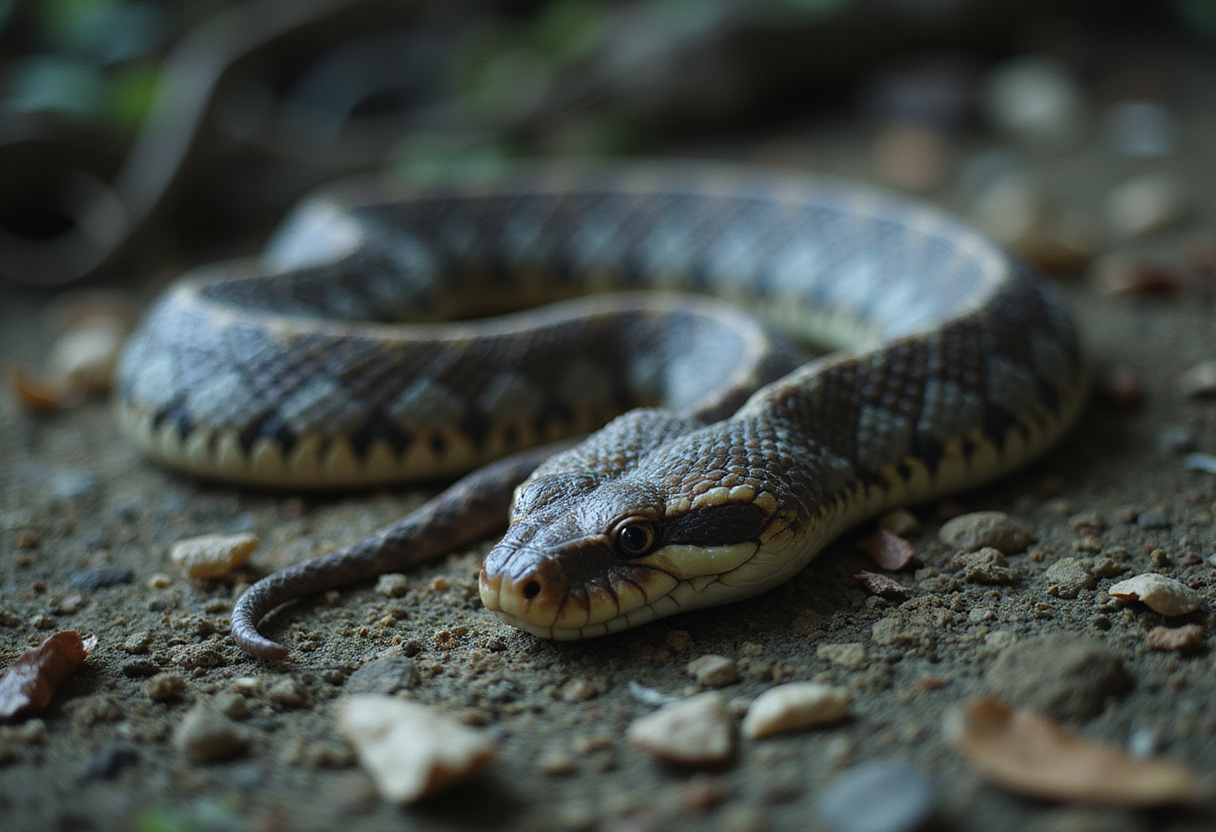
Combinations of proteins found naturally in western diamondback rattlesnake blood neutralized snake venom about ten times more effectively than a current commercial antivenom in laboratory tests, University of Maryland researchers report in a study published September 8, 2026 in the Proceedings of the National Academy of Sciences.
The research, led by Distinguished University Professor of Biology Sean B. Carroll, points toward a new generation of antivenoms built from molecules that the snakes themselves evolved to survive their own deadly bites.
"This is one of those great stories when nature has already solved a problem we've been grappling with for decades," Carroll said.
Why are current antivenoms limited?
Snakebite kills an estimated 80,000 to 140,000 people each year, according to the World Health Organization, and leaves hundreds of thousands of survivors with permanent disabilities. Most victims live in rural areas with limited access to effective treatment.
Existing antivenoms rely on antibodies harvested from large animals such as horses or sheep that have been exposed to venom. The process is expensive, the products vary in quality, and they often fail to neutralize the full mix of toxins in any given snake's venom. They can also trigger serious immune reactions in patients.
What did the researchers find in rattlesnake blood?
Scientists have known for roughly a century that vipers tolerate their own venom, but the molecular basis of that resistance remained unclear. In 2022, Carroll's lab identified part of the answer: a blood protein called FETUA-3, which blocks metalloproteinase toxins in western diamondback rattlesnake venom and binds toxins from other rattlesnake species.
The discovery raised a practical question: why rely on antibodies from immunized horses when snakes already carry an effective antidote in their blood? For the new study, co-authors including Elda Sánchez, director of the National Natural Toxins Research Center at Texas A&M University-Kingsville, mapped what each FETUA protein contributes to venom resistance.
Individual proteins had narrow effects. One reduced bleeding, another blocked specific enzymes, but none alone prevented death from a venomous bite.
Why combine the proteins?
Rattlesnake venom is extraordinarily complex, typically containing around 100 toxin proteins drawn from multiple protein families. Composition shifts from one species to the next, so no single blocker can cover them all.
When the team mixed several FETUA proteins together, protection rose sharply. The optimized mixtures:
- Outperformed a current sheep-derived rattlesnake antivenom by roughly tenfold
- Completely neutralized the lethal effects of rattlesnake venom in lab tests
- Blocked venom from multiple viper species, some separated by tens of millions of years of evolution
The deep evolutionary conservation of the inhibitors, present across 50 million years of snake evolution, underscores how dangerous self-envenomation is for the animals, whether through bites to mouth tissue, eating poisoned prey, or cannibalism.
What's next for this antivenom approach?
The current study focused on metalloproteinases, one of three major toxin families in viper venom. Carroll said his group is now extending the same strategy to the other two families and is "getting remarkably close to having effective solutions" across all of them.
Recombinant, meaning lab-produced, versions of the proteins could replace animal-derived antivenoms. Carroll expects veterinary applications to arrive first, with human treatments potentially following later. He envisions future products that are safer, cheaper, and easier to scale than current options.
"We could make train cars-worth of this stuff and help solve a massive global health problem," he said.
The UMD co-authors were visiting faculty specialists Fiona Ukken and Yetunde Ayinuola. The work received funding from the Howard Hughes Medical Institute and the Viper Resource Center.
Note: the findings come from cell and animal laboratory models and have not yet been tested in human clinical trials.
via cmns.umd.edu (Original)
More from Elena Vasquez
Nearby plates
- Measles Antibodies Could Become First Monoclonal Therapy in Two Years
- California rodenticide rules cut exposure in young owls by more than half
- What Makes a Snake Scary? Its Shape, Study Suggests
- Evolved Enzymes Build TB Antibiotic Ingredient Without the Waste
- Bats Carry a Double Antibody System No Other Mammal Has