Recorded November 26, 2026
Biology & EvolutionReported finding
Redesigned CRISPR Transposase Inserts DNA 100 Times Better
St. Jude researchers boosted a CRISPR-associated transposase's DNA insertion activity 100-fold with computational protein design, while revealing how the system locks onto precise genomic targets.
By Elena Vasquez4 min read839 words
In brief
- St. Jude researchers improved type I-F3 CAST DNA insertion activity 100-fold without losing on-target specificity
- Findings published in Nature (2026), DOI 10.1038/s41586-026-11287-9, by Shirin Fatma et al.
- Cryo-EM and computational protein design revealed conformational changes that lock CAST proteins into their active state
- CASTs encode 5-9 proteins whose cooperative assembly mechanisms were previously poorly understood
- CAST-based tools could replace defective genes with functional copies, unlike current single-mutation editing
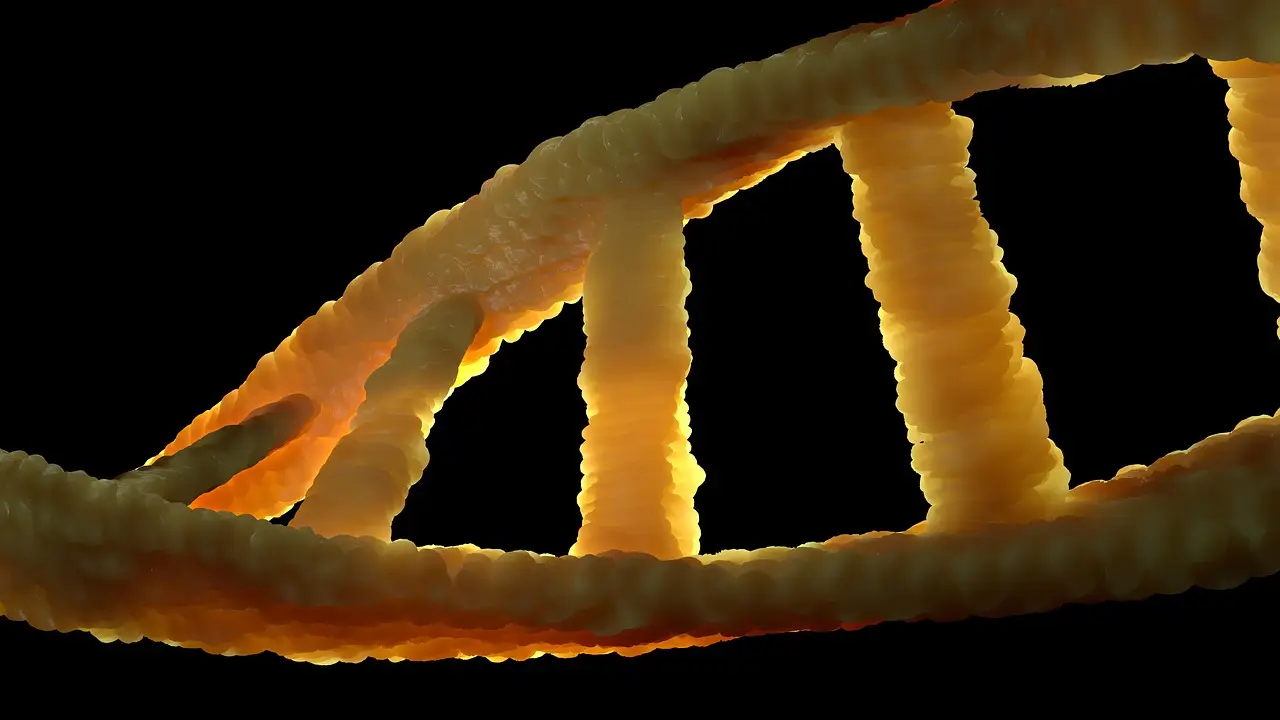
Researchers at St. Jude Children's Research Hospital have boosted the DNA-insertion activity of a CRISPR-associated transposase by 100-fold without sacrificing its precision. The study, published in Nature, also explains for the first time how this family of molecular machinery picks its exact landing spot in a genome.
The work centers on type I-F3 CASTs — CRISPR-associated transposases, systems that use RNA as a guide to insert DNA into chosen genomic locations. Scientists have known these systems exist and can be precise. What they lacked was a picture of how the machinery actually assembles and locks onto a target.
"There's excitement around CASTs because if you could program DNA integration where you want in a genome, that would be extremely powerful," said corresponding author Elizabeth Kellogg, Ph.D., of the St. Jude Department of Structural Biology.
Why does this matter for gene therapy?
Current gene editing tools correct a single mutation in a single patient. CAST-based tools could do something more radical: swap in a healthy gene wholesale.
"We are most excited for the implications in gene therapy, because CASTs can pave the way for gene-replacement tools," Kellogg said. "Instead of correcting a single mutation in a single patient the way current gene editing tools do, with CAST-based tools, we could essentially replace a defective gene with a functional copy."
The long-term stakes are real. Genome engineering carries vast potential to treat and even cure diseases, yet it remains, as the researchers put it, a largely uncharted biomedical innovation. A mechanistic framework for precise, programmable DNA integration could push the field past several of its current limits.
How did the team see the machinery at work?
CASTs typically encode between five and nine proteins. Until now, researchers had little understanding of how those proteins cooperate to mediate DNA integration.
The St. Jude team attacked the problem with two approaches: cryo-electron microscopy and computational protein design.
- Cryo-EM, a technique that freezes molecules and images them at near-atomic detail, let the researchers visualize how the proteins interact.
- Computational protein design let them first simulate the structure and stabilize the assembly.
The combination was deliberate. When the project began, no structure existed. "We were trying to reconstitute the full system, with all components assembled, so we began with a prediction of what it should look like," Kellogg said. "We decided to use protein design to make that assembly more stable, in the service of gaining mechanistic insight."
That engineering step paid off twice. It stabilized the assembly for imaging, and it improved the system itself.
How did they get a 100-fold activity boost?
The redesigned components made the type I-F3 CAST dramatically more active at inserting DNA, and the gain came with no loss of on-target specificity — the system still hit only its intended genomic address.
"We improved the activity of the type I-F3 CAST by 100-fold without compromising its on-target specificity," Kellogg said. "That's never been done before. We are excited because it demonstrates the potential of protein design to improve CAST systems."
The takeaway: computational protein design is not just a tool for studying these systems. It can build better ones.
What locks a CAST onto its target?
The study also solved a standing puzzle: why type I-F3 CASTs are so specific for their target sites.
The answer came as a surprise. The researchers found the system's components behave like puzzle pieces that adapt and respond to each other, fitting together and locking into place only when the correct neighbor is nearby. The proteins undergo conformational changes — shifts in their three-dimensional shape — that lock them into their active state.
"It was surprising to find these conformational changes in the proteins that basically lock them into their active state," Kellogg said. "Whenever you solve a structure, you don't know exactly what you're going to find, and this was a big surprise for us."
In plain words: the machinery checks its neighbors before it commits to cutting and inserting.
What comes next?
The findings answer many open questions about how RNA-guided DNA integration achieves precision, and they point beyond this single system. Type I-F3 is site-specific, but the underlying principles appear conserved across the whole CAST family.
"Even though the particular CAST we are studying is site-specific, there are common principles that are conserved among the whole family," Kellogg said. "In the future, I hope we can turn more to engineering these systems based on such principles. By understanding principles, rather than just structures, we will be less restricted by what currently exists and be able to move toward building entirely new systems."
The study appears in Nature as Shirin Fatma et al., "Licensing mechanisms during RNA-guided DNA integration by type I-F3 CAST" (DOI: 10.1038/s41586-026-11287-9).
The core message: precision DNA insertion now has both a mechanism and a design path — and gene replacement looks one step closer.
via phys.org/rss-feed/ (Source)
More from Elena Vasquez
Show full bio
Correspondent covering money, funding and market shifts around general science news at SciBeat.
659 articles
Nearby plates
- New plant chromosome protocol targets edits up to a megabase
- Self-assembling nanocarrier hits 37.2% gene editing in mouse tumors
- CRISPR-edited stem cells engrafted in all 30 patients in blood cancer trial
- DNA 'Typewriter' Traces Mouse Embryo's First 13.5 Days
- Gene Editing Converts High-Risk Alzheimer's Gene into Safer Form