Plate Nº 66 · recorded November 12, 2026
Science Policy & FundingReported finding
Researchers Urge Prevention-First Approach to the Human Right to Water
Over 2 billion people lack safe water. Notre Dame researchers argue in Nature Water that preventing harm beats assigning blame after the fact.
By Priya Raman6 min read1,157 words
In brief
- More than 2 billion people, about one-quarter of the world's population, lack access to safe water, sanitation and hygiene.
- The commentary appears in Nature Water (2026), DOI: 10.1038/s44221-026-00740-8.
- The U.N. Water Conference takes place in December 2026, co-hosted by Senegal and the UAE.
- Notre Dame researchers presented their water-rights framework to the U.N. at a 2022 forum in Geneva.
- A dashboard tool maps water-security and governance risks like a traffic light; it was commissioned by BHP, which had no role in the research conclusions.
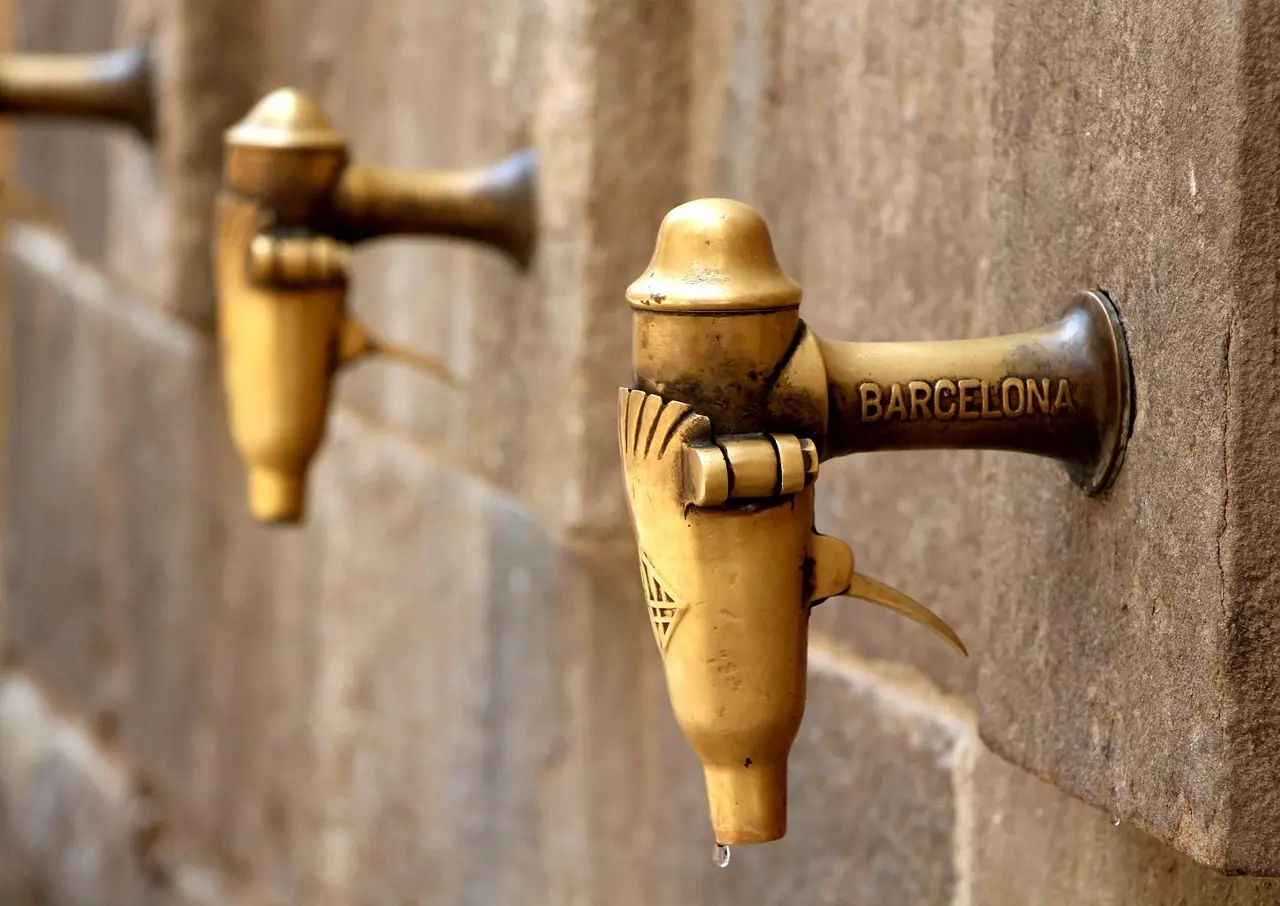
More than 2 billion people — roughly one-quarter of humanity — still lack access to safe water, sanitation and hygiene, according to the United Nations Children's Fund. Sixteen years after the U.N. General Assembly recognized that access as a fundamental human right, the law on paper and the reality on the ground have diverged, and a group of researchers now argues that the gap will close only if the world stops reacting to harm and starts preventing it.
In a commentary published in Nature Water ahead of a major global water conference, researchers including two University of Notre Dame scholars call for a shift from remedy to prevention: anticipating damage to water before it happens rather than assigning responsibility afterward. The commentary, led by Marc F. Müller and colleagues, presses for faster implementation of universal water and sanitation access under the U.N.'s Sustainable Development Goals.
The authors include Ellis Adams and Diane Desierto, faculty members at Notre Dame's Keough School of Global Affairs; Desierto also holds a joint appointment at the Notre Dame Law School. They say a prevention-first blueprint can protect human rights for communities worldwide.
Why look forward instead of backward?
The need to accelerate progress on safe water and sanitation will sit on the agenda of the December 2026 United Nations Water Conference, co-hosted by Senegal and the United Arab Emirates.
"We hope that this convening will help catalyze new ways for policymakers and practitioners to consider what more we can do as we approach the 2030 deadline for the Sustainable Development Goals," said Adams, an associate professor of geography and environmental policy and a core-affiliated faculty member of the Keough School's Pulte Institute for Global Development.
The researchers argue that actors across society — private companies and government regulators alike — should focus on stopping harm before it occurs. Adams points to a structural weakness in the backward-looking approach: harm sometimes surfaces long after the activity that caused it, making remediation far harder. A mining company, for example, might leave behind toxic chemicals from its operations. Years later, when a community begins to show the effects, the company may be long gone or bought by another firm that hopes to avoid inheriting the damages.
Desierto frames the stakes in planetary terms. Remediation, she said, may no longer suffice to restore the global water cycle to what it once was.
"At this stage of our climate crisis, prevention is an inevitable strategy for an era of water inadequacy for present and future generations," said Desierto, a professor of law and global affairs. "We need more proactive approaches in order to realize the human right to water and the related right to a safe, clean, healthy and sustainable environment."
What does context have to do with it?
The proposed approach links water security (reliable access to adequate, safe water) and governance conditions to the challenge of delivering clean water as a human right. Context, Adams insists, is critical, because communities hold different views of what counts as harm.
"Water is never just water," said Adams, who is also affiliated with Notre Dame's Environmental Change Initiative and Eck Institute for Global Health. "When two communities say their right to water has been violated, it doesn't mean the same thing."
For one community, the harm might be mining pollution that contaminates the food supply. For another, it may be water unsafe for mixing infant formula or making tea. For still others, it may be damage to a water site used for prayer, meditation or other cultural and religious practices.
Laws and institutions shape these outcomes too. In Chile, Adams notes, the 1981 water code long treated water as an economic good rather than a cultural one, so a mining company's use could take priority over a community's cultural claim.
How can companies put this into practice?
Companies in water-intensive industries — mining, agriculture, beverage and garment production — can integrate the prevention-first approach into existing due-diligence processes, the routine assessments that examine water risk, stewardship and human rights. Such a move fits the private sector's growing recognition of corporate social responsibility, Adams said.
Adams and other Notre Dame researchers presented this framework to the U.N. at a 2022 forum in Geneva, sharing a design aimed at helping communities realize their water rights. The project now includes a dashboard that companies can use to assess potential risks before projects begin. Users enter their proposed activities, and the tool maps documented water-security and governance red flags onto a human-rights risk profile — working much like a traffic light to encourage preemptive assessment.
The work was commissioned by the mining company BHP, which had no role in the design, analysis or conclusions of the research.
"This was a way to show that scholars and the private sector can work together, and the U.N. wanted our project to highlight that," Adams said. "These companies already conduct due diligence activities. A mining company, for instance, wants to know how long a project would last and how much of a mineral would be recovered. We want them to take that same analysis and time frame and incorporate the human right to access water."
The researchers stress that engaging business is not an endorsement of any industry. The goal, they said, is coordination among all the actors involved.
"Our interdisciplinary research provides legal, hydrological and environmental guidance for water-intensive activities that can help coordinate prevention by engaging both the public and private sectors," Desierto said.
A future phase of the project would deploy the dashboard in places with proposed water-intensive industrial projects, Adams said. Researchers hope to examine how it performs in practice, and they note it can also serve as a teaching tool.
Where do governments and communities fit in?
Adams describes a better process as intensely consultative, involving communities and national government delegates alongside private companies. For governments, that means consultation and education. States are the guarantors of the right to water, Adams said, but the average policymaker may not know what that entails.
Governance operates at national and communal levels, he said, and consultation often needs to reach beyond a mining site itself — to communities downstream or upstream, and across borders where water is shared.
As the U.N. pushes to accelerate innovation toward universal clean water access, Adams argues that a prevention-first model acknowledging the need to work with both public and private sectors could yield better results than the current, largely reactive system.
"This is a good time for us to take stock and think about what more we need to do," Adams said, "and we think this approach can help protect the human right to water in different global contexts."
Publication details: Marc F. Müller et al., "Realizing the human right to water means moving from remedy to prevention," Nature Water (2026). DOI: 10.1038/s44221-026-00740-8
via phys.org/rss-feed/ (Source)
More from Priya Raman
Show full bio
Senior reporter covering people, launches and day-to-day practice in general science news at SciBeat.
342 articles
Nearby plates
- WHO: Six climate measures could save 1.6 million lives a year
- Ocean risks could raise food prices and weaken pensions worldwide
- COP31 Indigenous women demand direct climate finance
- WHO Chief Puts Health at the Center of COP31 Climate Action
- OMB Plan Would Tighten Political Control Over Federal Science Grants