Plate Nº 71 · recorded November 17, 2026
Space & AstronomyReported finding
Roman Space Telescope may deliver 30% sharper images and longer life
NASA's Roman Space Telescope is 85% of the way to L2 with 12 extra years of fuel and a mirror adjustment promising images about 30% sharper than planned for astronomers.
By Priya Raman4 min read874 words
In brief
- Roman's journey to L2 is about 85% complete, with arrival expected in less than two weeks.
- Extra fuel could add 12 years to the planned 10-year mission, allowing observations into 2048.
- Mirror recalibration suggests images may be about 30% sharper than designers predicted.
- The Wide Field Instrument has a 288-megapixel camera and a field of view about 100 times Hubble's.
- Roman may find an estimated 100,000 new exoplanets and collect data up to 1,000 times faster than Hubble.
By Priya Raman
NASA's Nancy Grace Roman Space Telescope could capture images about 30% sharper than engineers planned and gain 12 additional years of fuel, potentially extending its planned 10-year mission through 2048.
More than 1 million miles (1.6 million kilometers) from Earth, Roman has completed about 85% of its journey to Lagrange point 2, or L2. At this fixed location, the gravitational pulls of Earth and the Sun cancel each other.
Mission scientists expect Roman to arrive in less than two weeks. It should then take its first in-depth cosmic images, following a commissioning process during which engineers switched on and tested its instruments remotely without a major hitch.
What will Roman study?
Roman is NASA's latest flagship space telescope, following Hubble and the James Webb Space Telescope. The $4 billion spacecraft measures 42 feet (12.7 meters) long and launched aboard a SpaceX Falcon Heavy rocket from Kennedy Space Center in Florida on Aug. 30, more than a decade after scientists began building it.
At L2, Roman will join JWST and the European Space Agency's Euclid telescope. Its surveys could uncover an estimated 100,000 previously unknown exoplanets, or planets outside the Solar System, while examining expanding nebulae (large clouds of gas and dust) and colliding galaxies.
Why might its mission last twice as long?
Two postlaunch developments underpin the longer mission:
- Precision engine firings. Near-perfect rocket burns sent Roman out of Earth's orbit during and shortly after launch. Two major firings supplied the momentum, and each saved as much as four years of fuel.
- Lower launch mass. Roman weighed less than budgeted. Alison Rao, the Roman propulsion lead at NASA Goddard, said the team could fill the propellant, or rocket fuel, tanks to capacity rather than only the required amount, adding another four years of fuel.
Jamie Dunn, director of NASA's Goddard Space Flight Center in Greenbelt, Maryland, said in a Sept. 14 statement that the burns reflected exquisite planning by the orbital dynamics team and brilliant execution by the operations team.
Combined, the savings could add 12 years to the planned 10-year mission, more than doubling its expected observing lifetime. Roman could therefore still collect images in 2048.
Roman can gather data up to 1,000 times faster than Hubble. Eamonn Kerins, an astronomer at the University of Manchester who will help lead one of Roman's major surveys, said: "With a 20-year Roman lifetime, we could, in theory, do over 20,000 years of Hubble survey work."
The additional years would let astronomers compare images of specific objects decades apart, including expanding nebulae and colliding galaxies, and detect changes that shorter intervals might miss.
Kerins also expects Roman may reveal objects or phenomena astronomers have not yet discovered, a possibility he considers especially exciting.
Further extension remains possible because flight teams often find ways to keep active spacecraft working beyond initial plans. Hubble now operates more than two decades past its initial mission parameters, while Swift lasted 10 times longer than initially predicted before falling back to Earth last week.
How will sharper images change Roman's science?
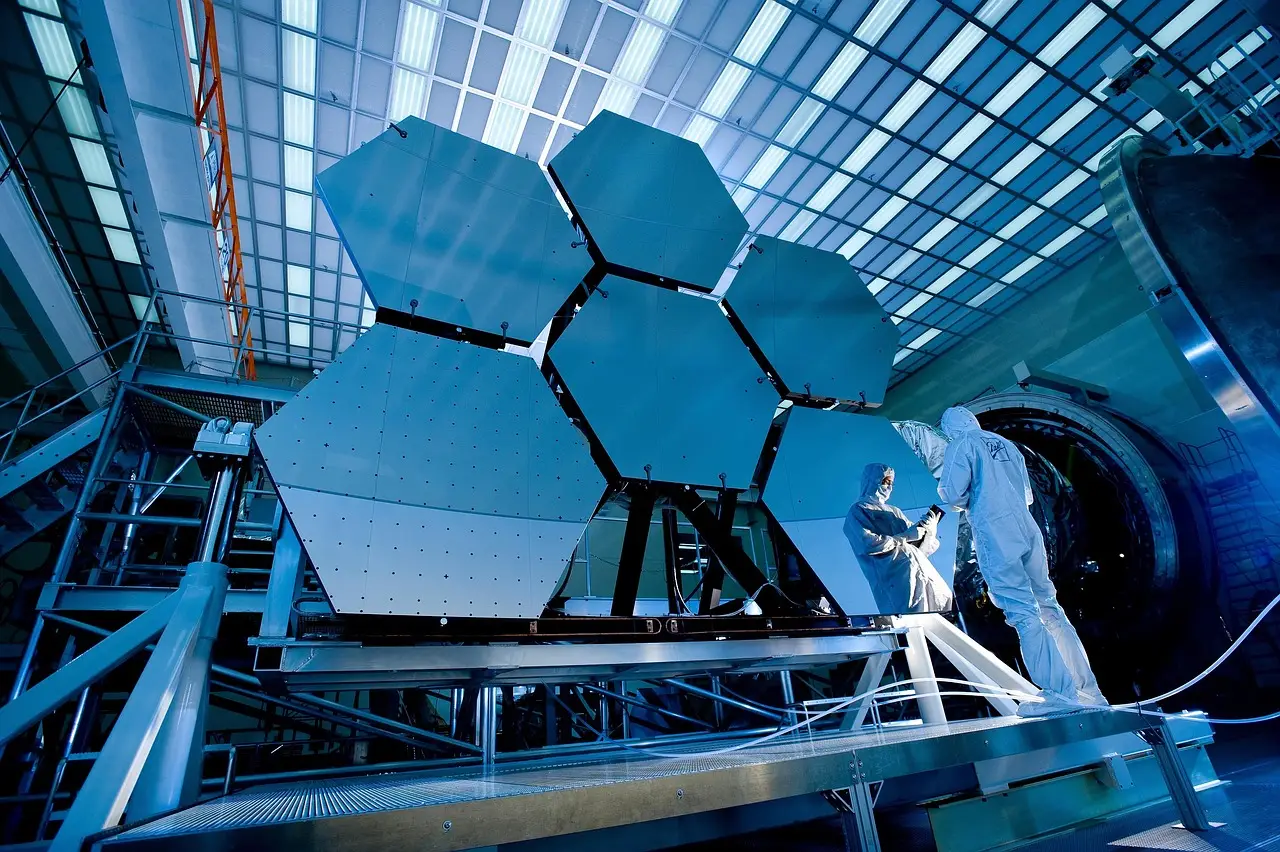
Roman's Wide Field Instrument (WFI), its main survey camera, combines a 288-megapixel camera with a 7.9-foot (2.4-meter) mirror. A megapixel is one million individual picture elements. WFI will view a patch of sky roughly 100 times larger than Hubble's.
First test pictures came from 18 detectors and showed blurry green dots, which do not represent the images expected after full commissioning.
Engineers found the likely image-quality gain after realigning Roman's main mirror by one-sixteenth the diameter of a human hair.
Maxime Rizzo, a WFI systems engineer at NASA Goddard, said calibration works like tuning a piano before a concert: technicians adjust the settings, then leave them fixed so the instrument performs consistently during use.
After initial WFI commissioning, survey images should be about 30% sharper than designers predicted. Senior optical engineer Alden Jurling said in an Oct. 14 statement that all images from Roman's cosmic surveys should exceed the team's expected sharpness.
The gain could strengthen Roman's search for potentially habitable exoplanets. Kerins, who leads the Exoplanet Demographics Working Group for the Transits in the Roman Exoplanets Survey, cautioned that sharper images do not guarantee more exoplanet discoveries than initially predicted.
What still has to happen before science begins?
Roman's coronagraph, an instrument that blocks starlight so WFI can spot alien worlds, has passed its main commissioning phase and works as intended.
A global network of ground stations has established contact with Roman and receives its signals as expected. The network can take up to 1.4 terabytes, or 1.4 trillion bytes, of data from the spacecraft each day.
These early results remain provisional because Roman has not yet begun its full science surveys. Even so, the smooth commissioning and revised performance estimates support hopes for a long, successful mission.
Kerins said the teams that designed, launched and commissioned Roman had done an amazing job and prepared the observatory for the demands ahead. He called the early optical performance and lifetime estimates a remarkable achievement, then offered a succinct verdict: "The possibilities are truly breathtaking."
via livescience.com/feeds/news (Source)
More from Priya Raman
Show full bio
Senior reporter covering people, launches and day-to-day practice in general science news at SciBeat.
476 articles
Nearby plates
- NASA's Roman Telescope launches on mission 1,000 times faster than Hubble
- NASA's Roman Telescope Will Image 100× More Sky Than Hubble
- Roman Space Telescope lifts off to survey the infrared sky
- NASA's Roman Space Telescope May Operate for at Least 22 Years
- Roman telescope hits 1/100,000-degree stability in early tests