Recorded November 20, 2026
Science Policy & FundingReported finding
Six Chinese AI models point to banned Nvidia Blackwell chips
An independent November 12 analysis links six models from four Chinese labs to banned Nvidia Blackwell chips, but its unreviewed fingerprinting method cannot prove how the chips were obtained.
By Nathan Brooks5 min read939 words
In brief
- November 12: An independent analysis linked six recent models from four Chinese labs to possible Blackwell use.
- The four labs were DeepSeek, Moonshot AI, MiniMax and Ant Group; Qwen models showed Hopper-like patterns.
- Hopper has 132 streaming multiprocessors; Blackwell has 148 or 152, depending on the version.
- DePue searched about six trillion combinations of seed and chip layout.
- The self-published work is not peer-reviewed and estimates that thousands of chips were used.
By Nathan Brooks
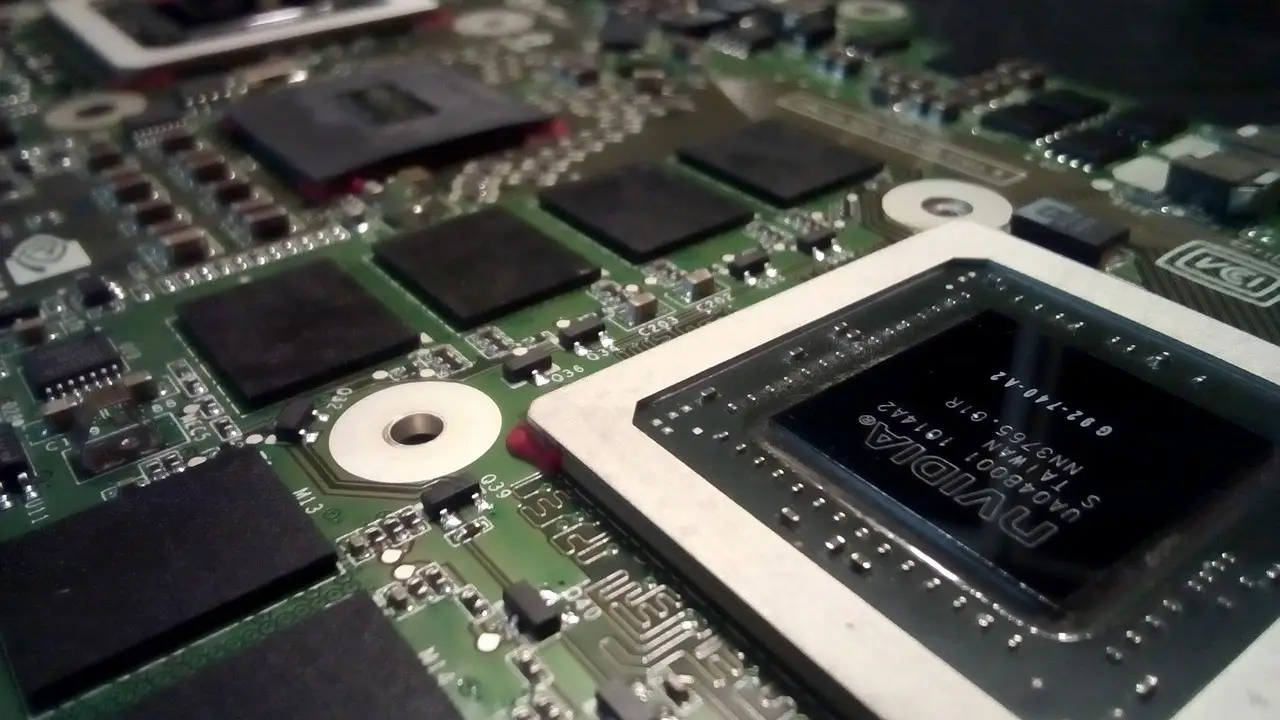
Six recent Chinese AI models from four Chinese labs show signs consistent with Nvidia’s export-banned Blackwell chips, according to an independent analysis released November 12. The finding remains preliminary because the report has not undergone peer review.
What did the analysis find?
The models come from DeepSeek, Moonshot AI, the maker of the Kimi models, MiniMax and Ant Group. Will DePue, an independent researcher who worked at OpenAI until earlier this year, says their starting-value fingerprints most strongly match Blackwell.
Earlier models from those four companies, along with newer models from Alibaba’s Qwen team, instead carry signs of Nvidia’s previous Hopper generation. Chinese companies have at times been allowed to buy certain Hopper versions.
DePue calls his technique forensic analysis. “Every single little processor has its own type, a small, different signature,” he said. By matching those signatures with barely changed model weights, he says, he could identify which chip type most likely supplied the model’s starting values.
Why did scrutiny intensify?
The report followed late-October reporting by The New York Times that U.S. intelligence officials suspected an executive at a Singapore company was spying for Beijing. The company had bought billions of dollars’ worth of Nvidia hardware.
She reportedly had a close relationship with Nvidia’s then-chief executive, Jensen Huang. Officials did not think Huang knew about the alleged spying. Huang has since acknowledged the alleged spying affair and resigned as Nvidia’s CEO.
Neither the case nor DePue’s analysis establishes how the six Chinese labs obtained Blackwell hardware. The report nevertheless landed as Washington maintained that Blackwell chips could not legally be exported to China.
That restriction rests on the theory that laboratories without the best hardware cannot build the best AI systems. Officials have accused Chinese companies of obtaining the chips anyway, though they have offered little evidence publicly. If DePue’s analysis holds up, it would show that the restriction has a side door.
How can a model expose its chip?
AI models contain weights—billions of numbers that collectively determine how a model responds to a prompt. Before a model sees training data, those weights begin as random-looking values. Training nudges them toward a final configuration that captures information and writing patterns in the data.
Rohith Kuditipudi, a recent computer science Ph.D. graduate from Stanford University, said some weights change very little throughout training. Those nearly stationary values preserve clues about how the model began.
DePue explained that a model does not need to move far through the high-dimensional space of possible values to speak English. As a result, its initialization—the starting set of numbers—remains embedded in the weights.
Those starting numbers are not truly random. Training software begins with one number, called a seed, which feeds an algorithm that produces random-looking values, one for each of the billions of weights.
For efficiency, software divides that work among a chip’s many processors. The division pattern depends on the specific chip, leaving a processor-specific mark that can survive training.
A graphics processing unit, or GPU, is the type of chip used to train and run AI models. It contains many processors that can work at once. Tor Aamodt, a computer engineering professor at the University of British Columbia who consults for Nvidia, said the hardware cannot run a million tasks simultaneously.
Here, the million tasks are random numbers, each headed for its own slot in the developing model. Aamodt framed the engineering problem as how to run those million tasks on hardware with much less capacity.
Nvidia calls its GPU processor units streaming multiprocessors, and the layouts differ by generation:
- The Hopper chips in question have 132 streaming multiprocessors.
- Blackwell chips have 148 or 152, depending on the version.
With the same seed, random values land in different slots because each chip splits the work differently. DePue sifted through about six trillion combinations of seed and chip layout.
Combinations that reproduced the barely moved weights in models he could read revealed the chip type most likely behind each starting point. The same hardware probably did the training too, though the fingerprint alone cannot prove that.
What can the fingerprint not prove?
The method cannot reveal how the four laboratories gained access to Blackwell chips. Nor can it establish where the hardware operated—in a server room in China or a rented rack abroad.
DePue stops short of claiming that his analysis proves illegal exports. By his rough estimate, building the six models required thousands of Blackwell chips.
Has the method been peer-reviewed?
Not yet. DePue self-published the research, which has not gone through peer review, the process in which outside specialists check a study’s methods and conclusions.
Kuditipudi nevertheless called the evidence convincing. “I find the evidence pretty convincing,” he said. Aamodt said the approach looked feasible at a glance but wanted more evidence and clearer technical documentation.
DePue said he withheld the findings for a while until he was almost certain of them. That confidence does not replace peer review or establish the circumstances in which the hardware was obtained.
Can developers erase the trail?
Since DePue released his report, PyTorch, a popular open-source toolkit for building and training AI models, has begun removing this kind of fingerprinting. A Meta engineer working on the program confirmed the effort.
DePue said the fingerprints are easy to erase, though he believes models’ open weights still contain more clues. He said seed tracking offers an immediate example and that more forensic analysis could reveal additional details about a model’s hardware origin.
via scientificamerican.com (Source)
More from Nathan Brooks
Show full bio
Market editor covering companies, deals and strategy in general science news at SciBeat.
563 articles
Nearby plates
- U.S. Moves to Block Remote Access to AI Chips as Nvidia Scandal Widens
- AI Checked Ethics Applications in Minutes — But Only One Model Got It Right
- OpenAI's New Safety Program Draws Fire From Researchers
- NASA Launches New Plan to Bring Mars Samples Home by 2035
- California Sues OpenAI, Claims It Lost Control of AI Agents Over 80 Times