Recorded November 19, 2026
Chemistry & MaterialsReported finding
Six Ways Rain Can Move Dust: Study Rewrites Self-Cleaning Surface Design
Six drop-particle interactions, catalogued by Edinburgh and Max Planck researchers, show that dust-surface friction can matter more than water repellency for self-cleaning solar panels.
By Priya Raman3 min read627 words
In brief
- Researchers identified six distinct ways a water drop interacts with a dust particle on a surface.
- The study appeared in the journal Science Advances.
- Friction between particle and surface can matter more for cleaning than extreme water repellency.
- The team developed a method to predict whether a drop will remove a particle under given conditions.
- Applications could include solar panels, tall building windows and historic structures.
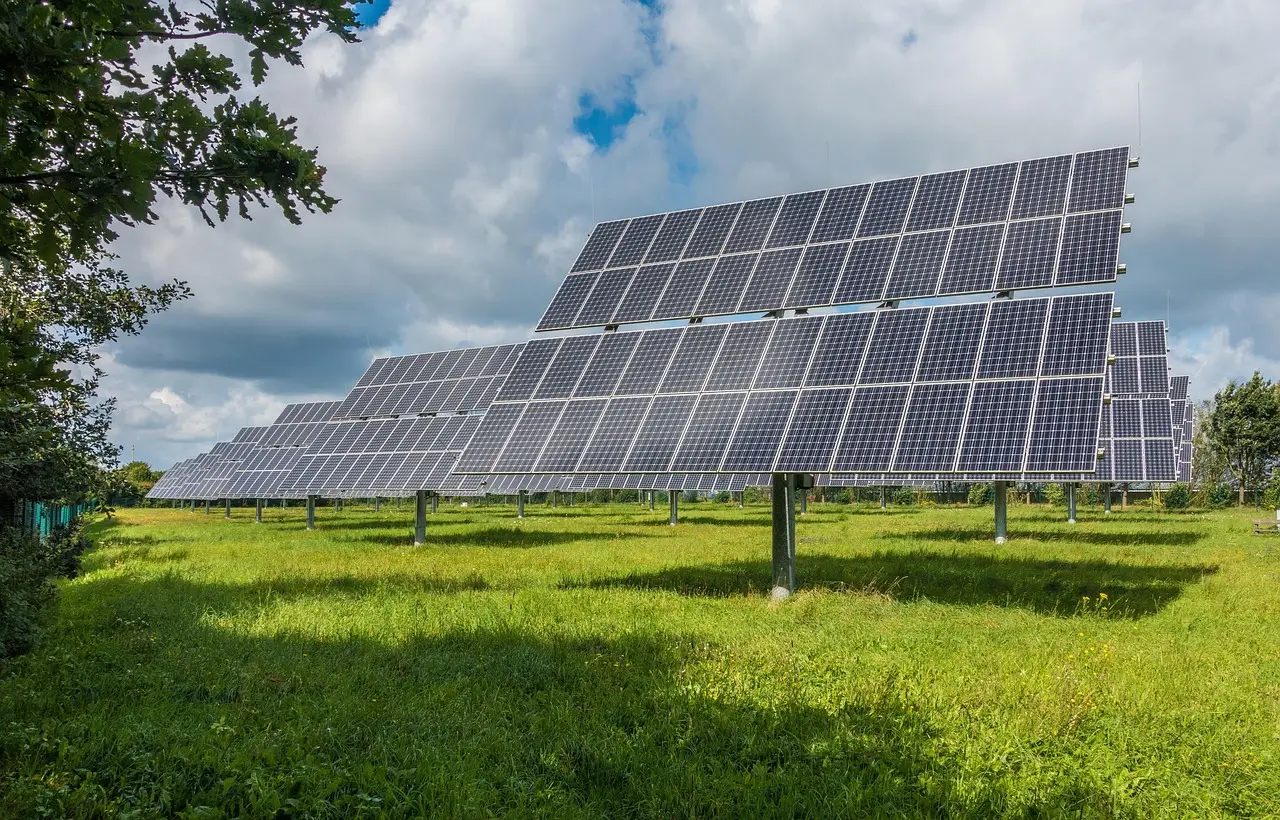
Six distinct interactions — not two or three — determine whether a falling raindrop carries dust away or leaves it stuck, according to a new study that could reshape how engineers design self-cleaning solar panels, windows and historic facades.
Researchers at the University of Edinburgh and the Max Planck Institute for Polymer Research published their findings in the journal Science Advances. They combined laboratory experiments with computer simulations to track how individual water drops behave when they meet particles resting on different surfaces. From those observations they built a predictive method: a way to calculate, under given conditions, whether a drop will remove a particle or leave it in place.
The stakes are financial as much as scientific. Dust is a costly problem for solar power. When particles settle on a panel, less sunlight reaches the cells beneath, and output falls. Cleaning large solar farms demands significant labor, water and equipment, particularly in dry regions where dust is constant. Because large installations cover extensive areas, even a small reduction in cleaning work, repeated across thousands of panels, could translate into real savings.
What did the researchers actually find?
The team catalogued six different ways a drop and a particle can interact. Some encounters lift particles off the surface entirely. Others push them along it. Still others leave them exactly where they were. The distinctions matter because a coating that looks slippery to the eye, or to a bead of water, does not necessarily clean well.
That observation overturns a common assumption in materials design: that the most water-repellent surface — the one on which water beads up most dramatically — must also be the easiest to clean. The new findings suggest otherwise. Friction between the dust particle and the surface beneath it can matter even more than how strongly the surface repels water.
If a particle slides or detaches easily, a moving drop can sweep it away without the coating being extremely water-repellent at all. That opens a path to surfaces that are simpler or more durable than existing designs, some of which achieve their repellency at the cost of fragility or complexity.
Where could this be applied?
Solar panels are the most obvious application, and the one the researchers highlight first. But the same principles extend to tall building windows and historic structures, where the challenge in every case is removing dirt without harsh chemicals or repeated intensive washing. Rain, in effect, becomes the cleaning crew.
Local weather will shape the engineering. The best coating for a dry, dusty region, where rain is rare and precious, may differ substantially from one suited to a climate with frequent heavy rainstorms. Engineers will have to weigh local conditions alongside laboratory measurements rather than rely on a single universal design.
How firm are the conclusions?
The researchers themselves frame the work as a starting point, and the limitations deserve emphasis. The study examined individual drops meeting individual particles. Real surfaces collect many particles at once, and outdoor conditions involve shifting rain, wind, temperature and dirt types — variables no laboratory simulation fully captures.
Further testing must show how candidate coatings perform over years of use, and whether their benefits justify manufacturing costs before any commercial claim is possible. A ready-made self-cleaning solar panel is not on the market as a result of this work.
What the study does offer is a practical lesson with unusual clarity: making dust less able to grip a surface may matter more than making water bead up on it. For an industry that spends heavily on water, labor and equipment to keep panels clean, that reversal of priorities is the news.
A surface designed around particle friction rather than water repellency would be, in effect, a panel that lets the weather do the washing.
via knowridge.com (Source)
More from Priya Raman
Show full bio
Senior reporter covering people, launches and day-to-day practice in general science news at SciBeat.
549 articles
Nearby plates
- Raindrops can damage paint with microscopic electrical discharges
- Bouncing Sand Grains May Be the Missing Key to Mars's Planet-Wide Dust Storms
- Microplastics make up 1 in 100 particles at four Michigan schools
- NASA dust study finds signs of ancient ice beyond Neptune
- NASA Tests Tools to Tackle Rare Supercooled Large Droplet Ice