Plate Nº 88 · recorded November 17, 2026
Chemistry & MaterialsReported finding
Straighter ion paths help a fast-charging cell keep 94% capacity
A KAIST separator with polymer molecules lined up through its thickness kept a lab cell at 94% capacity after 100 fast-charge cycles — promising, and still a lab result.
By James Calloway4 min read728 words
In brief
- A KAIST test cell retained 94% of its starting capacity after 100 charge-and-discharge cycles at a rate corresponding in theory to a full charge in about 15 minutes
- Researchers aligned polymer molecules through the thickness of a porous separator, giving lithium ions a more direct route to the electrode than with surface-aligned molecules
- The work was done at the Korea Advanced Institute of Science and Technology in South Korea and published in ACS Nano
- Dendrite branches from uneven lithium deposits can damage the separator that keeps a cell's electrodes apart, shortening life and sometimes causing internal short circuits
- Next step named by the team: consistent larger-scale production and testing in larger cells under more varied conditions
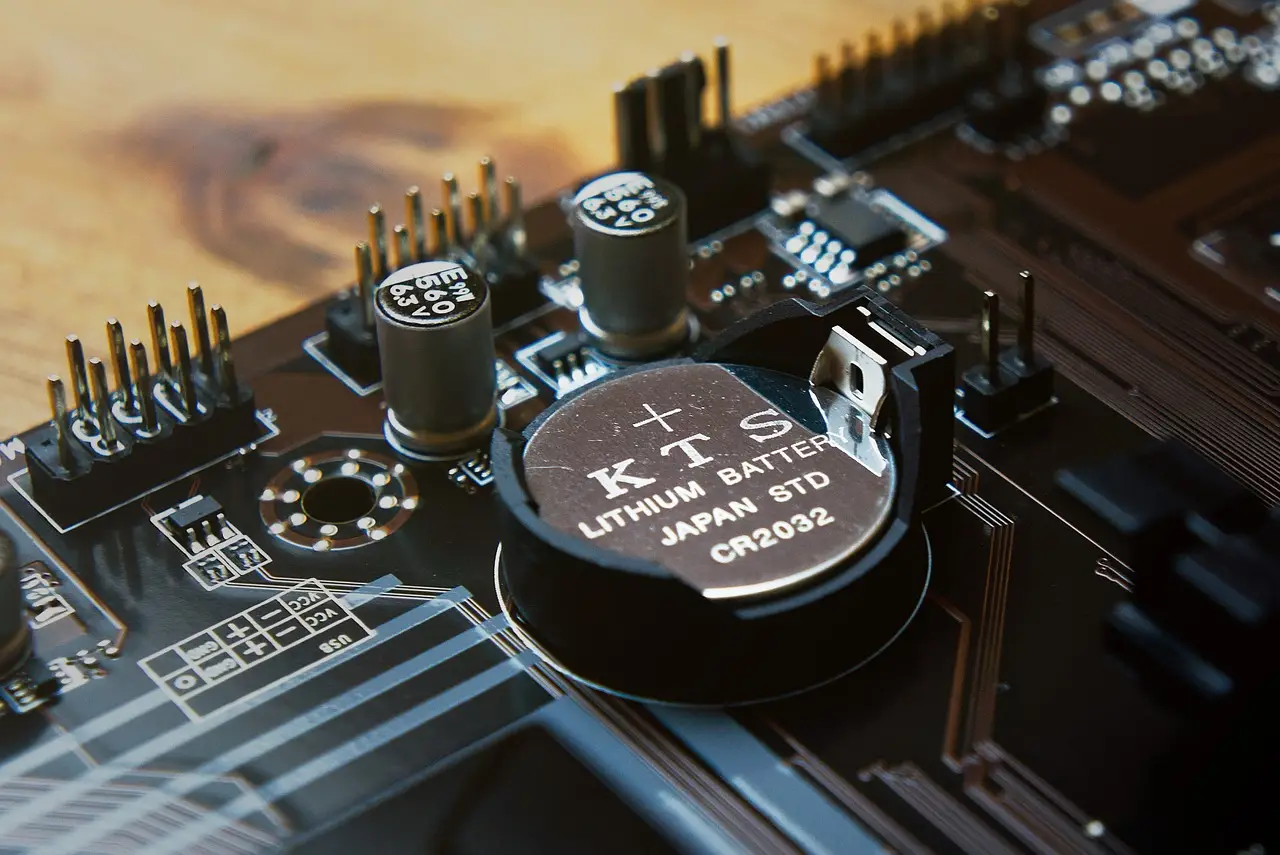
A laboratory cell built by researchers at the Korea Advanced Institute of Science and Technology (KAIST) in South Korea kept 94% of its starting capacity after 100 charge-and-discharge cycles at a fast charging rate.
The rate used in that test corresponds in theory to a full charge in about 15 minutes, calculated from the cell's rated capacity. That is the hardest number in the study, and it comes attached to a warning label: it belongs to one research cell, not to a phone or vehicle pack.
Why does fast charging shorten lithium metal batteries?
Lithium metal batteries look attractive because they could store more energy for their weight than many of the batteries used in devices today. The catch has been familiar for years: charging them quickly can encourage the lithium metal to build up in uneven deposits instead of spreading smoothly across the electrode.
Some of those deposits grow into sharp branches called dendrites. They can damage the thin barrier that keeps a battery's two electrodes apart, shortening battery life and, in some cases, contributing to an internal short circuit.
So fast charging and long life have traded off against each other, and the trade-off is where this work aims its tools.
How does a straighter path change the deposition?
The barrier in question is the separator, and it has to do two contradictory jobs. It must stop the electrodes from touching while still letting charged particles pass through.
KAIST's team asked whether that second job could be made less winding without losing the first. They used polymers whose molecules can be lined up in a chosen direction, built a porous separator from them, and added chemical chains that help lithium ions move through the layer.
The alignment mattered. When the molecules stood up through the thickness of the separator — pointing across the layer rather than lying flat along its surface — lithium ions had a more direct path toward the electrode than in a separator whose molecules lay along the surface. The team set out to make the ions arrive more evenly as well as more quickly, because even arrival is what keeps dendrites from sprouting.
The study appears in the journal ACS Nano.
What does 94% after 100 cycles actually prove?
Less than the number invites people to assume, which is why the reporting deserves care.
One research cell. One hundred cycles. One charging rate. The write-up gives no result for a comparison separator with its molecules lying along the surface, so a reader cannot judge how much of the 94% came from the alignment itself. It also names no specific polymer, reports no energy-density figure and no cost estimate, and offers no data on how the material behaves once produced in quantity.
The 94% figure also does not say what kind of loss the cell suffered. Capacity fading and dendrite damage are different problems, and the summary treats them as a single outcome.
And the gap between lab cell and product is wide. A phone or vehicle battery pack carries many more demands: temperature control, safety limits, and stable performance after hundreds or thousands of cycles. A 100-cycle single-cell test covers none of that.
What would have to happen before this reaches a phone or car?
Consistency at scale, and bigger cells. The researchers flag the next challenge themselves: making the material "consistently at a larger scale" and testing it in larger cells under more varied conditions. If the direct pathways keep working there, the approach could help make faster charging compatible with longer battery life.
That claim is conditional, and should be read that way. No timeline appears anywhere in the report. Nothing suggests when, or whether, a commercial cell with an aligned separator will show up in a device.
What does this change for battery buyers?
For now, very little you can hold in your hand. What it changes is a design strategy. Instead of trying to move ions faster through every part of a battery, engineers can examine how the route through one thin layer affects the way lithium deposits on the electrode — a more tractable lever than rebuilding an entire cell.
The skeptic's version: a promising materials trick, measured on a single laboratory cell over 100 cycles, with the real test — scale, larger cells, varied conditions — still ahead of it.
via knowridge.com (Source)
More from James Calloway
Show full bio
Staff writer covering regulation, policy and their impact on general science news at SciBeat.
473 articles
Nearby plates
- Cobalt-Free Battery Design Survives 350 Cycles and Minus-20 Cold
- Four Electrons Instead of Two: UCL Chemistry Boosts Water Battery Hopes
- Evidence Links Chlorine to Charging in a Solid-State Cathode
- Neutrons Expose Ion Traffic Jams Inside Solid-State Battery Materials
- Harvard Team Hits 91% Yield With Battery Molecules in Clean Chemistry