Recorded November 23, 2026
Earth & ClimateReported finding
Study links distant earthquakes to lingering fault weakening
A 2026 HKU study says seismic waves can build pore pressure in fault gouge, weakening faults long after waves pass and reframing triggering thousands of kilometers away.
By James Calloway4 min read727 words
In brief
- A 2026 Science Advances study led by HKU Professor Jun Yang modeled remote triggering in fault gouge.
- Large earthquakes can trigger seismic activity thousands of kilometers away through remote, or dynamic, triggering.
- Simulations produced progressive pore-pressure buildup despite tiny wave-induced stress amplitudes.
- Compressional wave components drove pore-pressure buildup more efficiently than shear components.
- Remote triggering correlates more strongly with Rayleigh waves than Love waves, despite Love waves’ larger theoretical shear stresses.
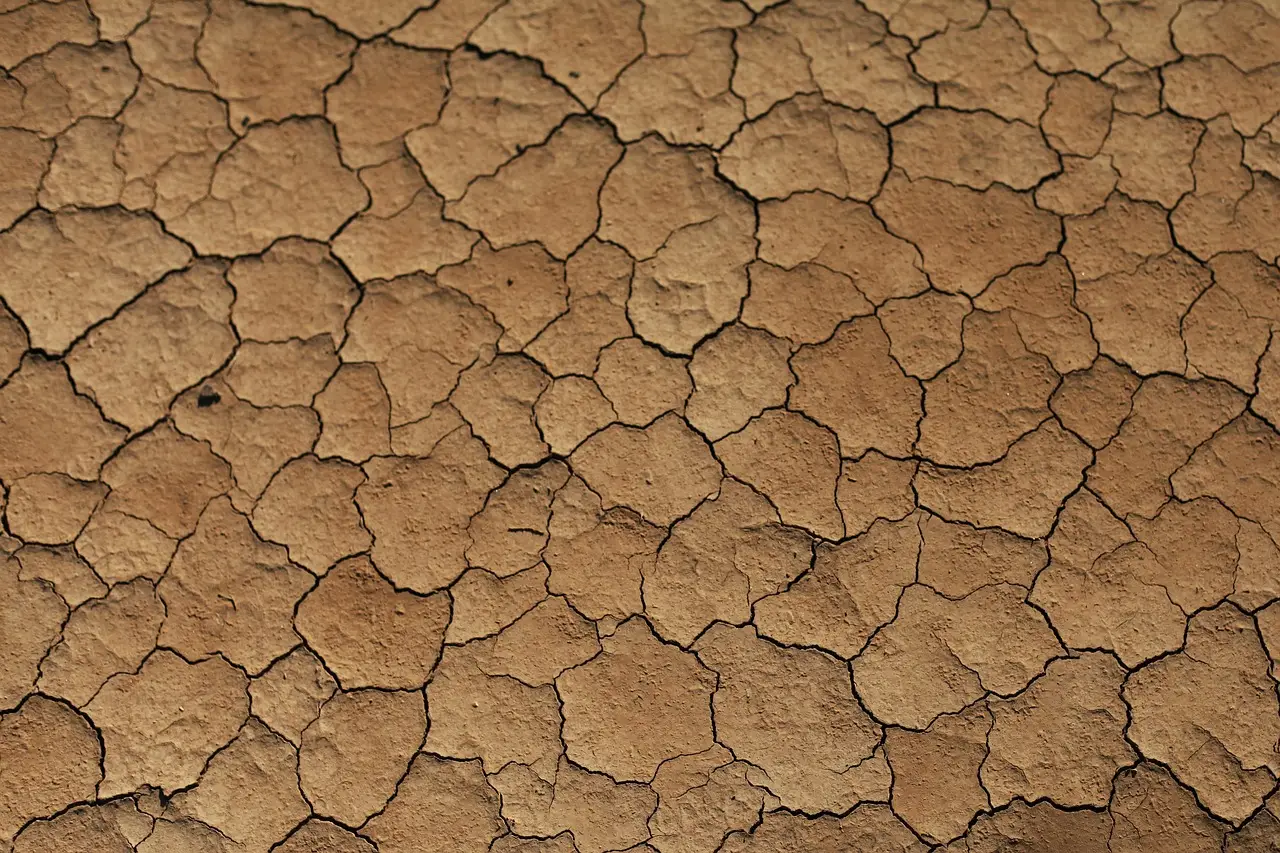
A 2026 Science Advances study reports simulations in which seismic waves progressively raised pore pressure and weakened a fault, offering a unified explanation for earthquakes triggered thousands of kilometers from a mainshock.
Led by Professor Jun Yang and his team at the Department of Civil Engineering, Faculty of Engineering, The University of Hong Kong, the study proposes that dynamic pore-pressure evolution inside fault gouge can explain two long-standing puzzles at once.
Yang explained the study’s broader reach: “The core significance of this work extends beyond proposing a novel remote triggering mechanism. It transforms the remote-triggering problem from a classical stress-amplitude question into a coupled problem involving material rheology, fluid dynamics and wave propagation.”
Rheology, in plain terms, describes how a material deforms or flows. Here, fluid dynamics concerns moving pore fluid inside the gouge, while wave propagation describes the travel of seismic energy.
For decades, seismologists have observed that seismic waves from large earthquakes can trigger seismic activity at distances of thousands of kilometers, a process called remote, or dynamic, triggering.
Two puzzles remained. Why did some triggered events occur long after the waves had passed? Why did Rayleigh waves appear more effective than Love waves, even though Rayleigh waves carry lower shear stresses?
What changed in the triggering explanation?
Under the traditional Coulomb failure view, wave-imposed stresses must be large enough to push a nearly failed fault into rupture. The new results suggest that seismic waves need not deliver that direct shear stress. Instead, they elevate pore pressure, indirectly lowering the fault’s strength.
Fault gouge is a porous, granular material lining fault surfaces; pore pressure is the fluid pressure in the spaces between its grains. The research treats this narrow critical zone next to the fault as far more mechanically complicated than damaged rock.
To represent its essential behavior, the team used a novel framework built on a bounding surface model rooted in critical-state soil mechanics.
The simulations followed stress and pore-pressure responses in a gouge-bearing fault subjected to wave perturbations. Although the wave-induced stresses had tiny amplitudes, pore pressure accumulated progressively inside the gouge. That buildup substantially reduced effective normal stress, meaning the contact stress carried by the gouge after accounting for fluid pressure.
The more the pressure rose, the more the fault weakened. This is the mechanism’s critical departure from a stress-amplitude-only account of rupture: small waves can prepare a fault for failure without directly shearing it across the failure threshold.
After the waves cease, the simulated pore pressure did not recover instantly. The fault therefore remained weakened for an extended period. That persistence offers a physical explanation for delayed triggering: the first shock may leave behind a fault that remains vulnerable to subsequent failure.
Why do Rayleigh waves appear more effective?
The simulations also found that the compressional, or dilatational, component of the waves drove pore-pressure buildup far more efficiently than the shear component. That result may resolve a long-standing observational paradox. Remote triggering correlates more strongly with Rayleigh waves than with Love waves, although Love waves impose larger theoretical shear stresses.
What does this change for earthquake hazard?
It changes the kind of physics a triggering model needs to contain. A model built only around the stress amplitude of a wave could miss pressure buildup, the special role of compressional motion and the fault’s lingering weakness. The study instead points toward calculations that couple material behavior, fluid movement and wave travel.
For people seeking a usable warning, the answer is less dramatic: this is not an early-warning tool. The reported result gives no numerical warning threshold, no time window for delayed rupture and no demonstrated forecast of a particular distant event. It is a mechanically explicit explanation, not a prediction system.
The immediate limitation is equally important. The evidence reported here comes from simulations of a gouge-bearing fault, not from direct measurement of a documented delayed earthquake. The proposed mechanism still needs testing against field observations before it should displace other explanations or support forecasting in practice.
The publication is “What triggers seismicity thousands of kilometers away from a mainshock?” by Chao Huang et al. It appeared in Science Advances in 2026 with the DOI 10.1126/sciadv.aec4754. The work gives remote triggering a plausible new direction, but not the final word.
via phys.org/rss-feed/ (Source)
More from James Calloway
Show full bio
Staff writer covering regulation, policy and their impact on general science news at SciBeat.
584 articles
Nearby plates
- Climate change can trigger earthquakes, scientists warn — and cities like LA are exposed
- 362 Hidden Earthquakes Detected Under Antarctica's Doomsday Glacier
- Lab Tests Overestimate Volcanic Tsunamis, Stromboli Study Finds
- Southern California Faults Hit 1,000-Year Stress High, Study Finds
- Two West Coast Faults May Rupture Hours Apart, Study Finds