Plate Nº 29 · recorded October 10, 2026
Earth & ClimateReported finding
362 Hidden Earthquakes Detected Under Antarctica's Doomsday Glacier
Researchers identified 362 glacial seismic events in Antarctica between 2010 and 2023, including 245 near Thwaites, the so-called Doomsday Glacier that could raise seas by 3 metres.
By Nathan Brooks3 min read570 words
In brief
- Researchers identified 362 previously overlooked seismic events in Antarctica between 2010 and 2023, including 245 clustered near the marine edge of Thwaites Glacier.
- The most prolific stretch of glacial earthquakes ran from 2018 to 2020, coinciding with a satellite-confirmed acceleration of Thwaites's ice tongue toward the sea.
- Complete collapse of Thwaites Glacier could raise global sea levels by about 3 metres.
- A second cluster near Pine Island Glacier sat 60 to 80 kilometres from the waterfront and does not match the iceberg-capsizing signature.
- The study appeared in Geophysical Research Letters and was authored by Thanh-Son Pham of the Australian National University.
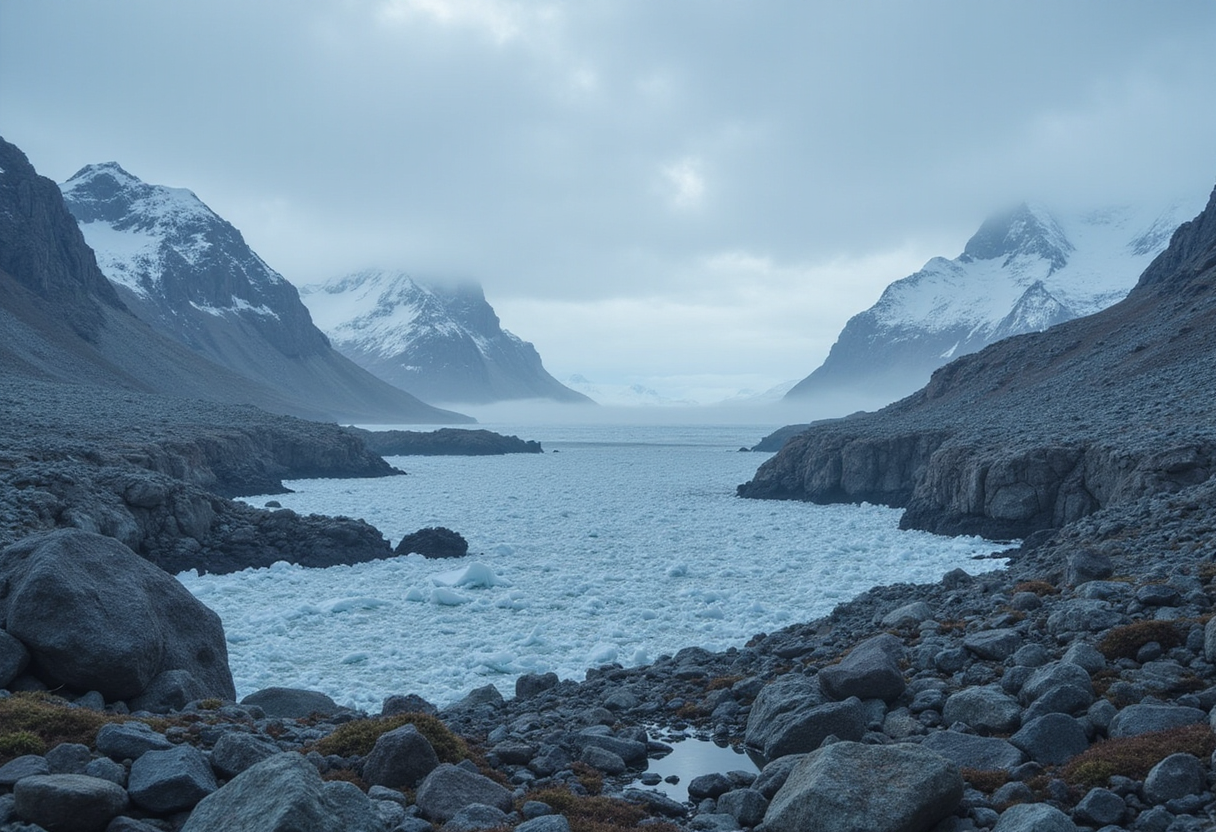
Scientists have identified 362 previously overlooked seismic events beneath Antarctica, including 245 clustered near the marine edge of the Thwaites Glacier, the ice mass sometimes called the Doomsday Glacier.
Thanh-Son Pham, an ARC DECRA Fellow in Geophysics at the Australian National University, made the detection using seismic stations deployed on the Antarctic continent rather than distant global networks. Most of the events appear in no earthquake catalogue yet. Pham published the analysis in Geophysical Research Letters, drawing on data from 2010 to 2023.
What kind of quakes occur under glaciers?
The events look like glacial earthquakes, a distinct class of tremor that scientists first identified in Greenland more than 20 years ago. A glacial earthquake forms when tall, thin icebergs break from the front of a glacier, capsize in the ocean, and slam back into the parent ice. The collision sends seismic waves thousands of kilometres away. Because these waves lack the high-frequency component that seismologists rely on to pinpoint earthquakes, volcanoes, and nuclear explosions, the events remained hidden until recently.
Why are these new findings significant?
Before this study, direct evidence of glacial earthquakes from capsizing Antarctic icebergs was elusive. Researchers assumed the global seismic network would catch such events, as it does in Greenland. Greenland's largest glacial quakes rival the magnitude of North Korea's recent nuclear tests. Antarctic ones appear smaller, which is why researchers needed Antarctic seismic stations, rather than the global array, to spot them.
"The events I detected were in two clusters, near Thwaites and Pine Island glaciers," Pham wrote. "These glaciers have been the largest sources of sea-level rise from Antarctica."
What does the surge at Thwaites reveal?
About 245 of the 362 events sat near the seaward end of Thwaites. The timing carries a sharp signal: the most prolific stretch ran from 2018 to 2020. That window matches an independently confirmed period when Thwaites's floating ice tongue accelerated toward the sea, observed by satellites.
"The most prolific period of glacial earthquakes at Thwaites, between 2018 and 2020, coincides with a period of accelerated flow of the glacier's ice tongue towards the sea," Pham noted. The acceleration does not appear to track seasonal air warming. Pham suggests ocean conditions, whose precise role remains poorly understood, may have driven both the faster flow and the surge in iceberg calving.
If Thwaites collapsed completely, it would lift global sea levels by about 3 metres. The new record hints that short-term changes in ocean state can affect the stability of marine-terminating glaciers on timescales that matter for sea-level projections.
What about the second cluster near Pine Island?
Detections there consistently appeared 60 to 80 kilometres from the waterfront. That distance rules out capsizing icebergs as the cause. Pham calls the Pine Island events "puzzling" and flags them as a priority for follow-up research.
What comes next?
Pham argues the catalogue can sharpen estimates of how quickly Thwaites might destabilise. "The detection of glacial earthquakes associated with iceberg calving at Thwaites Glacier could help answer several important research questions," he wrote, including the "fundamental question about the potential instability of the Thwaites Glacier due to the interaction of the ocean, ice and solid ground near where it meets the sea."
Better resolution of that interaction could narrow the wide uncertainty in projected sea-level rise over the coming centuries, a question with stakes for coastal communities worldwide.
via doi.org (Original)
More from Nathan Brooks
Nearby plates
- Two West Coast Faults May Rupture Hours Apart, Study Finds
- Slow waves deep inside Earth helped Antarctica freeze first
- 76 km² Ice Island Breaks Off Greenland's Petermann Glacier
- Antarctica Gained 695 Billion Tons of Ice. The Trigger Was Thousands of Miles Away
- 3.1-Billion-Year-Old Rocks Show Water Fueled Early Volcanoes