Recorded November 20, 2026
Earth & ClimateReported finding
Climate change can trigger earthquakes, scientists warn — and cities like LA are exposed
A 2025 Swiss study links Alpine meltwater to tremors near Mont Blanc. From Tokyo typhoons to California's atmospheric rivers, a heating climate may nudge 'locked' faults toward rupture sooner.
By Nathan Brooks4 min read899 words
In brief
- A Swiss Seismological Service study published in summer 2025 tied tremors beneath Mont Blanc to meltwater from a 2015 heatwave lubricating a fault zone.
- Taiwan quakes of magnitude 6 or higher are five times more likely within four years of a major storm, the data shows.
- The USGS puts the odds of a damaging magnitude 6.7 Bay Area quake within 30 years above 70 per cent; a magnitude 7.5 on the San Andreas is over 1 in 3.
- Greenland has lost 6 trillion tonnes of ice since the early 1990s; around 11,000 years ago, similar ice loss triggered a quake up to magnitude 8.3.
- Climate change can't create new earthquakes — it can only hasten ones already due to happen, scientists say.
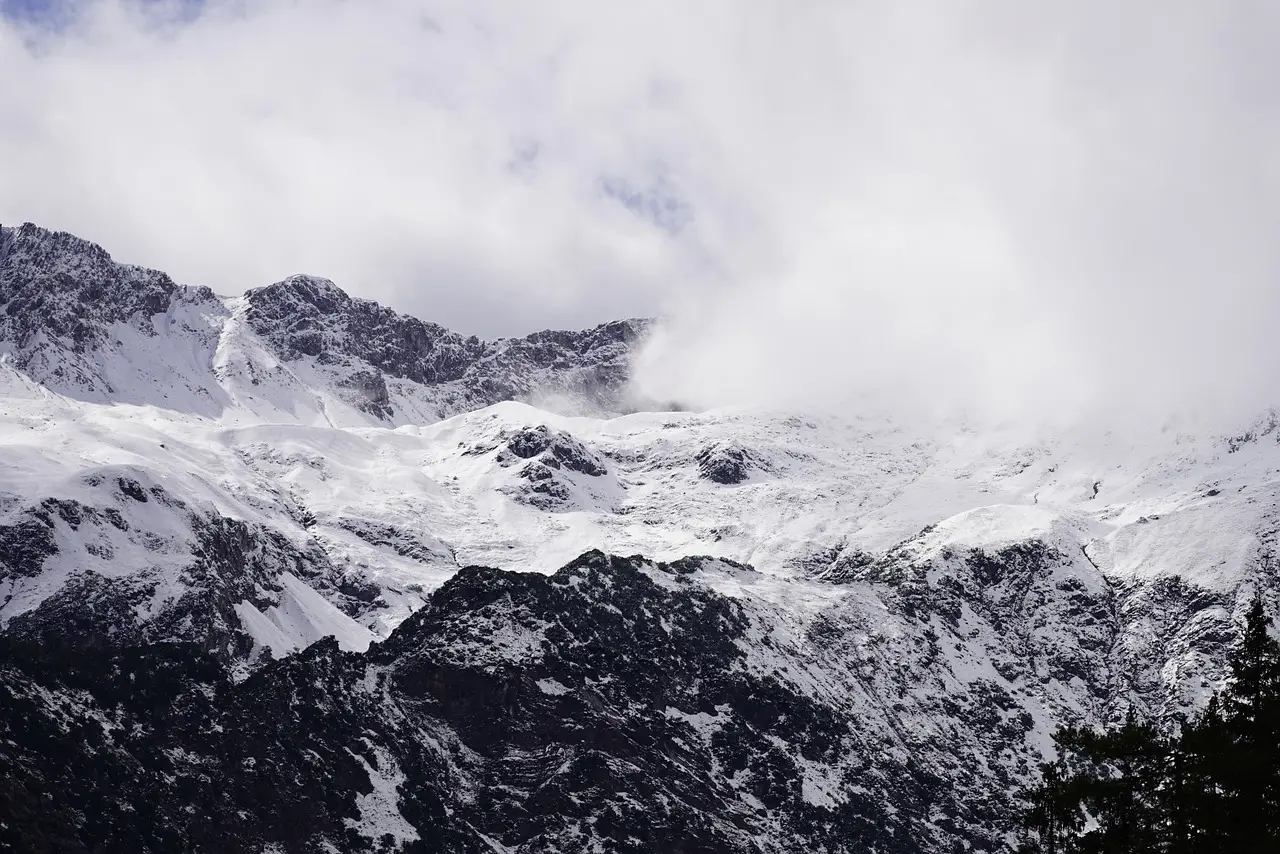
Earthquakes already shake California roughly 10,000 times a year — about one an hour — and new research suggests climate change could nudge some of them into happening sooner.
The evidence comes from the Swiss Seismological Service, whose study published in summer 2025 linked swarms of small tremors beneath Mont Blanc in the European Alps to rapid thawing during a 2015 heatwave. Meltwater percolated down into a major fault zone that slices through the 12km Mont Blanc Road Tunnel, lubricating the fault and triggering low-level seismic activity.
Tremor rates have stayed elevated since, which the researchers say substantially raises the risk of bigger quakes in the future.
How can the climate shake the ground?
The idea that the atmosphere affects the solid Earth sounds far-fetched, but decades of research show the climate can drive earthquakes, tsunamis and volcanic eruptions. Water is the main messenger: extra rain or meltwater seeps into cracked fault zones and reduces the friction holding them together.
As global heating drives longer, more intense heatwaves, meltwater from glaciers and thawing permafrost is expected to increase seismic activity in high mountain ranges worldwide, plus the great permafrost tracts of Canada and Siberia.
The stakes are highest for major cities sitting on faults with a history of big quakes — Tokyo, San Francisco and Los Angeles. None are mountainous, so meltwater isn't the issue. Other pathways exist.
What's the risk to Tokyo and California?
Tokyo faces typhoons that climate change is making slower and wetter, dumping more rain that can percolate into active fault zones. The chance of a serious earthquake hitting the Japanese capital in the next 30 years is estimated as high as 70 per cent, so anything that adds to that probability matters.
California's numbers are similar. The US Geological Survey puts the odds of a damaging magnitude 6.7 quake in the San Francisco Bay Area within 30 years at more than 70 per cent. Southern California has the highest earthquake risk in the US, with more than 300 faults capable of serious quakes.
The San Andreas Fault itself carries an estimated greater-than-1-in-3 chance of a magnitude 7.5 quake in the next three decades. Such an event is predicted to kill around 2,000 people and cause $200 billion in damage — roughly the annual economic output of a mid-sized US state.
In February 2024, an atmospheric river — a 'river in the sky' carrying water vapour at up to 15 times the flow of the Mississippi's mouth — brought 48 hours of continuous rain to Southern California. It triggered landslides, cut power to nearly a million people and flooded Los Angeles. Early 2025 brought another barrage, with flooding and loss of life.
Is there proof that storms trigger quakes?
The strongest evidence comes from Taiwan. In September 1999, the magnitude 7.6 Chi-Chi quake destroyed more than 50,000 buildings and killed almost 2,500 people — just three years after Super Typhoon Herb dropped a couple of metres of rain on the region.
That alone could be coincidence. But at least four other big Taiwan quakes in the past half-century followed especially wet storms, and magnitude-6-plus earthquakes there are five times more likely to strike within four years of a major storm than otherwise.
The years-long lag means quick water lubrication can't be the whole story. One proposal: torrential rain triggers thousands of landslides, and erosion removes the debris, reducing the weight bearing down on faults so they slip more easily. The unloaded weight is tiny — but on a fault that's nearly ready, tiny is enough.
Haiti shows a similar pattern. The devastating 2010 earthquake, which killed at least 160,000 people, followed four very wet hurricanes a couple of years earlier.
Does this mean more earthquakes overall?
No — and that's an important limit. Climate change doesn't create extra earthquakes; it can only bring forward events that were going to happen anyway. Scientists expect no detectable increase in quake numbers above the normal background.
There's also an attribution problem: when the next big one hits the Bay Area or LA, we'll likely never know whether rainwater, landslide unloading or pure geology set the timing.
The clearest climate-seismic link is where ice is vanishing wholesale. Alaska has seen increased seismic activity after losing, in places, a vertical kilometre of ice over the past century. Greenland is the bigger worry: its 3km-thick ice sheet holds enough water to raise global sea levels by 7 metres, and since the early 1990s it has lost 6 trillion tonnes of ice — meltwater that would cover the entire US to a depth of half a metre.
Greenland's faults have been quietly accumulating strain for thousands of years. Just under 11,000 years ago, ice loss at the end of the last ice age triggered a quake as large as magnitude 8.3 off the island's southern tip, and simulations suggest the resulting tsunami drove 7-metre waves into Canada and the UK. A little over 8,000 years ago in Norway, an earthquake linked to melting Scandinavian ice set off a submarine landslide and a North Atlantic tsunami with waves over 20 metres high.
The bottom line: climate breakdown reaches the ground beneath our feet. It won't add earthquakes — but it can move up the clock.
via sciencefocus.com (Source)
More from Nathan Brooks
Show full bio
Market editor covering companies, deals and strategy in general science news at SciBeat.
580 articles
Nearby plates
- Cascadia megaquake could shake northern Oregon 17% harder than expected
- 362 Hidden Earthquakes Detected Under Antarctica's Doomsday Glacier
- Southern California Faults Hit 1,000-Year Stress High, Study Finds
- Study links distant earthquakes to lingering fault weakening
- Two West Coast Faults May Rupture Hours Apart, Study Finds