Plate Nº 20 · recorded November 14, 2026
Space & AstronomyReported finding
Supernova SN 2026ahvu Brightens Near NGC 1433: Why Astronomers Are Racing
Discovered Nov. 2, 2026, SN 2026ahvu sits 50 million light-years away and should peak at magnitude 10.5–12.1 by Nov. 18–23. Amateur telescopes can already spot it.
By Nathan Brooks3 min read670 words
In brief
- ATLAS discovered SN 2026ahvu on Nov. 2, 2026 at magnitude 17; it reached 13.5 within days
- Expected peak brightness of magnitude 10.5–12.1 between Nov. 18 and 23, 2026
- It lies in NGC 1433, about 50 million light-years away in the constellation Horologium
- One of the nearest Type Ia supernovae observed since SN 2011fe in the Pinwheel Galaxy in 2011
- Visible now in small to moderately sized amateur telescopes from southern locations
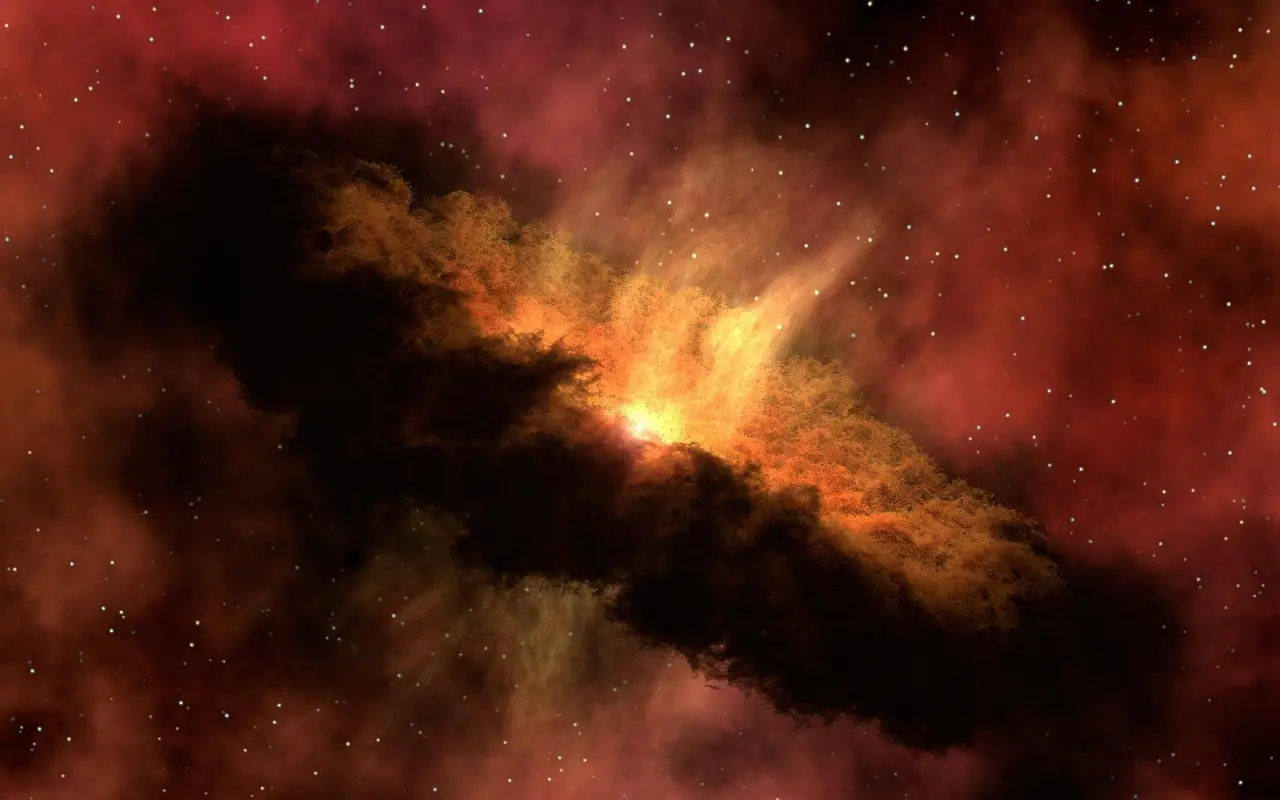
A stellar explosion discovered on Nov. 2, 2026 at magnitude 17 has already brightened to magnitude 13.5 — and it's expected to peak at 10.5–12.1 between Nov. 18 and 23. Astronomers say SN 2026ahvu is one of the nearest Type Ia supernovae observed since SN 2011fe lit up the Pinwheel Galaxy in 2011.
The supernova sits in NGC 1433, a barred spiral galaxy about 50 million light-years away in the southern constellation Horologium, the Pendulum Clock. New images from the Dark Energy Camera (DECam) and the Gemini South telescope capture the blast just right of and slightly below the galaxy's center, changing in appearance from night to night.
The Asteroid Terrestrial-impact Last Alert System (ATLAS) found the object first, tagging it AT 2026ahvu. Spectroscopy — splitting the light to read its chemical fingerprint — then confirmed it as a young Type Ia supernova, earning the final designation SN 2026ahvu.
What is a Type Ia supernova?
It's the thermonuclear destruction of a white dwarf: the dense leftover core of a star like our sun. In this case, the dwarf had been pulling matter off a close companion star until it could no longer hold itself together.
These explosions matter far beyond the spectacle. Astronomers use Type Ia supernovae as standard distance markers to measure the expanding universe. Yet basic questions remain open — what stellar systems produce them, and how exactly do they ignite? Catching one before peak brightness is rare, and that's the whole point here.
Because the explosion was found early and sits relatively close by, researchers get a valuable window onto evidence that quickly vanishes as the debris cloud expands. Early observations can distinguish between competing explosion scenarios and hunt for signs of the dwarf interacting with its companion star or surrounding material.
Which telescopes are watching?
DECam rides on the NSF's Víctor M. Blanco 4-meter Telescope at Cerro Tololo Inter-American Observatory (CTIO) in Chile, a program of NSF NOIRLab. Gemini South is one half of the International Gemini Observatory, an NSF-led partnership with Canada, Chile, Brazil, Argentina and the Republic of Korea, also operated by NOIRLab.
The pairing is powerful for a practical reason: DECam imaged NGC 1433 before the explosion during the Dark Energy Survey, a Fermilab-led project that ran from 2013 to 2019 to probe dark energy. That gives astronomers before-and-after views of the supernova's environment, while Gemini's sharper imaging adds a deeper look at the system itself.
NOIRLab is also coordinating follow-up with the SOAR Telescope on Cerro Pachón in Chile. The division of labor:
- Repeated imaging tracks how brightness and color evolve over time
- Spectroscopy reveals what the expanding material is made of and how fast it's moving
- Following the blast from first days through peak and into its long fade tells researchers about the system before it blew and the mechanism of the explosion
NOIRLab has invited other observatories, on the ground and in space, to contribute complementary observations. Coordinated coverage across wavelengths and time zones, the lab notes, can catch changes any single facility might miss.
Can you see it yourself?
Yes. At its current brightness, SN 2026ahvu is already within reach of small to moderately sized amateur telescopes under favorable conditions — especially from southern locations, where NGC 1433 rides high in the sky. To the eye it's a faint point of light, but it's a live view of a star detonating in another galaxy.
That's a brightening point of roughly 3 to 6 magnitudes between discovery and expected peak — on the astronomical magnitude scale, each step roughly multiplies brightness by 2.5, so the star is on track to shine dozens of times brighter than when ATLAS first flagged it.
Over the coming weeks, professional and amateur observations together will trace the supernova's evolution. The payoff, researchers hope, is a sharper understanding of stellar explosions and a better calibration of the cosmic yardsticks we use to measure the universe.
via phys.org/rss-feed/ (Source)
More from Nathan Brooks
Show full bio
Market editor covering companies, deals and strategy in general science news at SciBeat.
365 articles
Nearby plates
- Black Hole Caught Faking 27 Supernovas in a Nearby Galaxy
- Chandra Catches Hidden Black Hole Fueling 'Supernova Impostor'
- 1,700 Supernovae Reanalyzed: Is Cosmic Acceleration an Illusion?
- First Clean X-Ray Map Reveals Supernova Remnant Near Milky Way's Black Hole
- A Giant Star Flares Every 113 Days. Chandra May Have Found Why