Plate Nº 89 · recorded October 10, 2026
Neuroscience & MindReported finding
The Brain Might Not Create Consciousness After All, Scientists Suggest
A provocative scientific claim argues the brain may relate to consciousness as a filter rather than a factory — but the evidence remains preliminary and contested.
By James Calloway3 min read524 words
In brief
- New scientific discussion reported by ScienceDaily suggests the brain might not create consciousness.
- The claim challenges the standard 'production' model, in which neurons generate subjective experience.
- The alternative 'receiver or filter' view remains preliminary and lacks decisive experimental evidence.
- The hard problem of consciousness — why experience exists at all — still has no consensus answer.
- Mainstream neuroscience continues to rely on robust correlations between brain states and experience.
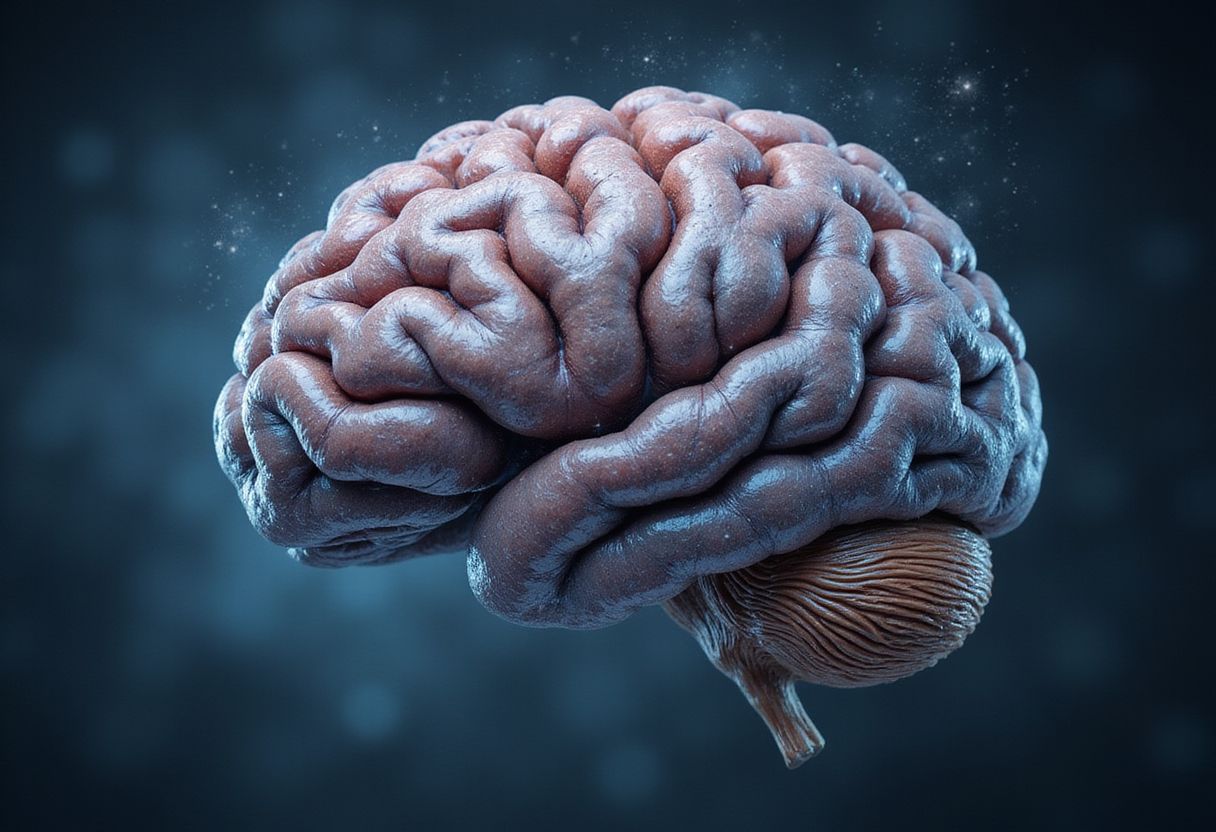
The brain might not create consciousness after all. That striking suggestion is the headline finding behind new scientific discussion reported by ScienceDaily, and it pushes against one of the most basic assumptions in modern neuroscience: that the roughly 1.4-kilogram organ inside our skulls manufactures our subjective experience.
The claim deserves careful handling. It does not come with a single experiment that settles the question. Instead, it reflects ongoing debate among researchers about whether the standard picture — consciousness as a product of brain activity — is the only explanation consistent with the evidence.
What is the standard view?
Most neuroscientists work from a materialist starting point. In this framework, conscious experience emerges from physical processes: neurons fire, networks synchronize, and somewhere in that machinery, subjective awareness appears. The idea is often called the "production" model — the brain produces consciousness the way a factory produces goods.
That model has real strengths. Changes to the brain reliably change experience. Damage certain regions and specific aspects of awareness disappear. Anesthetics that dampen neural activity switch consciousness off. Correlations between brain states and reported experience are among the most robust findings in biology of the mind.
Why might that picture be incomplete?
Correlation, critics of the production model point out, is not the same as creation. The brain could be related to consciousness in a different way — perhaps more like a receiver or filter than a generator. On that view, neural activity would shape and constrain conscious experience without producing it from scratch.
This is an old philosophical position, but it keeps resurfacing in serious scientific discussions because the hard problem of consciousness — explaining why physical processes feel like anything at all — remains unsolved. No current theory can specify which physical arrangements generate experience, or why.
How strong is the evidence?
Honest answer: preliminary and contested. Claims that the brain does not create consciousness rest on interpretation rather than decisive data. The alternative frameworks have not produced testable predictions that clearly outperform mainstream neuroscience, and most researchers in the field remain skeptical.
The limitations are significant:
- No experiment has directly shown that consciousness exists independently of the brain.
- Alternative models are difficult to falsify with current methods.
- The reported discussion is a proposal and argument, not a confirmed result.
- Mainstream neuroscience continues to accumulate detailed brain-mind correlations.
What should readers take away?
Treat the headline as an invitation to think, not a settled verdict. The claim that the brain might not create consciousness challenges assumptions worth examining, but it does not overturn decades of neuroscience. The evidence linking brain states to experience remains strong, whatever the ultimate explanation turns out to be.
What the story does highlight is genuine scientific humility. Despite remarkable progress in mapping neural circuits, humanity still lacks a widely accepted explanation of how — or even whether — the brain generates subjective experience. Debates like this one are how science stress-tests its foundations.
Expect this question to stay open. Consciousness research is one of the few scientific fields where the most basic question — what produces experience? — has no consensus answer, and provocative claims like this one will keep forcing researchers to sharpen their arguments.
via Google News: Neuroscience (Source)
More from James Calloway
Show full bio
Staff writer covering marketplaces and e-commerce at SciBeat.
205 articles
Nearby plates
- Brain 'Prediction' Signals Are Clocks, Not Anticipation, Mouse Study Finds
- REM Sleep Paradox: Brain's Energy Drops Despite Higher Fuel Supply
- No 'Lizard Brain': Evolution Trades Brain Wiring Styles, Study Finds
- Scientists Create Mice with Part-Human Brains
- Distant Brain Synapses Build Their Own Proteins, Study Finds