Recorded November 20, 2026
Chemistry & MaterialsReported finding
Trace iron helps alkaline electrolyzers until dendrites form
Argonne's 1,000-hour test-cell study traces trace iron in alkaline electrolyzers: it boosts electrodes at first, then grows into dendrites that creep toward the separator.
By Nathan Brooks4 min read824 words
In brief
- Argonne researchers tracked iron through alkaline electrolysis test cells for up to 1,000 hours; the paper appeared in Joule in 2026 (DOI 10.1016/j.joule.2026.102639).
- Iron impurities at just a few parts per million improved nickel-based electrode performance but also formed iron-rich dendrites on the cathode.
- Even after 1,000 hours, dendrite intrusion into the separator remained near the surface, with no evidence of dendrites spreading across it.
- Five factors govern dendrite growth: iron accumulation, electrolyte flow rate, electrode surface smoothness, cathode electric potential and electrode atomic structure.
- The collaborative project involved Argonne, other national laboratories, universities and industry, with TotalEnergies SE named as a partner.
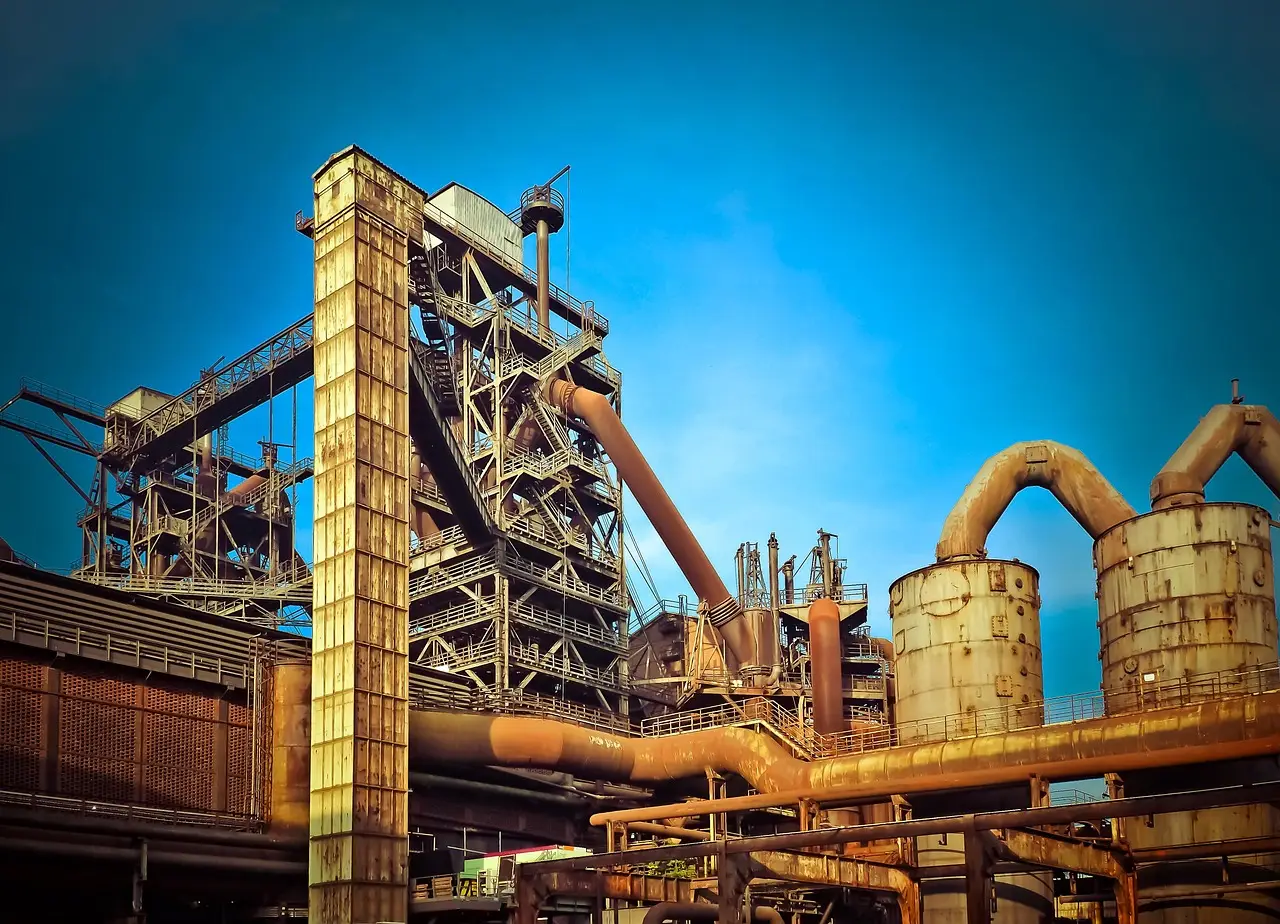
A 1,000-hour test-cell experiment at Argonne National Laboratory found that trace iron in alkaline water electrolyzers improves electrode performance at first, then slowly grows into treelike metallic deposits that begin pushing into the device's separator.
The study, published in the journal Joule in 2026, gives engineers a first systematic map of when iron in the electrolyte stays helpful and when it turns into a durability problem. "Finding ways to make hydrogen more cheaply, and therefore more widely available, is still a bottleneck," said Pietro Papa Lopes, an electrochemist at the U.S. Department of Energy's Argonne National Laboratory and a Consortium for Advanced Science and Engineering senior scientist at the University of Chicago.
How does splitting water feed the food supply?
Scientists first used electricity to split water into hydrogen and oxygen gases in 1800. Today that process, called water electrolysis, produces much of the hydrogen used in industry, including the ammonia that goes into agricultural fertilizers sustaining global food production.
One long-established method is alkaline water electrolysis. Inside a working electrolyzer, much like a battery, an electrolyte sits between a cathode and an anode, and a separator material keeps the two electrodes physically apart. The electrolyte is potassium hydroxide dissolved in water, which makes the solution alkaline, while the cathode and anode are made from different nickel-based materials. When current flows through the system, hydrogen and oxygen gases emerge in separate streams.
Iron reaches that electrolyte in two ways: as trace contamination in commercially available potassium hydroxide, and as corrosion products from steel components inside an industrial plant. Earlier studies indicated that this iron can improve how nickel-based electrodes perform during operation, but it can also migrate out of the solution and form metallic deposits on electrode surfaces, where those deposits then interact with the separator. Until now, the conditions governing that transition stayed poorly understood.
"Even tiny amounts of impurities in the electrolyte can have a surprisingly large effect on how well alkaline water electrolyzers perform and how long they last," said Meital Shviro, a former staff scientist at DOE's National Laboratory of the Rockies who has since moved to the Institute of Energy Technologies, Jülich Research Center, in Germany.
What happens to iron over 1,000 hours?
The team tracked the fate of iron through the electrodes, the electrolyte and the porous separator inside test cells running for up to 1,000 hours. They used multiple techniques to determine where the iron ended up and how it changed over time.
The results confirmed the performance boost. But over time, iron-rich dendrites — tiny treelike deposits — form on the cathode, and those dendrites can intrude into the cathode-facing surface of the separator.
Even after 1,000 hours, however, the intrusion stayed confined to the near surface, and the team saw no evidence of dendrites spreading across the separator. That limited penetration is a reassurance in the short term, but it points to a standing concern for the long-term stability of electrolyzers running under more demanding conditions.
"Even a few parts per million of iron impurities in the electrolyte can prove either friend or foe," Papa Lopes said. "The team concentrated on establishing the fundamental mechanism at work under different conditions so that the experimental side of the team had a baseline on what to expect."
What five factors control dendrite growth?
The researchers identified five conditions that decide whether iron stays limited to the cathode surface or develops into larger dendritic structures:
- Iron accumulation in the electrolyte
- The flow rate of the electrolyte
- The smoothness of the electrode surface
- The electric potential at the cathode
- The atomic structure of the electrodes
"The important point is that dendrite formation is not simply a consequence of having iron in the electrolyte," Shviro said. "Several other factors are contributing. Understanding those relationships gives us a basis for evaluating and controlling iron deposition in operating electrolyzers."
What does this mean for industrial electrolyzers?
By mapping where iron goes, what triggers potentially harmful deposits and how their growth can be inhibited, the researchers hope to help industry build alkaline electrolyzers that keep iron's performance benefits while running reliably for longer. The work ran as a major collaboration with other national laboratories, universities and industry partners.
"Because of the involvement of the private sector, namely TotalEnergies SE in this case," Papa Lopes said, "we were able to bring the tools available at national laboratories to solve a problem that industry can apply and then even modify and generate intellectual property."
The caution is scale. These findings come from laboratory test cells rather than full commercial plants, and the researchers themselves flag the behavior of dendrites under more demanding operating conditions as an open question. The paper appears as Virginia Larson et al., "The dual role of iron in alkaline water electrolysis: A friend or a foe?" in Joule (2026), DOI 10.1016/j.joule.2026.102639.
via phys.org/rss-feed/ (Source)
More from Nathan Brooks
Show full bio
Market editor covering companies, deals and strategy in general science news at SciBeat.
563 articles
Nearby plates
- New Electrode Design Breaks Energy Barrier in Green Ammonia Production
- Real-Time Oxygen Sensing Exposes Hidden Losses in Solar Water Splitting
- Palladium Membrane Lets Hydrogen Through and Keeps Water Out
- Catalyst Surface Alone Can Explain Entropy Puzzle in Electrocatalysis
- Harvard Team Hits 91% Yield With Battery Molecules in Clean Chemistry