Plate Nº 64 · recorded October 10, 2026
Biology & EvolutionReported finding
Tracking a 100-million-year-old genome duplication in salmonids
New study maps 80 billion DNA sequence pairs from salmon and trout, revealing how a 100-million-year-old whole-genome duplication shaped gene activity during embryonic development.
By Marcus Bennett3 min read628 words
In brief
- Researchers generated 800 high-quality sequencing datasets covering 80 billion DNA sequence pairs from Atlantic salmon and rainbow trout.
- The salmonid ancestor underwent whole-genome duplication roughly 100 million years ago; an older WGD in the vertebrate ancestor took place more than 500 million years ago.
- The €6 million EU-funded AQUA-FAANG project produced publicly available gene activity maps for both species.
- Duplicated genes have the least flexibility to change their expression during late embryonic development, the period when organs form most rapidly.
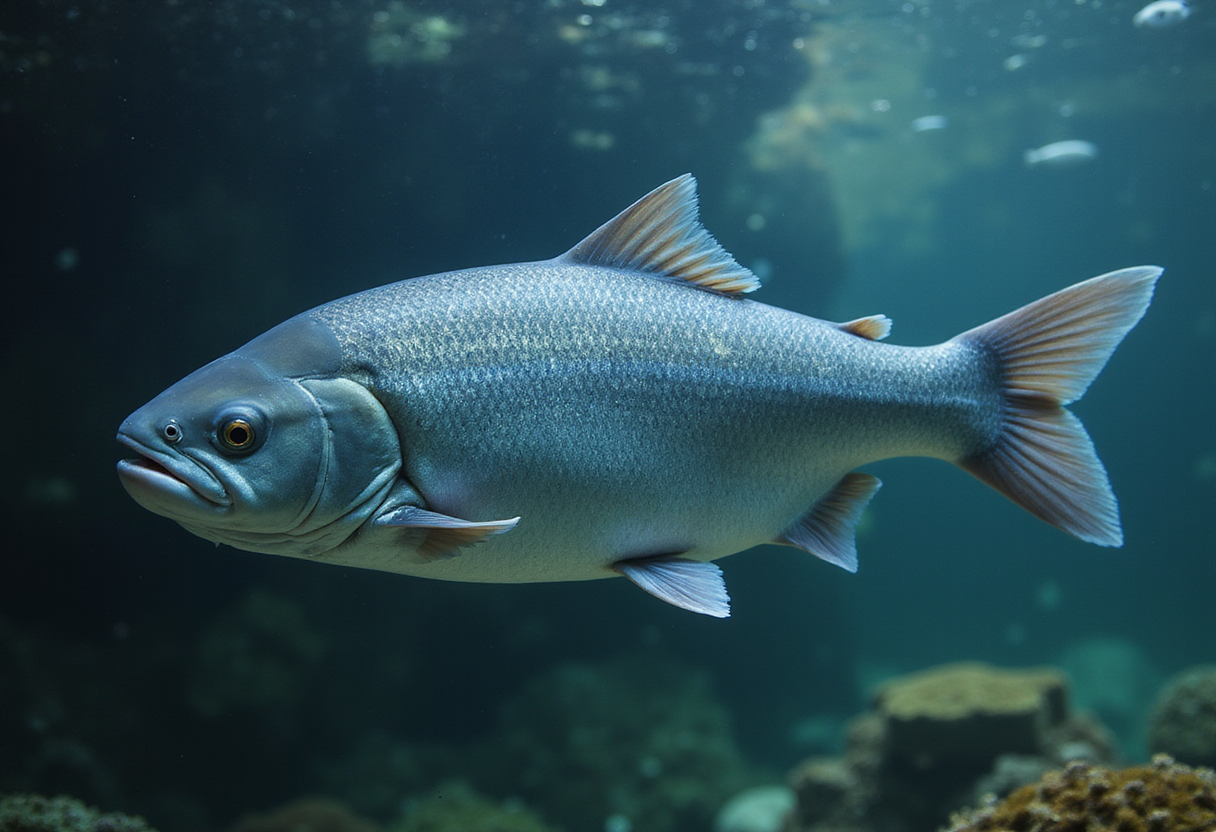
A study published in Nature Ecology & Evolution has produced 800 high-quality sequencing datasets covering 80 billion DNA sequence pairs from Atlantic salmon and rainbow trout. The work charts gene activity since a whole-genome duplication in the salmonid ancestor roughly 100 million years ago.
Researchers at the Norwegian University of Life Sciences and the University of Edinburgh's Roslin Institute led the analysis. They carried it out through AQUA-FAANG, a €6 million EU-funded project with multiple European research organizations and aquaculture industry partners.
What is whole-genome duplication?
Most evolutionary change happens through small edits, single-letter swaps that can subtly alter traits. Whole-genome duplication, or WGD, operates on a much larger scale. It duplicates an organism's entire genetic code, leaving two copies of every gene.
Those duplicate copies are not wasted. Over millions of years, some take on new roles, switch on in new tissues, or activate at different times.
WGD events have punctuated major branches of life's tree, including one in the ancestor of all living vertebrates more than 500 million years ago. The catch: such ancient events leave few traces, which makes their downstream consequences hard to reconstruct.
Why study salmon and trout?
Salmonids offer an unusually clear window into post-WGD evolution.
"The ancestor of salmonids experienced WGD around 100 million years ago, and many duplicated genes are still in the process of being retained, lost or repurposed," said Sigbjørn Lien, a professor at the Norwegian University of Life Sciences and a lead author of the study.
"Because of this, the genomes of these fish contain clearer traces of WGD compared to most other vertebrates, and thereby offer a unique window into how evolution unfolds after WGD," Lien added.
What did the team discover?
The group tracked which genes switched on or off across tissues and during early embryonic development in both species. They identified which features of gene activity have stayed stable since the duplication and which have diverged most.
Notably, the team found that duplicated genes have the least flexibility to change their expression during late embryonic development, the period when organs form rapidly.
"How the duplicated DNA sequences created by WGD evolve to shape gene expression is a fascinating subject, but not easy to study," said Dan Macqueen, a professor at the Roslin Institute and the study's overall lead.
"This unique dataset allowed us to dig deeply into such questions from new perspectives, revealing that gene expression evolution after the salmonid WGD was strongly dependent on life stage and variable across different tissues," Macqueen added.
When is evolution most constrained?
The most striking pattern sits in the developmental timeline. Late embryogenesis, when organs take shape, allows the least room for genes to alter their activity after duplication.
The team interprets this as evidence that natural selection removed most regulatory changes during that window, since altering a single gene could cascade into multiple organ defects.
"Interestingly, this period of 'constraint' matches the period when different vertebrate species — from fish to frogs to humans — appear most similar in terms of morphology, suggesting fundamental rules are at play," Macqueen said.
How will the data be used?
The gene activity maps are publicly available through AQUA-FAANG. Macqueen said the data offer "a valuable resource for future research and for improving breeding strategies in salmon and trout aquaculture."
Aquaculture breeders may use them to identify genes that control growth rate, disease resistance, and other commercially relevant traits. Evolutionary biologists studying other duplicated genomes can also draw on these atlases as comparison points.
The work has limits. Analyses focused on early development, leaving later life stages under-sampled. The team covered only two species, so broader conclusions about vertebrate post-WGD evolution will require comparisons with additional duplicated genomes.
via Phys.org Biology (Source)
More from Marcus Bennett
Nearby plates
- First global genome atlas maps hidden microbial life in 362 lakes
- 3D genome reshuffling may explain cephalopod brain complexity
- Pond Protist Rewrites a Rule of the Genetic Code
- Ancient DNA reveals extinct yak relative hidden in Siberian bones
- Microbe With 189 Genes Sets Record for Smallest Genome Ever Found