Recorded November 24, 2026
Biology & EvolutionReported finding
Genetic Mosaic Explains Darwin's Finches With Mismatched DNA and Beaks
Western large tree finches carry mostly small tree finch DNA, except for one beak-size supergene — evidence that interbreeding plus natural selection builds new bird forms, per a 2026 study.
By Elena Vasquez4 min read838 words
In brief
- The study, published in Nature Communications in 2026, analyzed whole-genome sequences from hundreds of Galápagos tree finches plus museum specimen measurements.
- Western large tree finches carry mostly small tree finch DNA, except the G03 supergene region tied to beak and body size.
- G03 is a cluster of four genes inherited as a block affecting multiple traits.
- The mosaic pattern appears in birds on Isabela and Fernandina islands.
- DOI: 10.1038/s41467-026-78507-8
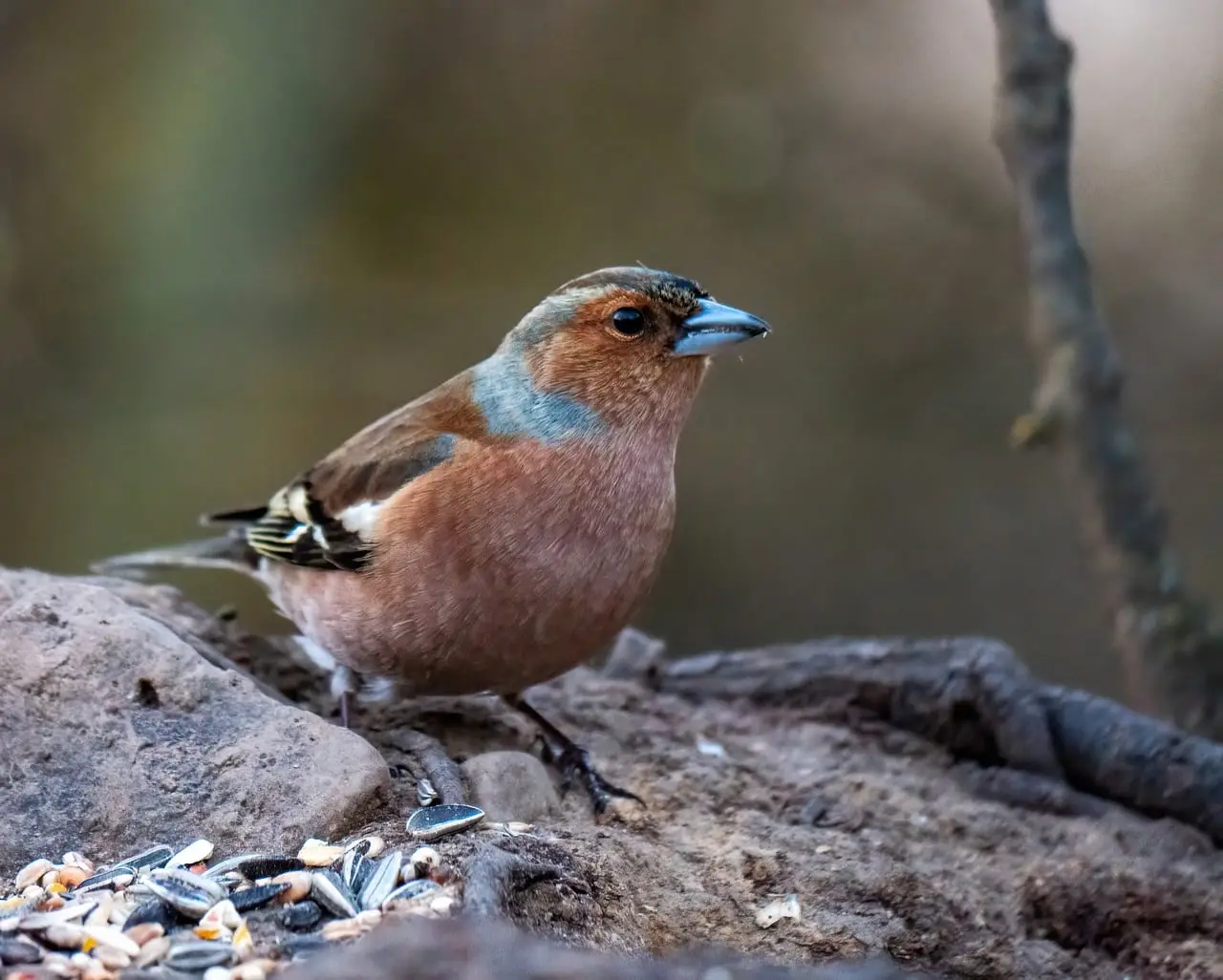
Most of the DNA of the western large tree finch belongs to a different species than its beak suggests. That's the core finding of a study from Texas A&M College of Veterinary Medicine and Biomedical Sciences (VMBS) and international collaborators, published in Nature Communications in 2026, which shows how interbreeding and natural selection can together produce new forms of Darwin's finches.
The western large tree finch looks like other large tree finches. Yet most of its genome more closely resembles that of the small tree finch, researchers found. One important exception: a genomic region tied to beak and body size, which matches the large tree finches.
Scientists call this mixture of genetic material from different ancestral lineages a "genetic mosaic." The finding suggests interbreeding can generate new combinations of traits, letting birds differ in appearance and feeding habits even when most of their DNA is nearly identical.
Takeaway: two birds can look alike and be genetically distant, or look different and be close cousins.
What did the researchers actually do?
The team combined whole-genome sequences from hundreds of birds with physical measurements taken from museum specimens. Pairing the two data sources let them test whether similarities in appearance — what biologists call phenotype — actually reflected close evolutionary relationships.
"Two birds can be very similar on the phenotypic level but show striking genetic differences and vice versa," said Dr. Leif Andersson, a professor in VMBS' Department of Veterinary Integrative Biosciences.
Darwin's finches are famous for their varied beaks, which let them exploit different food sources in the Galápagos Islands. Previous research has concentrated on seed-eating ground finches. Their insect-hunting relatives in forested areas got far less attention.
Among the most striking examples: small tree finches and western large tree finches living on the same islands. Despite their close genetic relationship, differences in beak and body size let them use different food resources.
Takeaway: appearance alone is a poor guide to a bird's family tree.
What is the supergene doing?
Researchers already knew that a DNA stretch called G03, a "supergene" associated with beak and body size, influences those traits in Darwin's finches. This study showed G03 accounts for one of the main genetic differences between small tree finches and western large tree finches.
"A supergene is a cluster of genes that are inherited as a block that often affect more than one trait, because different genes within the supergene affect different traits," Andersson said.
The mosaic pattern showed up in western large tree finches on Isabela and Fernandina islands. Andersson compared the pattern to a structure built from Lego pieces. Most pieces resemble those of the small tree finch. The piece representing G03 resembles the large tree finches.
One plausible explanation: the G03 variant linked to larger beak and body size entered a small tree finch population through interbreeding with large tree finches. The hybrids could then exploit food sources unsuitable for typical small tree finches, and natural selection favored traits suited to those foods.
"The key here is the combination of hybridization and natural selection that results in different forms of birds," Andersson said.
Beak and body size also shape mate choice. Those differences could reduce interbreeding between the groups, helping establish two closely related populations with distinct physical traits and food preferences.
Takeaway: one inherited block of DNA may be enough to change how a bird makes its living.
How common are mosaic genomes?
More common than once assumed, according to Andersson.
"Species or populations with mosaic genomes are more common than we previously thought and such gene flow between species can be very important for adaptation," he said.
He pointed to his team's earlier work on Baltic herring. There, genetic variants acquired from Pacific herring helped the fish adapt to the Baltic Sea's low-salinity water. Such exchanges can hand populations useful genetic variation for surviving in new environments.
Does this change how the finches are classified?
Maybe — but the study doesn't settle it. Andersson said the western large tree finch could be treated as:
- a form of the small tree finch,
- a form of the large tree finch,
- a distinct species, or
- part of a single species whose tree finches are different ecotypes — forms adapted to different ecological conditions.
The study doesn't resolve that debate. It does illustrate why appearance alone may not reveal a population's evolutionary history.
What comes next?
The team now wants to work out how each of the four genes within G03 contributes to its effects. Researchers are analyzing additional data from Darwin's finches alongside comparative data from domestic chickens, which also vary in beak and body size.
The findings come with limits worth keeping in mind. The interbreeding scenario is one possible explanation for the mosaic, and the classification question remains open.
Publication: Matteo Sebastianelli Arbelaez et al., "A supergene and genomic mosaicism are associated with phenotypic evolution in Galápagos tree finches," Nature Communications (2026). DOI: 10.1038/s41467-026-78507-8
By Elena Vasquez, SciBeat
via phys.org/rss-feed/ (Source)
More from Elena Vasquez
Show full bio
Correspondent covering money, funding and market shifts around general science news at SciBeat.
612 articles
Nearby plates
- Genes, Not Colony Life, Steer Cory's Shearwater Migration
- Denser Forests Do Not Always Mean More Bird Species, Island Study Finds
- All Three Endangered White Pine Species Were Defined Wrong, Study Finds
- Tracking a 100-million-year-old genome duplication in salmonids
- Two Finland eagle populations grew 9% a year — but differently