Recorded November 22, 2026
Biology & EvolutionReported finding
All Three Endangered White Pine Species Were Defined Wrong, Study Finds
Genome sequencing of 138 white pines shows all three named species in the Pinus kwangtungensis complex were wrongly defined, splitting them into three genetic lineages with different conservation needs.
By Marcus Bennett4 min read823 words
In brief
- A study published Nov. 10 in Molecular Phylogenetics and Evolution sequenced 138 white pines from 20 populations.
- All three nominal species in the Pinus kwangtungensis complex were found to be incorrectly defined.
- EAST and WEST lineages diverged approximately 15.64 million years ago; the hybrid PDAL lineage formed about 68,000 years ago.
- Populations in western range edges, Hainan Island and Dalat, Vietnam are most vulnerable under future climate scenarios.
- Researchers recommend two independent evolutionarily significant units plus a separate Hainan management unit.
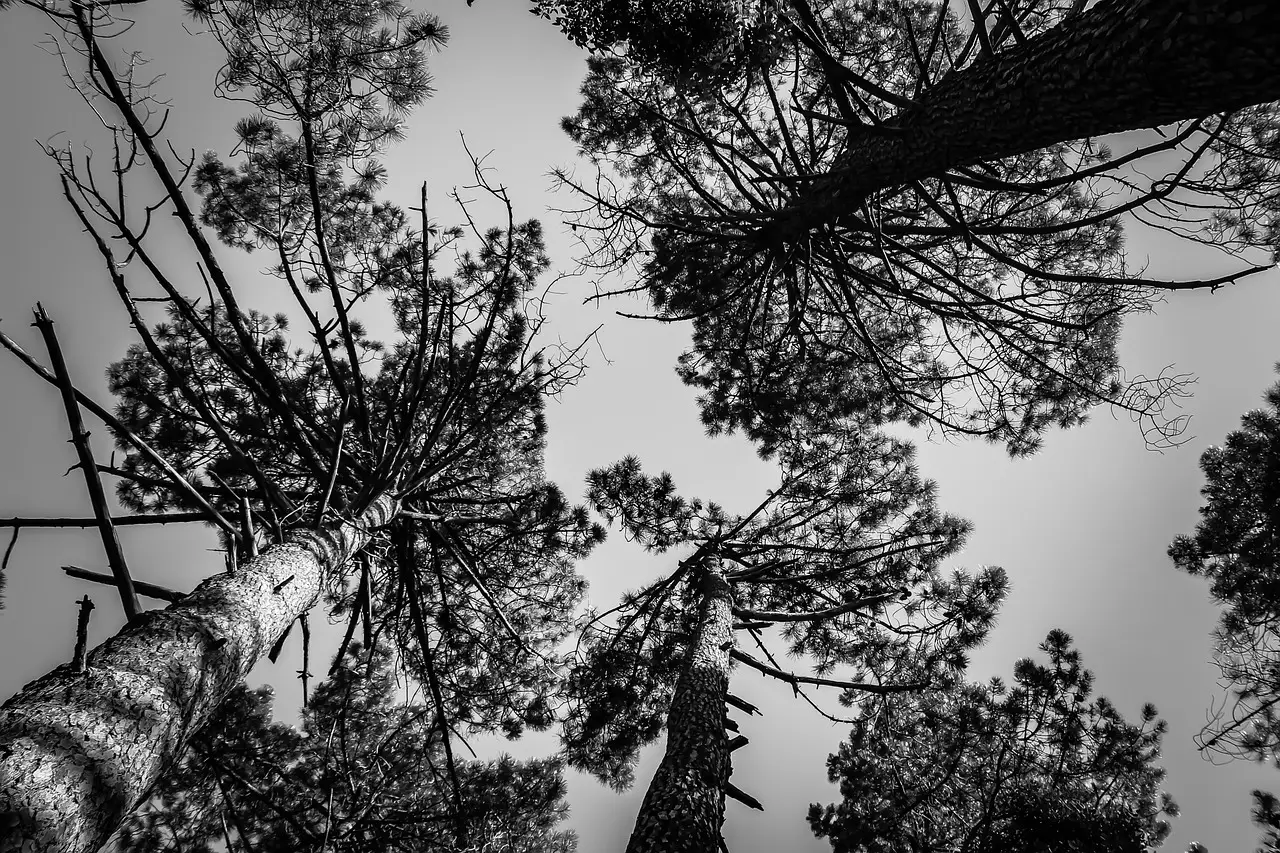
A genomic study of 138 white pines across 20 populations has found that all three named species in the endangered Pinus kwangtungensis complex were incorrectly defined — and that the group's hidden evolutionary diversity has been significantly underestimated.
The study, led by Professor Wang Xiaoquan of the Institute of Botany at the Chinese Academy of Sciences, was published in Molecular Phylogenetics and Evolution on November 10. For conservation managers, the practical consequence is immediate: the complex should now be treated as three genetic lineages rather than three nominal species.
What did the researchers actually sequence?
The team conducted transcriptome sequencing — reading the expressed genes, rather than the whole genome — of 138 individuals sampled from 20 populations covering the entire distribution range of the complex in subtropical China and Vietnam.
From those transcriptomes they screened thousands of SNP loci, single positions in the DNA where individuals differ. Crucially, they combined this with an unusual pair of markers available in the pine family: chloroplast genes, which pines inherit only from the pollen parent, and mitochondrial genes, inherited only from the seed parent. Because the two markers travel through opposite routes, together they act like two independent postal records of where a lineage has been.
That combination let the researchers reconstruct the evolutionary relationships among lineages, assess each population's genomic vulnerability under future climate scenarios, and propose formal conservation units.
How do the new lineages map onto the old species?
The three nominal species — P. kwangtungensis, P. wangii and P. dalatensis — dissolve into three genetic lineages the researchers named EAST, WEST and PDAL:
- EAST comprises the eastern populations of P. kwangtungensis.
- WEST comprises populations traditionally recognized as P. wangii plus the western populations of P. kwangtungensis.
- PDAL consists of the Hainan Island population of P. kwangtungensis together with P. dalatensis — a lineage formed by hybridization between EAST and WEST.
The habitats involved are highly fragmented. Many populations cling to isolated limestone mountaintops, and China already lists P. wangii as a Class I and P. kwangtungensis as a Class II nationally protected wild plant. In plain terms: the legal protection categories are attached to names that do not match the underlying biology.
Why did morphology get it wrong?
The most striking finding concerns the boundary between EAST and WEST. Adjacent populations of the two lineages show no obvious morphological differences, yet they have undergone significant genetic differentiation. Trees that look alike are, genetically, clearly separate.
The researchers attribute this mismatch to well-known confounders in conifer taxonomy: convergent evolution, where unrelated lineages independently evolve similar forms; introgressive hybridization, where genes cross species boundaries through interbreeding; and incomplete lineage sorting, where ancestral genetic variation persists after lineages split. Any one of these can make morphology a misleading guide. The high genetic differentiation among the three lineages means the complex holds substantially more evolutionary diversity than its species count suggested.
When did these lineages form?
Population history modeling places the origin of the split in the middle Miocene, roughly 15.64 million years ago, possibly driven by the strengthening of the East Asian monsoon and regional tectonic uplift. The EAST and WEST lineages then remained separated until about 68,000 years ago, during the late Pleistocene, when they came into secondary contact and hybridized to produce the PDAL lineage.
Repeated land bridge connections during the late Pleistocene, the models suggest, may have helped the PDAL lineage disperse to Hainan Island and Vietnam. The lineage map, in other words, is a record of both ancient climate and recent sea-level change.
What does this change for conservation?
The vulnerability assessment under future climate scenarios flags specific places: populations at the western edge of the distribution range, on Hainan Island, and in Dalat, Vietnam are particularly exposed.
The researchers recommend a two-tier structure:
- Treat EAST and WEST as two independent evolutionarily significant units (ESUs) — the highest-ranking category for conservation priority, defined by evolutionary distinctiveness rather than by name.
- Manage the Hainan Island population of the PDAL lineage as a separate management unit, with particular attention to the high-risk populations identified by the climate models.
The study argues this matters beyond one group of pines. Traditional conservation practice treats nominal species as the unit of protection. Under the combined pressures of gene flow, hybridization and climate change, the authors write, conservation urgently needs to shift from a "nominal species" approach to an "evolutionary lineage" framework — one that identifies conservation units more accurately, assesses genetic risks more precisely, and supports differentiated conservation strategies.
Accurate species delimitation, the paper concludes, is not bookkeeping; it is the foundation on which effective biodiversity conservation stands.
The paper: Chang Liu et al., "Reticulate evolution and complex biogeographic history lead to the difficulty in defining conservation units: A case study on Pinus kwangtungensis and its close relatives," Molecular Phylogenetics and Evolution (2027). DOI: 10.1016/j.ympev.2026.108776.
Evolutionary diversity survives in lineages, not in names — and protecting the former requires mapping it.
via phys.org/rss-feed/ (Source)
More from Marcus Bennett
Show full bio
News editor covering regulation, policy and their impact on general science news at SciBeat.
584 articles
Nearby plates
- Denser Forests Do Not Always Mean More Bird Species, Island Study Finds
- First Genus-Wide Barley Pangenome Maps Wild Genes for Breeding
- Tracking a 100-million-year-old genome duplication in salmonids
- Ancient DNA reveals extinct yak relative hidden in Siberian bones
- Deep-Sea Fish Lost 8% of Genetic Diversity in Just 12 Years