Plate Nº 69 · recorded November 10, 2026
Space & AstronomyReported finding
Two Nearby Rocky Worlds Could Show Aliens Planets Reversing Course
A new study finds hypothetical observers on GJ 1002 b and Teegarden's Star c, 12.5-16 light-years away, could watch neighboring planets reverse course in their skies.
By Elena Vasquez4 min read811 words
In brief
- The study identifies two potentially habitable rocky worlds with naked-eye-visible retrograde motion: GJ 1002 b (16 light-years away) and Teegarden's Star c (12.5 light-years away).
- The paper was published in Monthly Notices of the Royal Astronomical Society in 2026, DOI: 10.1093/mnras/stag2016.
- It introduces a new concept, 'developmentability', asking whether an exoplanet's environment could support the growth of science, beyond simple habitability.
- The analysis used orbital and physical data from the NASA Exoplanet Archive, testing motion duration, angular span, brightness and separation from host-star glare.
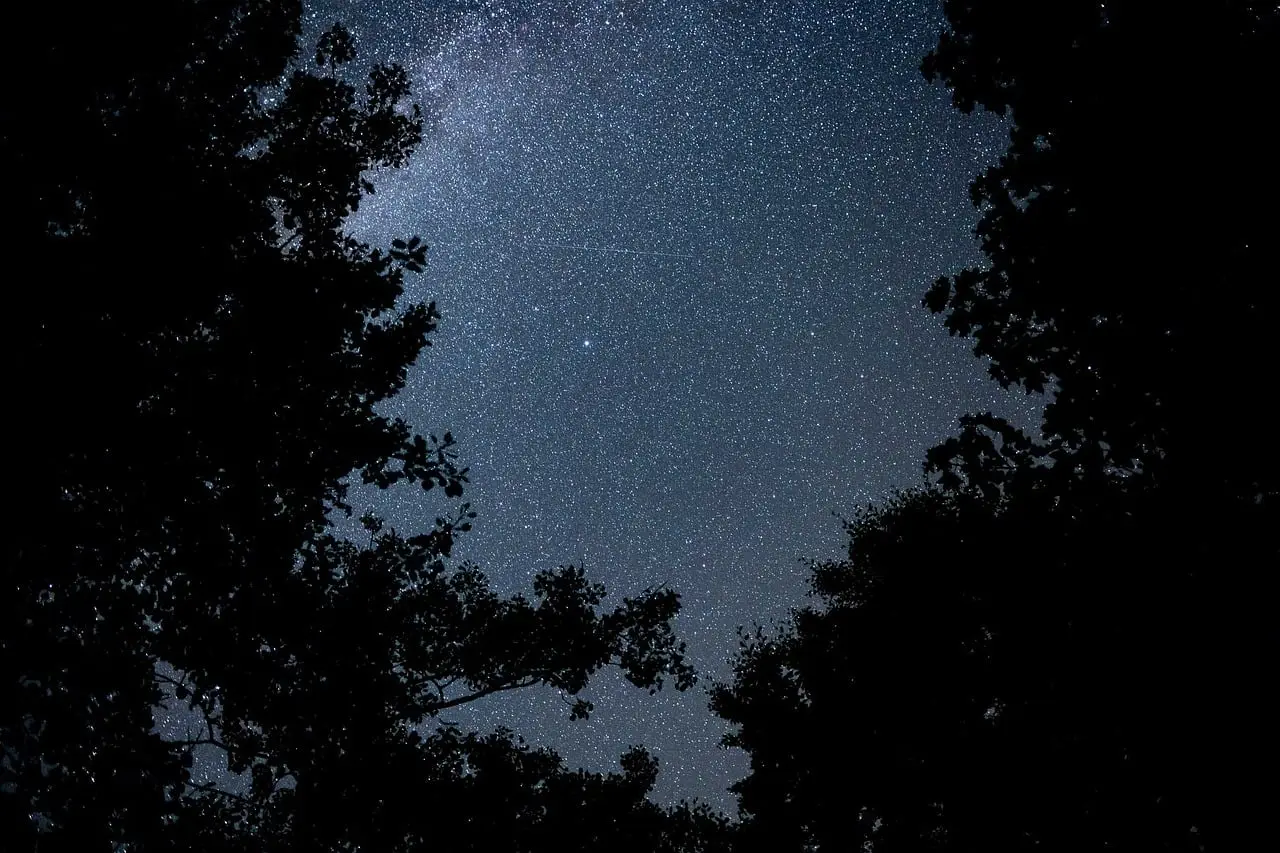
A new astronomy study has identified two potentially habitable rocky planets, just 12.5 and 16 light-years from Earth, from which a hypothetical observer could watch a neighboring planet appear to reverse direction in the night sky with the naked eye.
Professor Woong-bae Zee of Sejong University's School of Liberal Studies published the findings in Monthly Notices of the Royal Astronomical Society (2026), under the title "Alien skies: visibility of planetary retrograde motion from rocky habitable-zone worlds." The paper puts the word "alien" squarely at the center of a serious scientific question: not just where life might exist, but where science itself might develop.
What is retrograde motion, and why does it matter?
In Earth's night sky, planets such as Mars and Jupiter occasionally appear to reverse their usual direction of travel. Astronomers call this "apparent retrograde motion." It's an illusion, not a real reversal.
The phenomenon shaped human history. Astronomers who believed Earth sat at the center of the universe had to build elaborate orbital models to account for the planets' complicated loops. Once humans understood that Earth and its neighbors all orbit the sun, retrograde motion became simple: it's the natural result of planets moving at different orbital speeds.
That observational clue helped humanity abandon an Earth-centered cosmos and build the heliocentric model. In short: watching planets backtrack pushed us toward modern astronomy.
What did the study actually do?
The research starts from a gap in how scientists usually think about extraterrestrial life. Traditional work on habitability focuses on whether a planet could support life at all — its temperature, the possible presence of liquid water, and similar conditions.
But a planet that can host life doesn't automatically produce a civilization capable of doing science. Conditions for existing and conditions for understanding the universe are separate questions. For the search for extraterrestrial intelligence (SETI) to succeed in detecting technological traces, Zee argues, researchers must look beyond survival and ask whether science and technology could plausibly develop.
To capture that idea, the paper proposes a new concept: "developmentability." It asks how an exoplanet's astronomical environment might shape the way intelligent beings there come to understand the universe.
Zee gave the concept a concrete test. Using orbital and physical data from the NASA Exoplanet Archive, and drawing on two decades of exoplanet discoveries — including many multi-planet systems — he placed a hypothetical observer on each planet and calculated how neighboring worlds would move across its sky.
The analysis didn't stop at whether retrograde motion happens at all. It checked four conditions:
- Does the reversal last long enough, and span a large enough angle, to be noticeable?
- Is the neighboring planet bright enough to see with the naked eye?
- Does it appear far enough from its host star to stand apart from the star's glare?
The takeaway: seeing a planet reverse course requires a specific combination of geometry, brightness and timing, not just any neighboring world will do.
Which two worlds made the cut?
The study identified two potentially habitable rocky planets where a neighbor's retrograde motion should be clearly visible to the naked eye.
The first case: an observer on GJ 1002 b, watching the neighboring planet GJ 1002 c. The system orbits the star GJ 1002, roughly 16 light-years from Earth.
The second: an observer on Teegarden's Star c, watching Teegarden's Star d, in a system about 12.5 light-years away.
Both systems sit relatively close to Earth, and both observing platforms are planets that may have conditions suitable for life. That combination — possible habitability plus a good view of the sky — is exactly what makes them stand out.
Does this mean aliens live there?
No. The study does not establish that life or civilizations exist on either planet. And even a clear view of retrograde motion doesn't guarantee that a scientific civilization would follow.
What the paper does offer is a reframed question. Just as planetary motion helped humanity realize Earth wasn't the center of everything, could similar phenomena in alien skies steer the scientific progress of any civilizations that arise there? Zee raises the possibility that hypothetical astronomers on GJ 1002 b or Teegarden's Star c might one day watch a neighbor backtrack, conclude their world isn't the cosmic center, and produce their own "alien Copernicus" and "alien Galileo."
The broader shift is from "Where can life exist?" to "What environments could support civilizations capable of understanding the universe through science?" That's a new lens for SETI, and one that can be tested against real catalogued planetary systems.
The results are preliminary in the sense that they rest on modeled skies and hypothetical observers, not on any detection of life. Still, they show how archived exoplanet data can probe questions that once belonged purely to science fiction.
via phys.org/rss-feed/ (Source)
More from Elena Vasquez
Show full bio
Correspondent covering money, funding and market shifts around general science news at SciBeat.
384 articles
Nearby plates
- Rubin Observatory Finds a Backward-Orbiting Object Beyond Neptune
- First known “disappearing planet” traced to an orbit-tilting neighbor
- James Webb Catches a Lopsided Bulge in an Exoplanet's Air
- Astronomers Watch a Hot Jupiter Vanish From View Mid-Observation
- Solar Orbiter Flies Straight Through a Magnetic Switchback