Plate Nº 46 · recorded November 10, 2026
Space & AstronomyReported finding
First known “disappearing planet” traced to an orbit-tilting neighbor
TOI-2535 b, a hot Jupiter about 1,000 light-years away, stopped crossing its star in 2026. Evidence points to a nearby planet tilting its orbit, not a true disappearance.
By Priya Raman4 min read771 words
In brief
- TOI-2535 b lies about 1,000 light-years away and completes an orbit every 8.25 days, 10 times faster than Mercury.
- TESS observed the system from April 2019 to March 2026; the planet’s transits failed to appear in 2026.
- Transit times drifted by as much as six hours, and the events became shorter and shallower before disappearing.
- WIYN 3.5-meter observations helped establish that the planet is Jupiter-sized and extremely hot.
- The next transit is expected in 30 to 50 years, although the hidden neighboring planet may become visible sooner.
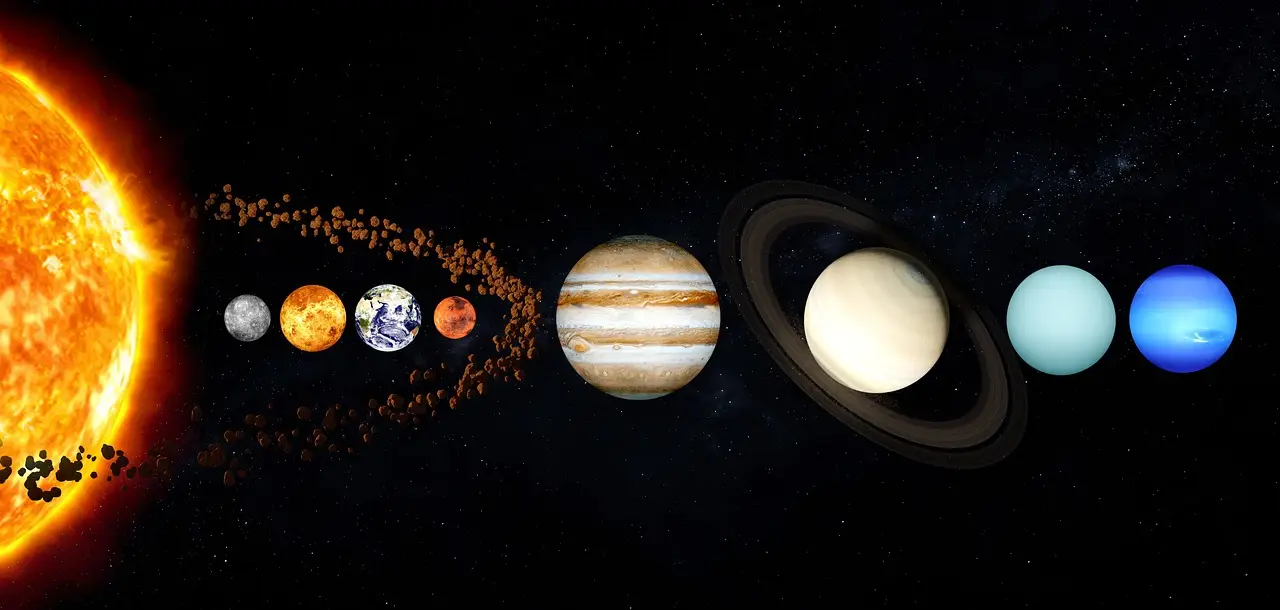
Astronomers have identified the first known “disappearing planet,” TOI-2535 b, about 1,000 light-years from Earth.
UCLA-led researchers say the planet has not vanished. A neighboring world appears to pull on it, tilting its path until it no longer crosses its star from our viewpoint.
The system offers a rare view of how neighboring planets can reshape one another and of how a hot Jupiter (a Jupiter-sized gas giant orbiting very close to its star) may have reached that orbit.
TOI-2535 b completes one orbit in 8.25 days, 10 times faster than Mercury’s 88-day orbit. Researchers followed the planet for seven years before its transits stopped.
An international team reports its findings in a 2026 paper in The Astrophysical Journal Letters. Corresponding author Samuel W. Yee, a 51 Pegasi b postdoctoral fellow at UCLA, and UCLA astrophysicist Erik Petigura led the work.
What makes TOI-2535 b appear to disappear?
NASA’s Transiting Exoplanet Survey Satellite, or TESS, observed the TOI-2535 system between April 2019 and March 2026. TESS identifies planets by measuring small dips in a star’s brightness when a planet passes in front of it and blocks a little light. These passages, called transits, become visible only when the star, planet and Earth line up precisely.
Repeated TESS observations showed that the transits did not follow a regular timetable. They ran early or late by as much as six hours. They also became shorter and shallower over the years, then failed to appear at all in 2026.
The team’s calculations point to an unseen neighboring planet whose orbit has a different tilt (the angle between a planet’s path and a reference plane). Gravity makes the two planets’ orbits wobble, changing their alignment with Earth. As the tilt shifts, TOI-2535 b spends less time in front of its star and eventually misses the transit altogether.
Yee called this the most extreme example observed so far. The interaction is so strong, he said, that the orbit tilts quickly enough for the transit to disappear while the team is watching.
What did the team learn about the planet itself?
Transit depth and precise observations from the WIYN 3.5-meter telescope at Kitt Peak National Observatory in Arizona indicate that TOI-2535 b is an extremely hot, Jupiter-sized planet.
Hundreds of hot Jupiters have been found, but they rarely have a massive neighbor close enough to alter their orbit. That combination makes this system an especially strong test of the forces that can tilt a planet’s path.
How could the planet have reached its star?
Hot Jupiters pose a formation puzzle because existing models require substantial ice to build them. Yee and Petigura are studying how such planets might migrate inward from more distant orbits. They outline two possible routes.
- A violent route: Another object could excite the planet into an elliptical orbit (a noncircular path), perhaps through a near-collision. Interactions with the star could then pull the planet inward.
- A shared-disk route: The planet could migrate inward with other planets in the protoplanetary disk (the disk in which planets form). That process should produce a “flat” system, with little difference in orbital tilt among the planets.
TOI-2535 b’s wobble conflicts with that flat expectation. The system may instead preserve evidence of interactions that tilted the planets over time, possibly including a violent event.
“If the moon’s orbit around the Earth was perfectly aligned with the Earth’s orbit around the sun, we would see an eclipse every month,” Petigura said. He attributed the Moon’s tilted orbit to a collision with the early Earth, and said the same geometry makes eclipses uncommon.
Yee also cautioned against assuming that planetary systems behave with perfect regularity. When several planets share a system, they can affect each other’s orbits, although only a few known examples show this effect.
“Because TOI-2535 b has a close neighbor, it probably migrated by slowly spiraling in instead of getting flung in,” Yee said. He added that the system may represent a formation channel that does not occur often but remains scientifically interesting.
When will the planet return to view?
TOI-2535 b is expected to next transit its star in 30 to 50 years. The hidden neighboring planet may become detectable sooner.
The study, “A TESS Disappearing Act: The Vanishing Transits of TOI-2535 b,” appears in The Astrophysical Journal Letters in 2026 under DOI 10.3847/2041-8213/aeb4a4.
For now, the apparent disappearance marks a shifting orbit, not a planet lost from the system.
via phys.org/rss-feed/ (Source)
More from Priya Raman
Show full bio
Senior reporter covering people, launches and day-to-day practice in general science news at SciBeat.
343 articles
Nearby plates
- Astronomers Watch a Hot Jupiter Vanish From View Mid-Observation
- A Giant Planet Vanished From View — And a Hidden Neighbor May Be Why
- Astronomers Watch an Exoplanet's Transits Vanish for the First Time
- Astronomers Confirm Youngest Known Planet, Under 1 Million Years Old
- Webb Telescope Finds Lava Planet TOI-561 b Has a Reflective, Cloudy Atmosphere