Plate Nº 30 · recorded November 10, 2026
Space & AstronomyReported finding
A Giant Planet Vanished From View — And a Hidden Neighbor May Be Why
TOI-2535 b, a hot Jupiter 1,000 light-years away, stopped transiting its star by 2026. Astronomers blame the gravitational pull of an unseen companion world.
By James Calloway3 min read638 words
In brief
- Hot Jupiter TOI-2535 b lies about 1,000 light-years away and orbits its star in a little over eight days.
- Transits ran up to six hours early or late before disappearing from observations by 2026.
- TESS observed the star from 2019 to March 2026, aided by the 3.5-meter WIYN telescope at Kitt Peak, Arizona.
- Models published in The Astrophysical Journal Letters suggest transits could resume in 30 to 50 years.
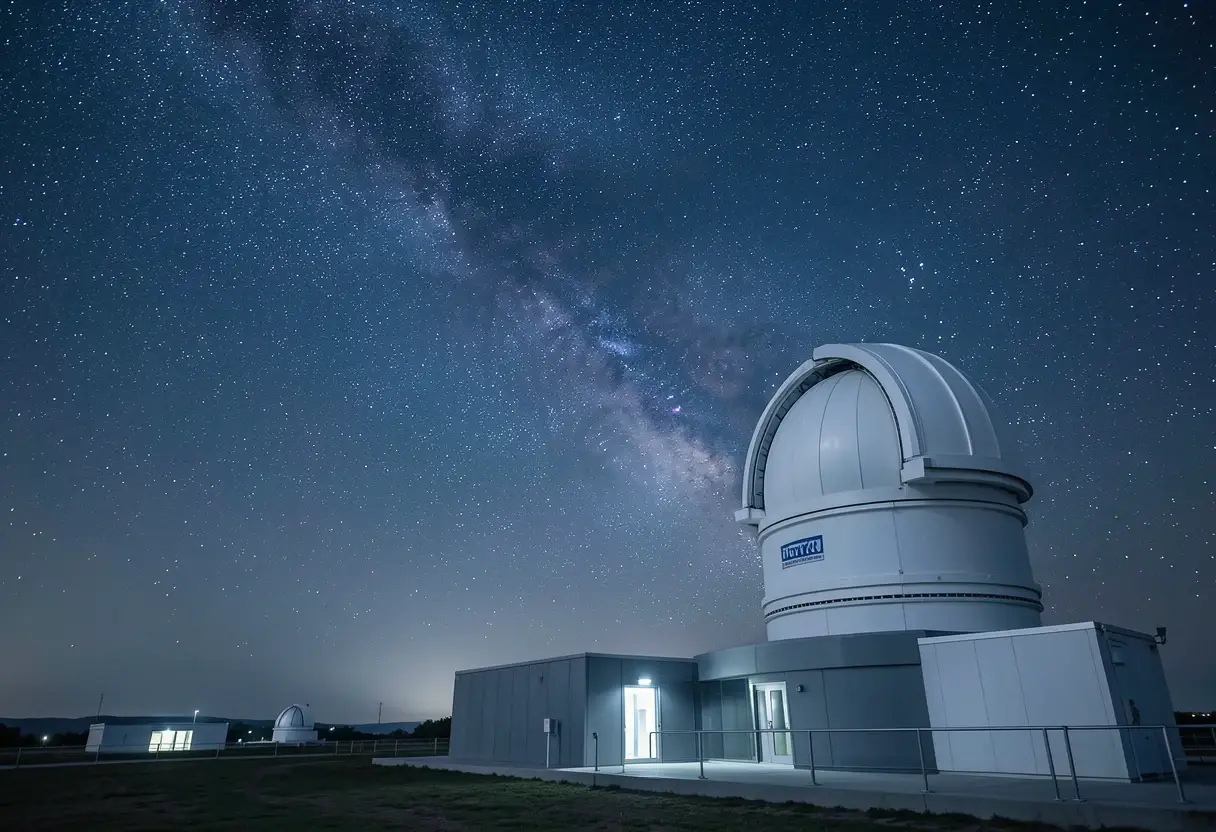
A gas giant 1,000 light-years away stopped crossing the face of its star by 2026 — and astronomers think the gravity of a hidden, still-unseen planet is the most likely culprit.
The planet, TOI-2535 b, is a hot Jupiter: a gas giant orbiting brutally close to its star, completing a lap in a little over eight days. For years, its orbit happened to line up with Earth so precisely that the planet passed directly in front of the star. Each passage, called a transit, briefly dimmed the starlight. That dip is how astronomers measured when the planet arrived and how long the crossing lasted.
Then the show ended. And nobody has seen the planet cross since.
What did the telescopes actually see?
NASA's Transiting Exoplanet Survey Satellite, known as TESS, collected observations from 2019 through March 2026. Researchers supplemented that data with observations from the 3.5-meter WIYN telescope at Kitt Peak in Arizona.
The crossings were odd from the start. Some arrived up to six hours earlier or later than predicted. Over time, the dips in starlight grew shallower and shorter, as if the planet were skimming closer and closer to the star's edge. By 2026, the transits had vanished from the data entirely.
Here's the key point: the planet didn't disappear. It can keep circling its star while passing just above or below the star's face from our vantage point. A small tilt in the orbit works like a small shift in angle moving an object out of a beam of light.
Why blame a hidden planet?
The researchers had two independent clues. Transit timing — when the crossings happened — showed the planet's motion was being disturbed. Transit duration — how long each crossing lasted — revealed how its path across the star had changed.
The team's analysis, published in The Astrophysical Journal Letters, points to another planet as the likely explanation. Its gravity could simultaneously shift the crossing times and gradually tilt the plane of the giant's orbit until the transits stopped. One unseen world, two puzzles solved.
But let's be clear about what this is not. Nobody has seen the second planet. It's an inference from wobbles in someone else's schedule, and the models that produce it depend on assumed orbits. A claim this tidy deserves scrutiny until the neighbor shows itself.
What does this change for planet hunting?
For starters, it complicates the story of how TOI-2535 b got so hot. One leading way to make a hot Jupiter is to send a giant planet spiraling inward on a stretched-out orbit — a violent trip that would disrupt any nearby worlds. If a companion survived close by, that route becomes harder to explain here. The neighbor, if real, is a fossil clue to the system's past.
The team's models also make a testable prediction: TOI-2535 b might start crossing its star again in 30 to 50 years. That estimate leans heavily on the proposed orbits, so treat it as provisional. The suspected neighbor could cross the star sooner, if its own path happens to swing into view.
Finding the second planet would let astronomers check whether its gravity genuinely accounts for both the timing shifts and the disappearance. That's the falsifiable test. Until then, the hidden-world explanation stays a strong hypothesis rather than a confirmed fact.
The quieter lesson
Even before that confirmation, the missing crossings demonstrate something practical. Watching the same star for years revealed behavior that a shorter survey would have missed entirely. Seven years of patience turned a routine transit detection into evidence for a planet nobody has directly observed.
Long-term monitoring, in other words, is not just bookkeeping. Sometimes it's the only way a hidden neighbor gives itself away.
via knowridge.com (Source)
More from James Calloway
Show full bio
Staff writer covering regulation, policy and their impact on general science news at SciBeat.
346 articles
Nearby plates
- Astronomers Watch a Hot Jupiter Vanish From View Mid-Observation
- Astronomers Watch an Exoplanet's Transits Vanish for the First Time
- First known “disappearing planet” traced to an orbit-tilting neighbor
- Webb Data Reveals Hidden Giant Planet After Software Clears Starlight
- Faint Young Stars Suggest Messier 74 Is Nearly Twice as Large as Thought