Plate Nº 30 · recorded October 10, 2026
Science Policy & FundingReported finding
White House Retreats From Plan to Tighten Grip on N.I.H. Grants
The White House has withdrawn a plan to route N.I.H. grant decisions through political appointees, preserving the agency's scientist-led peer review for now.
By Elena Vasquez4 min read866 words
In brief
- The White House withdrew a plan to give its budget office new control over N.I.H. research grants
- The proposal would have routed grant decisions through the Office of Management and Budget
- The reversal preserves the N.I.H.'s traditional scientist-led peer review process
- The plan drew criticism that political appointees could override scientific merit in funding decisions
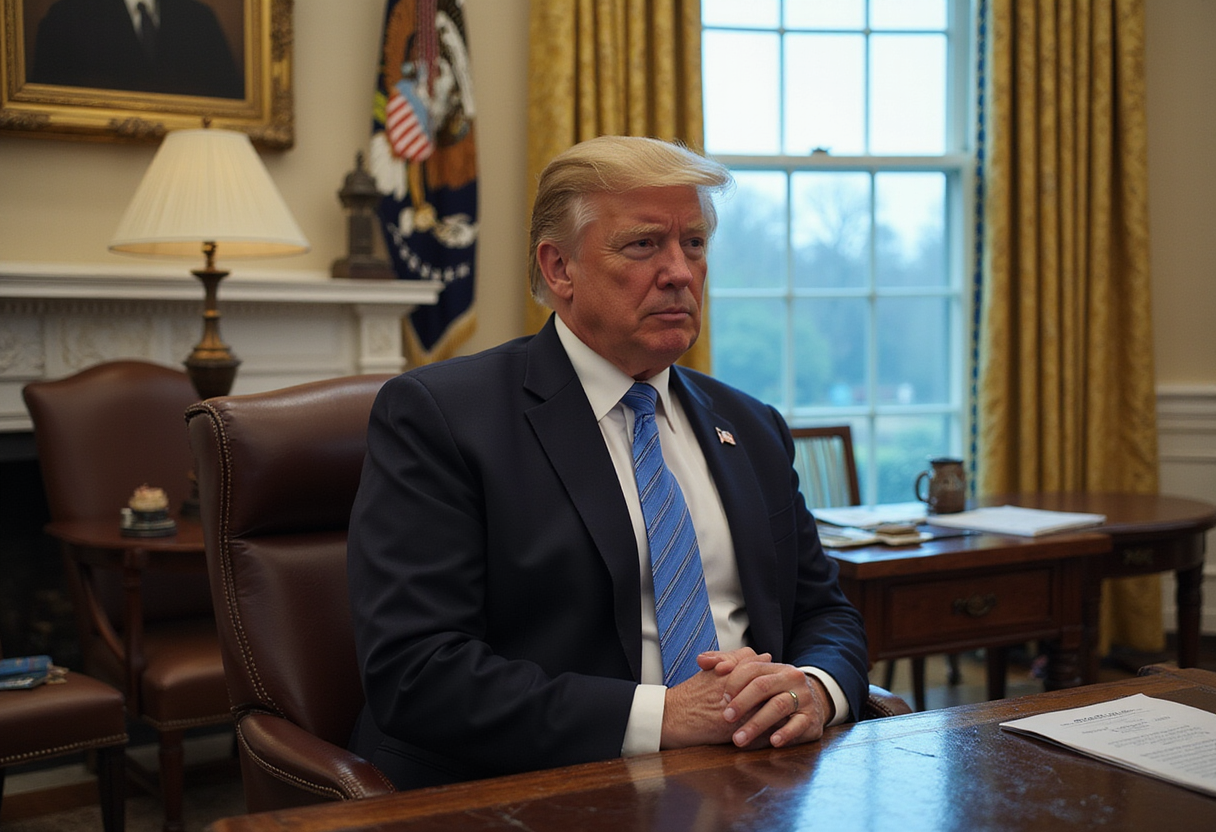
The White House has withdrawn a plan that would have given its budget office new authority over research grants issued by the National Institutes of Health, reversing course after the proposal drew criticism from scientists and policy watchers. The retreat means the world's largest public funder of biomedical research will not, for now, face a new layer of political review before grants reach laboratories.
The announcement, reported by The New York Times, marks a rare walk-back by an administration that has otherwise sought to reshape how federal science agencies operate. The NIH, with a budget of tens of billions of dollars a year, finances work on cancer, infectious disease, neuroscience and countless other fields at universities and hospitals across the United States — so even small changes to how its grants are approved tend to ripple through the entire research community.
What was the proposed plan?
At the heart of the withdrawn proposal was a shift in who gets the final word on N.I.H. funding. The plan would have routed grant decisions through the White House's Office of Management and Budget, an arm of the executive that answers directly to the president rather than to career scientists.
Under the system the N.I.H. has used for decades, panels of independent researchers score applications through a process called peer review. In plain terms, scientists who are experts in a field judge which proposed studies are the most rigorous and promising, and career officials at the institutes then issue awards based on those judgments. The proposed change would have inserted political appointees into that chain, giving them a checkpoint before money goes out the door.
Critics of the plan warned that this kind of oversight could let political priorities override scientific merit. They pointed to a long-standing principle in American science policy: decisions about which research to fund should rest on quality, not on whether a study's topic suits the agenda of whoever occupies the White House.
Why did the White House back away?
The Times reports that the administration reversed itself after the plan became public and prompted pushback. Details about precisely which officials drove the reversal, and exactly when the decision was made, have not been fully disclosed, so the full picture behind the retreat remains unclear.
What is clear is the outcome: the new layer of control will not go into effect. For researchers who depend on N.I.H. funding, that removes at least one source of uncertainty hanging over the grant process.
The episode nonetheless leaves questions open about whether the administration will attempt a similar move in another form. Agencies and White House offices can revise, rename or reintroduce proposals, and watchdog groups that track federal science policy say they will keep watching for signs of political interference in grant-making.
Why does control of N.I.H. grants matter so much?
The stakes are enormous. The N.I.H. is the single largest funder of biomedical research in the world, and its grants pay salaries, buy equipment and keep long-term studies running at hundreds of institutions. A delay or interruption in funding can halt a clinical trial, end a graduate student's project, or set back a line of research by years.
The peer-review system exists to protect the quality of that spending. Reviewers read proposals, judge the methods and the track record of the applicants, and rank the applications. When the process works as designed, the best science rises to the top regardless of who proposed it or where.
Supporters of insulating the system argue that inserting political review weakens that protection. If appointees can veto or delay grants, researchers may start tailoring their proposals — or avoiding certain topics entirely — to fit the preferences of the current administration. Scientists call that effect chilling: fewer risky, novel ideas get proposed because the safest route is work that offends no one.
On the other side, officials who favor more oversight have argued that elected administrations have a legitimate interest in how taxpayer money is spent, and that the executive branch should be able to ensure grants align with public priorities. The debate over where to draw that line is not new; versions of it have flared under multiple administrations of both parties.
What happens next?
For now, the grant process returns to its usual track. Study sections will keep scoring applications, and institute directors will keep issuing awards, without a new White House checkpoint in between.
Researchers and universities are unlikely to declare the matter closed. The reversal shows that public pressure can change administration policy, but it also shows that the underlying impulse to assert more control over federal science funding has not disappeared. Expect advocacy groups, scientific societies and members of Congress to keep pressing for clarity about how future proposals would be handled.
For readers outside the research world, the story is a reminder of how much everyday science depends on administrative decisions made far from the laboratory bench. Who signs off on a grant letter may seem like a bureaucratic detail, but it determines which questions about disease, the brain, and the body get asked — and which go unfunded.
via Google News: Science Funding (Source)