Recorded November 25, 2026
Biology & EvolutionReported finding
19-Nanomolar Inhibitor Restores Ciprofloxacin Against MRSA
IMP-2380 blocks the pump MRSA uses to eject ciprofloxacin, restoring the antibiotic's killing power and cutting resistance emergence in early lab and mouse tests.
By Marcus Bennett3 min read669 words
In brief
- IMP-2380 inhibits the NorA efflux pump with an IC₅₀ of 19 nM, over 400 times more potent than reserpine
- Cryo-EM resolved the NorA–IMP-2380 structure at 2.52 Å
- IMP-2380 plus ciprofloxacin cut bacterial numbers 100-fold in a mouse MRSA model
- The team screened 33,000 compounds to find the initial chemical series
- The study appears in Nature Chemical Biology (2026), DOI: 10.1038/s41589-026-02319-6
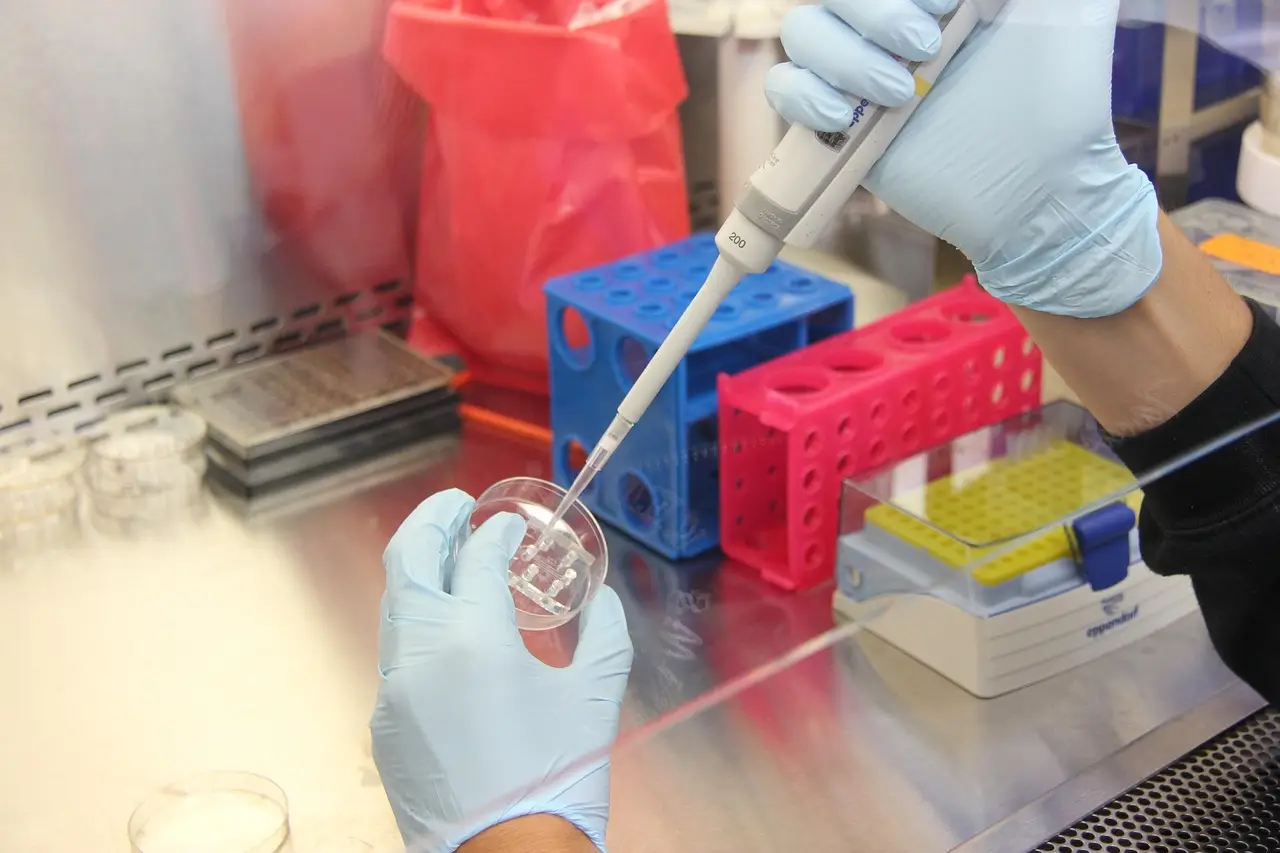
A small molecule that blocks a bacterial escape pump made ciprofloxacin work again against drug-resistant MRSA, cutting bacterial numbers 100-fold in infected mice. Researchers at Imperial College London and collaborators published the results in Nature Chemical Biology, describing a compound called IMP-2380 that disables the efflux pump NorA at a concentration of just 19 nanomolar.
For clinicians, the finding matters because adjuvant therapy — pairing an existing antibiotic with a booster molecule — could extend the life of drugs such as ciprofloxacin against methicillin-resistant Staphylococcus aureus. The compound is early-stage: safety, pharmacology and therapeutic potential remain untested, and clinical use is not yet on the table.
What does the inhibitor actually do?
Efflux pumps sit in the bacterial membrane and export antibiotics before the drugs can accumulate to lethal levels. Scientists have known for years that these pumps are promising targets, but building inhibitors that are both potent and selective has proven hard.
The team, led by Professor Ed Tate and Professor Andrew Edwards with Dr. Janine Gray and Dr. Elizabeth Ledger as co-first authors, started from a different angle. They ran a high-throughput screen of 33,000 compounds, looking for molecules that suppress the bacterial SOS response — a DNA-damage survival program that helps bacteria tolerate antibiotics and drives the emergence of resistance. The screen turned up a chemical series that shut down ciprofloxacin-induced SOS signalling without killing bacteria on its own.
Chemical optimization of that series produced IMP-2380. The molecule showed nanomolar potency and boosted ciprofloxacin activity against MRSA and other S. aureus strains. On its own, it showed no antibacterial activity — evidence that it works as an adjuvant rather than a stand-alone antibiotic.
Genetic experiments pinned down the target. Bacteria that overproduced NorA became less sensitive to the drug combination; bacteria lacking the norA gene stopped responding to IMP-2380 altogether. In short, the compound works only when NorA is present.
How does it trap the pump?
The researchers solved the structure of NorA bound to IMP-2380 using cryo-electron microscopy at 2.52 Å resolution. The inhibitor sits deep inside the transporter's central cavity and locks NorA in an outward-open shape. That lock matters: the pump normally cycles between conformations to grab antibiotics inside the cell and expel them, and the trapped state freezes that cycle.
The structure reveals a small-molecule binding site no one had observed before, giving medicinal chemists a template for designing better inhibitors. One practical detail stands out: the inhibitor binds from the outside of the transporter, so it does not need to cross the bacterial membrane to reach its target.
An ethidium bromide efflux assay quantified the potency: IMP-2380 blocked NorA-mediated transport with an IC₅₀ of 19 nM — more than 400 times stronger than reserpine, the commonly used reference inhibitor.
What did the mouse model show?
Blocking NorA raised the amount of ciprofloxacin inside bacterial cells and strengthened killing. The compound also dialed down ciprofloxacin-induced SOS activation and prevented resistant bacterial populations from emerging in laboratory experiments — attacking resistance evolution, not just the infection.
In a mouse model of MRSA infection, neither IMP-2380 alone nor ciprofloxacin alone significantly reduced bacterial burden. The combination delivered a 100-fold reduction, and three of five animals had bacterial levels below the assay's detection limit.
Those animal numbers are small, and the researchers flag the work's preliminary nature explicitly: further studies must assess the compound's safety and pharmacology before any clinical application can be considered.
Still, the study hands the field two concrete assets: a validated strategy — NorA inhibition as antibiotic adjuvant therapy — and a chemical probe for studying how efflux, stress responses and resistance evolution interact. For developers of anti-adjuvant therapies, the 2.52 Å structure and the newly exposed binding pocket now define where to build.
Publication: Janine L. Gray et al., "Small-molecule inhibitors block NorA efflux by conformational trapping," Nature Chemical Biology (2026). DOI: 10.1038/s41589-026-02319-6.
via phys.org/rss-feed/ (Source)
More from Marcus Bennett
Show full bio
News editor covering regulation, policy and their impact on general science news at SciBeat.
623 articles
Nearby plates
- PtrA protein blocks imipenem entry in Pseudomonas bacteria
- Staph Enzyme LytU Boosts Vancomycin Resistance 30-Fold in Lab Tests
- Resistance Gene Helps C. difficile Survive Hospital Disinfectants
- Scientists Map Three Weak Points in Antibiotic-Resistant Bacteria
- Two Protein Plugs Help Superbug P. aeruginosa Block Antibiotics