Plate Nº 13 · recorded November 14, 2026
Earth & ClimateReported finding
6% of Montreal's Mapped Area Sends Half Its Business Food Waste to Dump
Businesses in just 6% of Montreal's mapped area send about 100,000 metric tons of food waste to landfill yearly — half the city's non-household total, McGill researchers found.
By Elena Vasquez3 min read595 words
In brief
- Businesses in 6% of Montreal's mapped area account for ~100,000 metric tons of landfilled food waste per year, half the non-household total
- Researchers tracked 14,508 active businesses and institutions and mapped waste onto 300-by-300-meter grid cells
- The study was published in Waste Management (2026), DOI: 10.1016/j.wasman.2026.115751
- Montreal committed in the 2020s to diverting 60% of organic waste from landfills
- Teams in Halifax and Guelph are now replicating the model
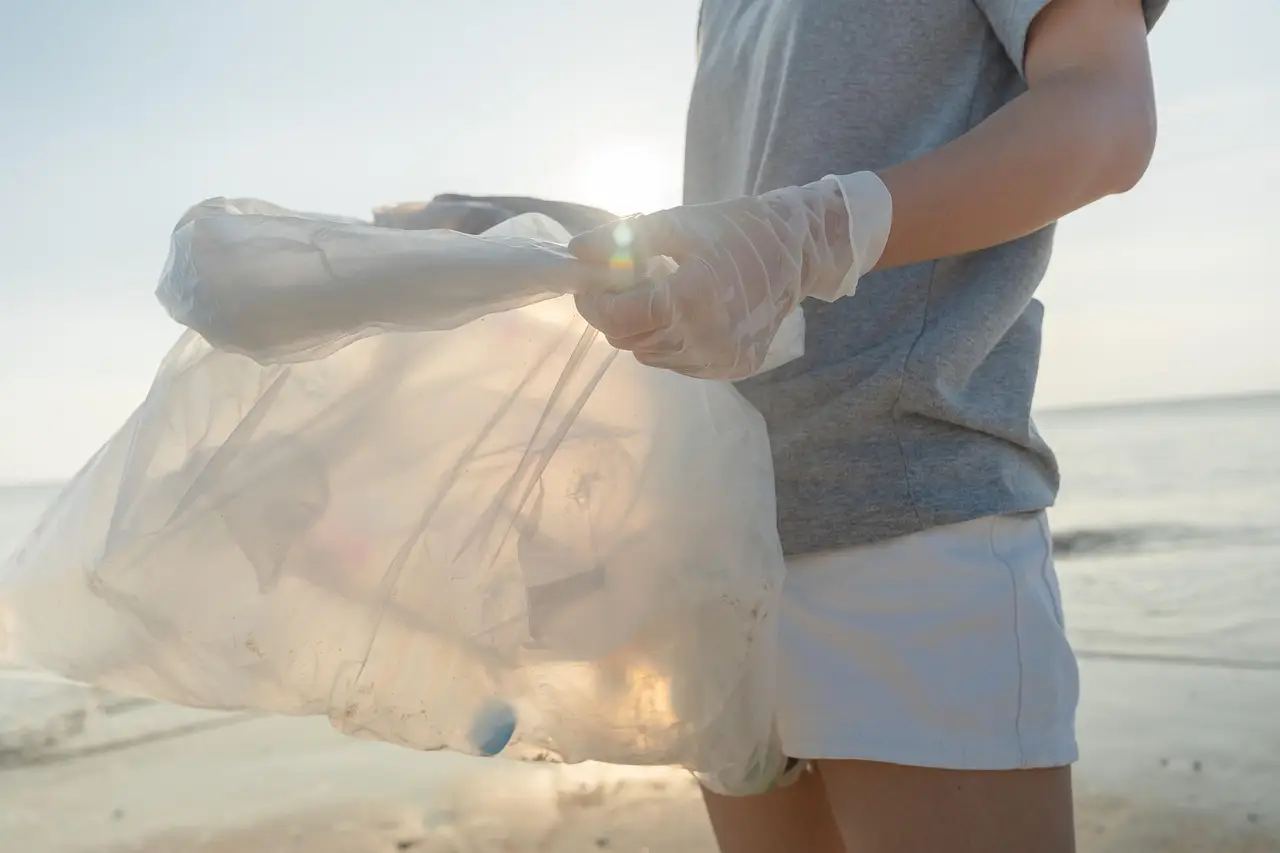
Businesses and institutions in just 6% of Montreal's mapped area generate roughly 100,000 metric tons (110,000 tons) of landfilled food waste every year, McGill University researchers have found. That's half of all food waste from non-household sources across the entire city.
Food service and retail businesses turned out to be the biggest contributors. The study, published in the journal Waste Management, maps the problem block by block for the first time.
The paper is titled "Quantifying uncertainty in food waste across an urban area: The role of industrial, commercial, and institutional sectors." Its lead author is Xiaowen Ni, a Ph.D. candidate in McGill's Department of Bioresource Engineering.
Why does the map matter?
Montreal's organic waste collection programs currently focus on households, and official waste audits generally report only citywide totals. That approach can obscure which zones or boroughs produce the most waste, Ni said.
"When I started my Ph.D. in 2023, Montreal had committed to divert 60% of its organic waste from landfills. I wanted to help solve this problem," Ni said. "But I found that while the city already has a collection system for residences by borough, it had very little data from the industrial, commercial and institutional (ICI) sectors."
ICI generators include food businesses, restaurants, schools and health care facilities — the everyday establishments most residents never think of as food-waste producers.
The short version: the city has been steering its waste policy using numbers that hide half the problem.
How did the researchers track the waste?
The team built a new geospatial mapping method that stitches together three kinds of information:
- Federal waste-audit data compiled for Environment and Climate Change Canada
- Municipal inspection records, which identified 14,508 active businesses and institutions
- Building-footprint data showing each site's location and size
The researchers fed all of this into a computer model that estimated food waste disposal across Montreal. They then plotted the results onto a grid of 300-meter-by-300-meter (984-foot-by-984-foot) cells, exposing food-waste hotspots throughout the city.
The method is cheap and simple by design. Ni said it could help municipalities target waste-reduction efforts where they would have the greatest impact, instead of spreading resources evenly across the map.
What happens next?
"This relatively straightforward, low-cost model can help cities frame food waste as a broader, systemic issue that might be happening away from home and related to the businesses and institutions we rely on every day," said Graham MacDonald, the study's co-author and an associate professor in McGill's Department of Geography.
The researchers are now working with colleagues in Halifax and Guelph to replicate the model, testing whether it holds up in other Canadian cities.
They are also exploring ways to cut food waste from the ICI sector itself. Ideas on the table include converting waste into animal feed and neighborhood-level strategies such as food redistribution.
"I think this is the first step," Ni said. "Now we at least know the probable amounts of food waste and where it's occurring. The next step is to optimize our waste management systems and see what can be done."
The study appears in Waste Management (2026), DOI: 10.1016/j.wasman.2026.115751.
What's the bottom line?
A modest mapping exercise has shown that a small slice of Montreal produces a huge share of its business food waste — and now other cities are lining up to find out if the same pattern holds on their own streets.
via phys.org/rss-feed/ (Source)
More from Elena Vasquez
Show full bio
Correspondent covering money, funding and market shifts around general science news at SciBeat.
424 articles
Nearby plates
- Diverting Food Scraps From Landfills Could Cut US Methane by 6%
- Four Methods Collapse Into Two: Study Simplifies Environmental Impact Analysis
- Five Data Sets, Five Answers: The Uncertainty Behind Nitrogen Pollution Maps
- Just 9% of Major Companies Use Biodiversity Indicators, Study Finds
- New polystyrene is half plant-based and designed to fall apart for recycling