Plate Nº 52 · recorded November 14, 2026
Earth & ClimateReported finding
Earth's Frozen Regions Have Crossed a Safe Planetary Limit, Study Finds
A 30-scientist study in Science, presented at COP31, finds Earth's ice has crossed its safe operating space, threatening the stable Holocene conditions behind all human civilization.
By Nathan Brooks5 min read982 words
In brief
- A study published in Science and presented at COP31 finds the cryosphere has exceeded its planetary safe operating space
- The assessment was compiled by more than 30 scientists led by the Stockholm Resilience Center and benchmarked against 11,700 years of Holocene stability
- COP31 runs November 9–20 in Antalya, Turkey; the U.N. Decade of Action for Cryospheric Sciences spans 2025–2034
- The paper proposes adding the cryosphere to the planetary boundaries framework
- Publication reference: Bo Su et al., Science (2026), DOI 10.1126/science.aef5636
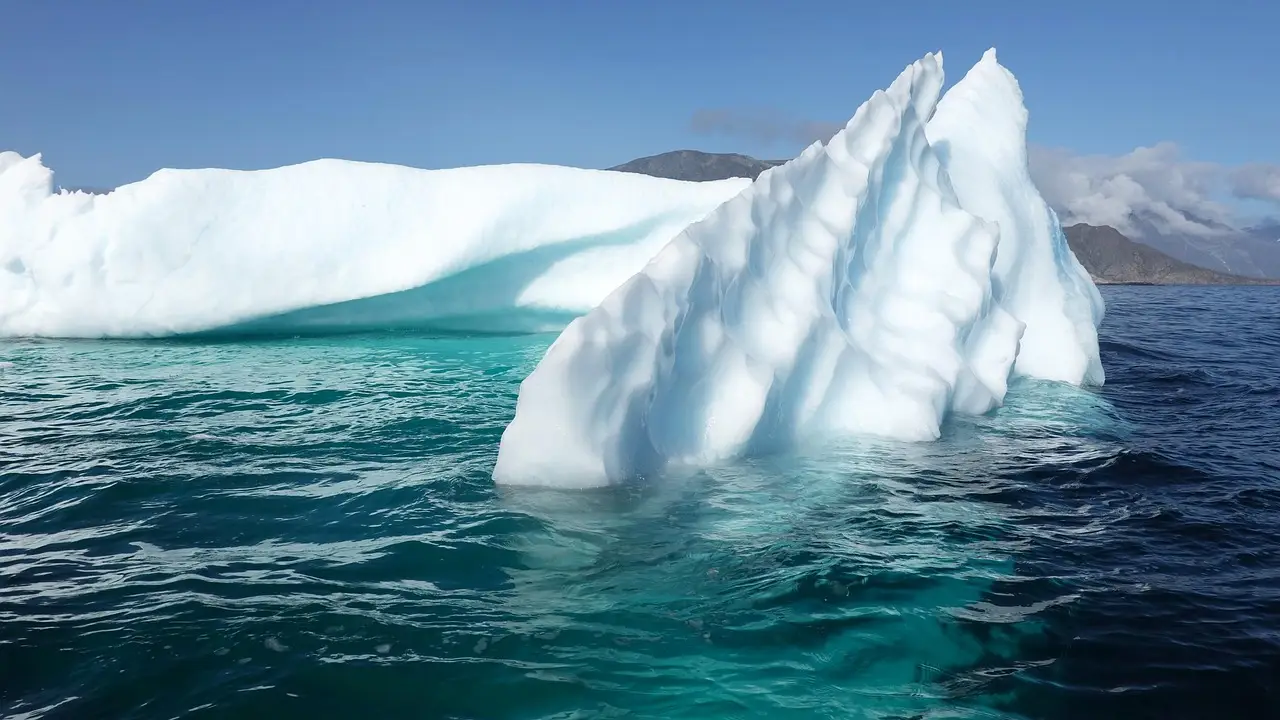
The planet's frozen regions have already pushed beyond their safe operating space. That's the headline finding of a new study published in Science and presented at COP31, the U.N. climate conference running November 9–20 in Antalya, Turkey.
The paper, led by researchers at the Stockholm Resilience Center at Stockholm University, assesses the cryosphere — the umbrella term for ice sheets, mountain glaciers, sea ice, permafrost and seasonal snow cover. Its verdict: human-driven climate change is degrading these frozen landscapes beyond safe environmental limits, and in doing so threatens the basic Earth system conditions humanity depends on.
More than 30 scientists from institutions worldwide compiled the assessment. The team includes researchers from the Potsdam Institute for Climate Impact Research (PIK), Tsinghua University, Beijing Normal University, the Earth Commission, the International Association of Cryospheric Sciences (IACS), the Climate and Cryosphere (CliC) project of the World Climate Research Program, the Third Pole Environment Program and the WWF Arctic Program.
What exactly has been crossed?
The study introduces a "safe operating space" (SOS) for the cryosphere — a set of precautionary boundaries for the planet's frozen areas. The reference point is the Holocene: the roughly 11,700-year stretch of relatively stable climate and environmental conditions in which human civilizations developed and thrived.
The authors conclude the cryosphere has now moved beyond that space. Current changes — and changes already locked in — are carrying it increasingly far from Holocene-era stability. In plain terms, humanity is exiting the climatic comfort zone it has occupied for the entire history of agriculture, cities and states.
There's a second layer of risk. The paper warns that cryosphere degradation could trigger reinforcing feedback loops — self-amplifying processes in which melting causes more warming, which causes more melting. Once those loops take hold, the authors say, returning to the stable conditions of the past 11,700 years becomes increasingly difficult.
Why does frozen ground matter so far away?
The cryosphere isn't a remote, decorative feature of the planet. It regulates the Earth's energy, water, carbon and methane cycles, and it stores vast amounts of carbon. When it breaks down, the consequences ripple outward: faster global temperature rise, accelerating sea level rise, degraded ecosystems, and a higher likelihood of catastrophic floods and droughts.
The communities most exposed sit in polar regions, high mountains, coastal zones and low-lying areas. The study's release came just as cryosphere-related risks were unfolding in real time — most recently, Professor Johan Rockström noted, with the floods in Nepal.
"The cryosphere has already exceeded its planetary safe operating space, threatening the frozen foundations of our planet that have supported human civilizations for millennia," said Dr. Bo Su, the paper's lead author. Su is a researcher at the Stockholm Resilience Center and Beijing Normal University, and co-chair of the Cryosphere Stewardship Working Group under the IACS.
Su also flagged a historical blind spot. Compared with other parts of the Earth system, he said, scientists arrived late to understanding the cryosphere — only in recent decades have researchers recognized its critical role in maintaining planetary stability, resilience and habitability, and grasped the severity of its decline.
What's driving the decline?
The dominant driver is human-induced climate change. But it's not the only one. The study also points to regional human disturbances: black carbon emissions — soot that darkens ice and speeds melting — plus industrial expansion and infrastructure growth in frozen regions.
That diagnosis shapes the prescription. The authors urge policymakers to use the proposed safe operating space as a scientific basis for precautionary targets and strategies. Concretely, that means:
- Cutting greenhouse gas emissions
- Limiting black carbon emissions
- Reducing local human disturbances in cryosphere regions
"This work substantially furthers our understanding of how cryosphere changes are threatening the stability and resilience of life-supporting conditions of the Earth system," said Rockström, director at PIK and co-chair of the Earth Commission. "As cryosphere risks unfold before our eyes — most recently with the floods in Nepal — the report's arrival at COP31 issues an important reminder for global leaders of the significance of cryosphere governance."
How does this fit into existing climate frameworks?
The study proposes folding the cryosphere into the planetary boundaries framework — the well-known scientific tool that defines nine limits, such as climate change and biodiversity loss, within which humanity can operate safely. Adding the cryosphere as a formal component, the authors argue, would help policymakers better understand and mitigate mounting risks, given how much the frozen regions contribute to maintaining life-supporting conditions on Earth.
The timing is deliberate. The report lands amid the U.N. Decade of Action for Cryospheric Sciences, which runs from 2025 to 2034, and during COP31 itself. Dr. John Pomeroy, chair of the Strategic Management Committee for that U.N. Decade, a UNESCO chair in mountain water sustainability and a distinguished professor at the University of Saskatchewan, called it a clear warning.
"This timely, integrated update on the state of cryosphere decline, its impact on the Earth's environment and the impacts on humanity's prosperity and survival issues a clear warning on the emergency of cryosphere collapse that global policymakers must heed at COP31 and beyond," Pomeroy said. The paper, he added, contributes to the Decade's ambitions "while reinforcing the need for coordinated international action on preserving our cryosphere, and the irreplaceable freshwater, ocean and ecosystem services it provides."
One caution is worth stating plainly: the safe operating space framework is a precautionary construct, not a physical tripwire. It defines boundaries designed to keep humanity within conditions known to be safe, based on 11,700 years of evidence. The study's conclusion is that we've left those conditions behind — and that the window for steering back is narrowing.
Publication details: Bo Su et al., "The cryosphere beyond a planetary safe operating space," Science (2026). DOI: 10.1126/science.aef5636.
via phys.org/rss-feed/ (Source)
More from Nathan Brooks
Show full bio
Market editor covering companies, deals and strategy in general science news at SciBeat.
361 articles
Nearby plates
- Mars' North Pole Holds Far Less Dust Than Scientists Believed
- Arctic winter sea ice loss may exceed forecasts by 1 million
- Arctic Sea Ice Ties for 10th-Lowest Minimum in 2026 Satellite Record
- Ice Ages May Have Started With a Pole-to-Pole Ocean Chain Reaction
- Every Fraction of a Degree: Why 0.1°C of Warming Adds Millions at Risk