Plate Nº 53 · recorded November 13, 2026
Earth & ClimateReported finding
Every Fraction of a Degree: Why 0.1°C of Warming Adds Millions at Risk
Every tenth of a degree of warming exposes 140 million more people to dangerous heat. At COP31 in Turkey, scientists explain why fractions of a degree decide coral survival and more.
By Nathan Brooks5 min read917 words
In brief
- Every tenth of a degree of warming exposes an additional 140 million people to dangerous heat.
- A recent UN study puts the best-case warming scenario at 1.7–1.8°C; current emissions paths lead to about 2.8°C by 2100.
- Beyond 2°C of warming, 99% of corals would be lost, according to the IPCC.
- An estimated 50,000 people died of heat-related causes in Europe this past summer.
- 44% of coral species globally are already at risk of extinction.
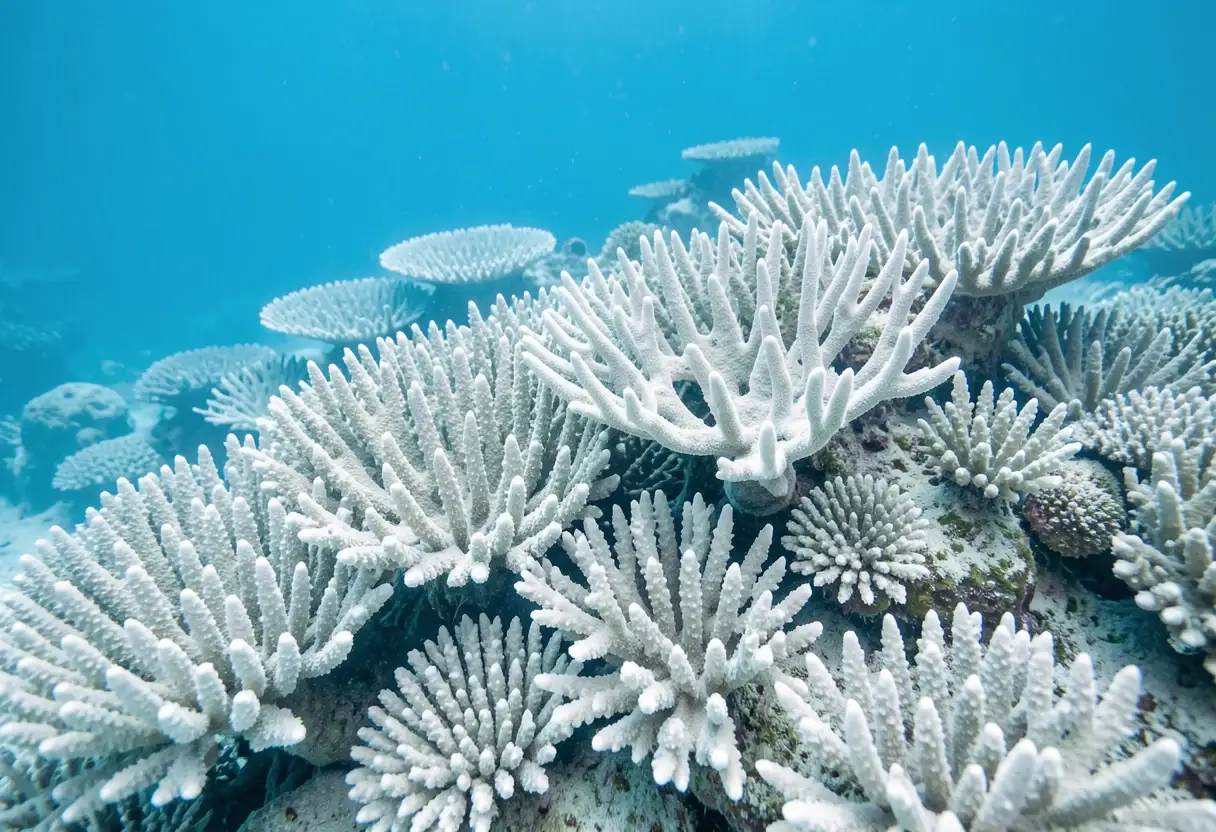
Every tenth of a degree of global warming exposes an additional 140 million people to dangerous levels of heat, according to researchers — one of the starkest numbers behind the climate talks now underway at the COP31 summit in Turkey.
The negotiations open against a sobering backdrop. A decade ago, countries agreed to cap warming at 1.5 degrees Celsius (2.7 degrees Fahrenheit). That goal, by most measures, is now out of reach. Global average temperatures already sit close to 1.5°C above pre-industrial levels, heat-trapping emissions from burning fossil fuels keep rising, and most countries aren't on track to meet their pledges to shift to cleaner energy.
A recent United Nations study puts the best-case scenario at 1.7 or 1.8°C of warming — roughly 3 degrees Fahrenheit. If emissions stay on their current path, the planet would be around 2.8°C (5°F) hotter by the end of the century.
"The crucial point is that every fraction of a degree matters," says Tim Lenton, a climate professor at the University of Exeter. "Every fraction of a degree that we avoid is really able to do a huge amount of limiting harm."
Why does half a degree matter so much?
The gap between 1.5 and 2°C may sound trivial — think the difference between two adjacent notches on a thermostat. But scientific research shows those increments can produce dramatically different outcomes, from more extreme weather worldwide to the collapse of some of the planet's most sensitive ecosystems.
The 1.5°C figure is a global average, and averages mask the extremes that drive them. Heat waves are already exacting heavy death tolls: in Europe this past summer, an estimated 50,000 people died of heat-related causes. Heat is especially dangerous for people with chronic health conditions, the elderly, and those who are pregnant. And the true toll is likely higher, because heat-related deaths are often undercounted.
"You could think of it a bit like a tipping point for the human organism or body," Lenton says. "At some point, our physiology kind of reaches a tipping point and the worst tipping point is death."
What happens to coral reefs?
Corals are the architects of entire ecosystems. As they grow, they build the framework that supports vast numbers of other species, making reefs biodiversity hotspots. Hundreds of millions of people depend on them for food and livelihoods.
They're also highly vulnerable to heat. Prolonged marine heat waves cause corals to bleach — turning white — which can eventually kill them. Since the late 1990s, the world has seen four global bleaching events, and with a historically strong El Niño now raising water temperatures, scientists say a fifth is likely unfolding.
The numbers are already grim. Even before the previous bleaching event, which ran from 2023 to 2025, researchers found that 44% of coral species globally are at risk of extinction.
"These are incredibly worrying statistics, but they also emphasize that time matters," says David Obura, director of the coral research organization CORDIO East Africa, who worked on the study published last month in the journal Nature. "Every ten years, every five years counts."
The survival of most reefs hinges on the difference between 1.5 and 2°C. The Intergovernmental Panel on Climate Change found that beyond 2°C of warming, 99% of corals would be lost.
"At 2 degrees of warming, we anticipate most corals just won't survive, not in functional ways to build a reef ecosystem," Obura says. "You might still find some of the species, but many of them may be so rare or so compromised that they will have gone extinct by then."
Conservation groups and coastal communities aren't waiting. They're restoring corals, cutting water pollution, and even breeding more heat-tolerant strains to make reefs as resilient as possible.
"Most people around the world don't have the luxury of giving up on degraded ecosystems, because that's where they live," Obura says. "That's all they have. So we have to work out how to make them function again."
How does warming fuel storms and sea level rise?
Warmer air holds about 7% more water vapor for every degree of warming, which translates into heavier downpours. Rainstorms are already growing more intense across most of the U.S.
Researchers also warn of larger-scale tipping points, such as the collapse of Antarctic glaciers. If those glaciers destabilize, the melt would add vast volumes of water to the ocean and raise sea levels globally.
"We're never exactly sure where the tipping point is until we cross it, but we can be 100% confident that, for most of them, more warming is a bigger likelihood of crossing them," Lenton says. "Less warming is controlling that risk and that's why we should fight for every fraction of a degree that we can stave off."
What's on the table in Turkey?
Don't expect major new emissions-cutting commitments from COP31. Instead, discussions are focusing on a new goal for electrification — getting more cars and homes to run on electricity instead of fossil fuels. That would help cut overall emissions, because a growing share of the world's electricity now comes from cleaner sources like solar and wind.
The science, in short, hasn't changed the politics. But it has sharpened the arithmetic: smaller numbers of degrees, and even tenths of degrees, translate directly into lives, reefs, and coastlines spared.
via feeds.npr.org (Source)
More from Nathan Brooks
Show full bio
Market editor covering companies, deals and strategy in general science news at SciBeat.
352 articles
Nearby plates
- Regional warming nears levels tied to 1.5°C global rise
- Global warming has accelerated to 0.35°C per decade, study finds
- El Niño Will Push Global Temperatures Past 1.5 Degrees C
- Global Fossil CO2 Set to Fall 0.4% in 2026 – But Wars, Not Clean Energy, Drive It
- New Study Ties Major Fossil Fuel Emitters to Extreme Weather Risk