Plate Nº 87 · recorded November 11, 2026
Earth & ClimateReported finding
Global Fossil CO2 Set to Fall 0.4% in 2026 – But Wars, Not Clean Energy, Drive It
Fossil CO2 is set to fall 0.4% in 2026, but wars and oil prices drive the drop – while total emissions still rise to 43.3 billion tonnes, the Global Carbon Budget finds.
By Nathan Brooks4 min read804 words
In brief
- Global fossil fuel CO2 emissions are projected to fall 0.4% in 2026, per the Global Carbon Budget.
- Total CO2 emissions will still rise to 43.3 billion tonnes in 2026, up from 42.8 billion tonnes, due to land-use change.
- The remaining 1.5°C carbon budget equals less than four years of emissions at the current rate.
- US emissions are projected to fall 1.3%; India's are set to rise 4.4%.
- Aviation emissions are expected to drop 1% due to flight reductions in and out of the Middle East.
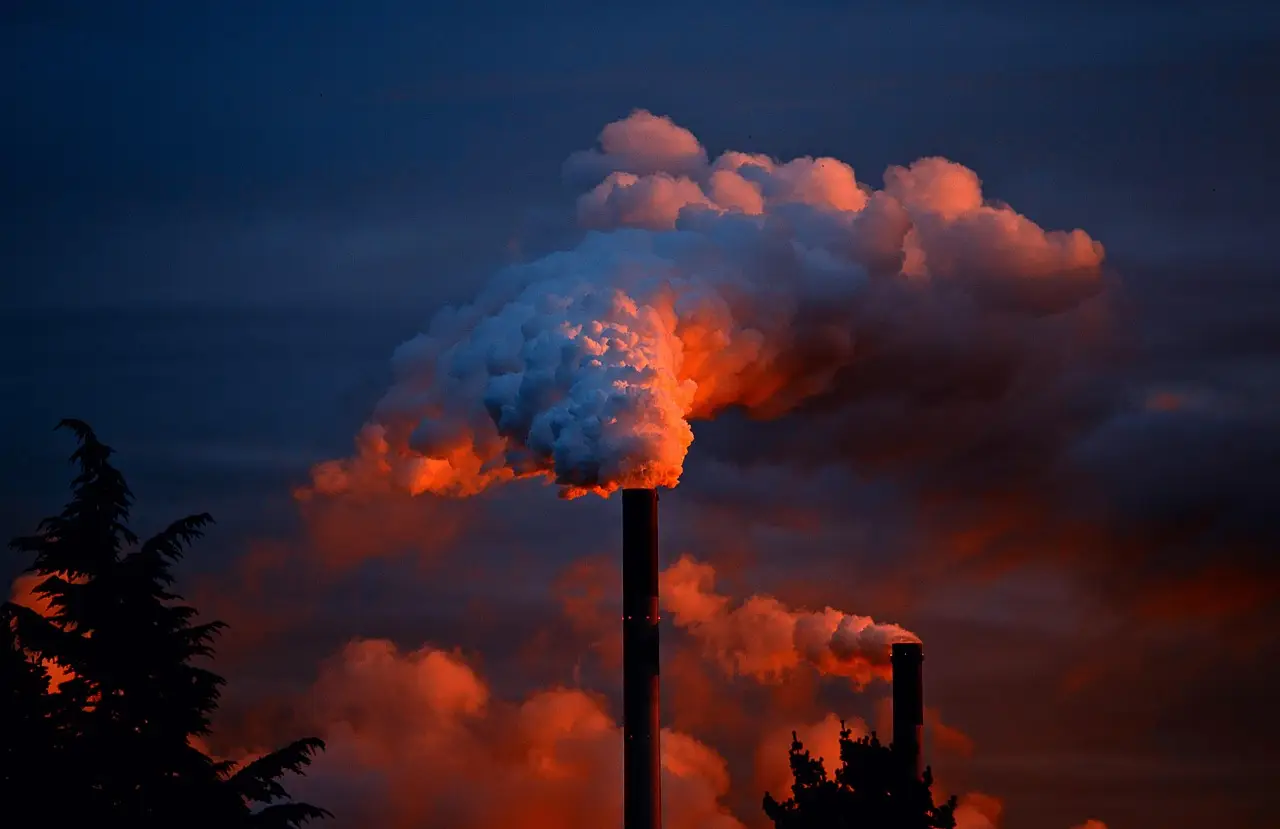
Global carbon dioxide emissions from fossil fuels are projected to fall 0.4% in 2026 – the first drop in years, but one that scientists say owes more to geopolitical shocks than to clean energy. That's the headline finding of the 2026 Global Carbon Budget, released alongside the COP31 climate summit, and the researchers behind it are notably cautious about celebrating.
Professor Pierre Friedlingstein, who led the study and directs the Global Carbon Budget Office at the University of Exeter, put it plainly: "A decline in fossil CO2 emissions is encouraging, but a reduction driven partly by geopolitical shocks is not a sustainable climate solution."
Why the decline isn't what it seems
The projected 0.4% dip in fossil fuel emissions has a familiar list of causes: wars and geopolitical tension. The single largest component of the global decline is oil, most likely because conflict-driven prices have pushed consumption down. Aviation emissions are expected to drop 1%, largely because flight reductions in and out of the Middle East have cut demand.
In other words, the world is emitting less because it's flying and driving less in certain regions – not because it has fundamentally rebuilt its energy system. Friedlingstein's prescription is different: "The long-term answer remains the rapid deployment of clean energy technologies." Renewables and electric vehicles, he noted, are increasingly offsetting growth in energy demand, but further acceleration is needed if global emissions are to peak and enter a sustained decline.
Total emissions are still going up
Here's the catch that makes the fossil-fuel decline less comforting. Total CO2 emissions – counting everything, not just fossil fuels – are projected to reach 43.3 billion tonnes in 2026. That's up from 42.8 billion tonnes the year before, an increase of half a billion tonnes in a single year.
The reason is land-use change. Deforestation, peat fires and agriculture are emitting enough carbon to more than wipe out the fossil-fuel savings. So while the coal-and-oil side of the ledger improves slightly, the forests-and-farms side worsens.
How much time is left for 1.5°C?
The report's most sobering number concerns the carbon budget – the amount of CO2 humanity can still emit before global warming reaches 1.5°C above pre-industrial levels. That remaining allowance now equals less than four years of emissions at the current rate of decarbonisation.
For context: if the world keeps emitting at today's pace, it would exhaust its 1.5°C allowance before the end of the decade. That timeframe frames the stakes at COP31, where negotiators are weighing how to speed up a transition that is moving, by the report's own account, too slowly.
What is happening to natural carbon sinks?
The report also flags a quieter threat: the planet's natural carbon sinks – forests, soils and oceans that absorb CO2 – were weakened significantly by the 2023-24 El Niño, the climate oscillation that periodically disrupts weather patterns worldwide.
A new El Niño predicted for 2026 is expected to have the same impact again, weakening the sinks further. That matters because every tonne a sink fails to absorb is a tonne that stays in the atmosphere, tightening the carbon budget from the other direction.
Which countries are moving – and which aren't?
As expected, the world is progressing at very different rates toward, and in some cases away from, net zero. The report's country-level projections show:
- United States: emissions projected to decrease by 1.3%, driven by a decline in coal use.
- India: emissions projected to increase by 4.4% – a growth rate above its recent average.
- Oil, globally: the largest single contributor to the decline, likely due to geopolitical tensions raising prices.
The US figure shows what a structural shift away from coal looks like. The Indian figure shows the counter-pressure of a growing economy whose energy demand is still rising faster than clean energy can cover it. The global picture is the tug-of-war between those two forces.
The bottom line
The 2026 numbers tell a split story. Fossil fuel emissions are falling – 0.4% this year, with the US down 1.3% and aviation down 1% – but for reasons that wars, not energy policy, created. Total emissions are still rising to 43.3 billion tonnes because land-use change is accelerating. And the window for staying under 1.5°C has shrunk to less than four years of current emissions.
The study's own authors frame the moment carefully. The decline is real, and it's encouraging, but a durable one – the kind that survives a peace deal and a recovery in air travel – will have to come from the rapid deployment of clean energy technologies, and faster than anything the world has managed so far.
via energylivenews.com (Source)
More from Nathan Brooks
Show full bio
Market editor covering companies, deals and strategy in general science news at SciBeat.
325 articles
Nearby plates
- Global Fossil CO₂ Emissions Set to Fall 0.4% in 2026, Report Says
- Fossil Fuel Emissions Dip in 2026, But Not Thanks to Green Energy
- High Oil Prices From Iran Conflict May Cut Global Fossil CO2 in 2026
- Government-Owned Power Plants Emit Most, Respond Least to Climate Policy
- New Study Ties Major Fossil Fuel Emitters to Extreme Weather Risk