Plate Nº 56 · recorded November 10, 2026
Earth & ClimateReported finding
Fossil Fuel Emissions Dip in 2026, But Not Thanks to Green Energy
Global fossil fuel CO2 emissions will drop 0.4 percent in 2026, but researchers credit high oil prices from the Iran war — not solar, wind or EVs — for the decline.
By James Calloway3 min read622 words
In brief
- Global fossil fuel CO2 emissions are projected to fall 0.4 percent in 2026, after growing 0.8 percent per year on average from 2019 to 2025.
- Emissions will reach 38.24 gigatons by year's end, about 0.16 gigatons less than 2025.
- Researchers attribute the dip to Iran war-driven oil prices, not the energy transition.
- EVs, solar and wind should counteract about 63 percent of emissions growth from 2025 to 2028, avoiding 1.64 gigatons.
- Without clean technologies, emissions would have grown 1.9 percent per year from 2019 to 2025.
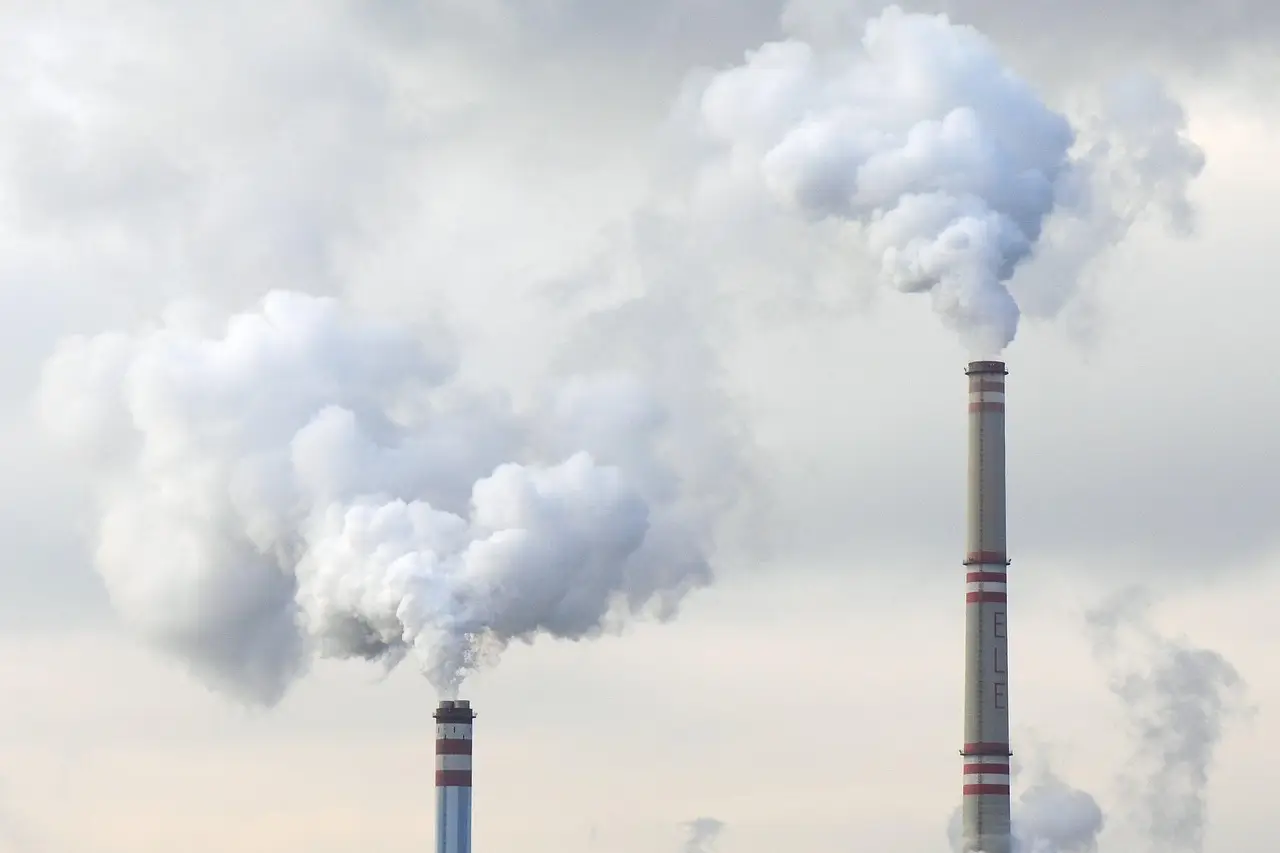
Global carbon dioxide emissions from fossil fuels will fall 0.4 percent this year, researchers project — but the dip has little to do with solar panels or electric cars. The likely culprit is the Iran war, which pushed oil prices up and energy use down.
That's the sobering takeaway from a study published November 9 in Nature Climate Change, led by Glen Peters of the Center for International Climate Research in Oslo. Emissions grew 0.8 percent per year on average from 2019 to 2025. This year breaks the streak. Barely.
What's actually driving the decline?
High oil prices stemming from the Iran war, according to the researchers. Remove that energy shock, and global emissions probably would have kept climbing in 2026.
"So the energy transition that's happening … it's not quite big enough to get emissions heading downward yet," Peters said.
That gap matters. A decline caused by economic disruption — expensive oil, squeezed consumers, throttled industry — isn't a decline caused by cleaner energy displacing fossil fuels. Wars end. Prices fall. The 2020 comparison makes the point: annual global emissions dropped by nearly two gigatons during the COVID-19 pandemic, then rebounded. The 2009 financial crisis cut about 0.5 gigatons. Crisis-driven cuts don't stick.
This year's cut is smaller than either. The researchers project global emissions will reach 38.24 gigatons by year's end — roughly 0.16 gigatons less than 2025.
What did the study actually measure?
Peters and his colleagues collected data on countries' electric vehicle stocks and on wind and solar generation, then projected how those technologies affect global fossil CO2 emissions through 2028. CO2, or carbon dioxide, is the main heat-trapping gas released by burning coal, oil and gas.
One detail deserves a flag. The team used the generative AI model Claude to source data and write the analysis code. The paper doesn't dwell on the limitations of that approach, and readers should weigh the projections accordingly. AI-assisted analysis is increasingly common in research, but it's a method worth noting, not glossing over.
Is the energy transition working at all?
Yes — more than headline cynicism suggests. The study found that without EVs, solar and wind, global emissions would have risen by 1.9 percent per year on average from 2019 to 2025. That's more than double the actual growth rate of 0.8 percent.
And if electric vehicle sales and solar and wind capacity keep growing at their 2026 rates, those technologies should counteract about 63 percent of emissions growth from 2025 to 2028. In plain terms, that's about 1.64 gigatons of added emissions avoided.
So the transition is bending the curve. It just isn't bending it downward on its own — not yet.
What does this change for the climate outlook?
For now, not much. The researchers conclude that the energy transition needs to accelerate before humanity sees emissions decline consistently, year after year, without a crisis doing the work. Clean technologies are already offsetting a large share of growth. But offsetting growth isn't the same as shrinking emissions.
The timing of peak emissions — the point at which emissions stop rising for good — remains genuinely uncertain. "It's very hard to say exactly how long it will take," Peters said.
Still, he sees a signal in the conversation itself. "The fact that we're talking about this means that we're close to that point."
Maybe. Peak emissions talk has circulated before, and projections through 2028 rest on growth rates holding steady. The honest read: the numbers are moving in the right direction, the cause this year isn't, and the real test arrives when oil prices fall back to normal.
via sciencenews.org (Source)
More from James Calloway
Show full bio
Staff writer covering regulation, policy and their impact on general science news at SciBeat.
346 articles
Nearby plates
- High Oil Prices From Iran Conflict May Cut Global Fossil CO2 in 2026
- Global Fossil CO₂ Emissions Set to Fall 0.4% in 2026, Report Says
- Global Fossil CO2 Set to Fall 0.4% in 2026 – But Wars, Not Clean Energy, Drive It
- Government-Owned Power Plants Emit Most, Respond Least to Climate Policy
- UK 2030 EV sales target may fall from 80% to 60% as demand lags