Plate Nº 20 · recorded November 9, 2026
Science Policy & FundingReported finding
UK 2030 EV sales target may fall from 80% to 60% as demand lags
Britain may cut the 2030 zero-emission car requirement from 80% to about 60% and ease annual quotas. Sales still trail the mandate, even as Chinese makers gain share.
By Nathan Brooks4 min read721 words
In brief
- The 2030 requirement could fall from 80% to about 60%, although Downing Street says no final decision has been made.
- Battery-electric cars held 26.6% of new registrations in the first 10 months of 2026, up from 22.4% in 2025.
- The mandate requires 33% in 2026, 38% in 2027, 52% in 2028 and 80% in 2030.
- The SMMT forecasts electric-vehicle shares of 27.2% in 2026 and 32% in 2027.
- Chinese manufacturers took about 15% of the UK market; EU tariffs on Chinese-made EVs range from 7.8% to 35.3%.
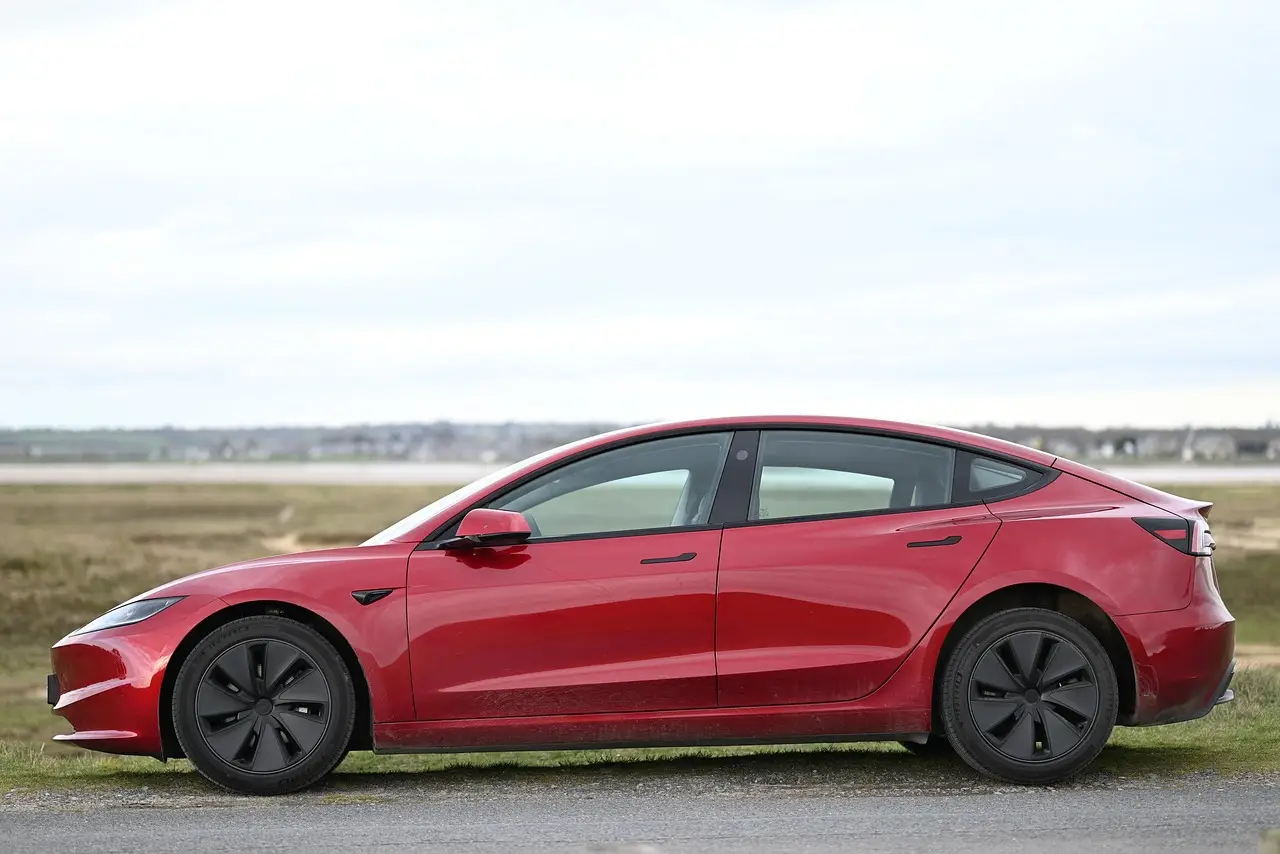
Britain’s 2030 zero-emission car requirement could fall from 80% to about 60%, the BBC reports, as ministers respond to electric-car sales lagging behind the annual legal quotas. Downing Street says no final decision has been taken, so the change remains a proposal rather than settled policy.
The likely shift would give manufacturers more flexibility over how they reach each year’s quota. It would also ease the annual sales path, while leaving the government’s commitment to phase out new cars powered solely by petrol or diesel from 2030 unchanged.
What is changing in the annual car quota?
The Zero Emission Vehicle Mandate requires manufacturers to reach a specified share of zero-emission car sales each year. That annual trajectory now sits under review, with reports suggesting the final 2030 requirement could land near 60% rather than the current 80%.
Battery-electric cars accounted for 26.6% of new registrations in the first 10 months of 2026, up from 22.4% during the same period in 2025. Electric-car sales are growing quickly, but not quickly enough to match the quotas already written into law.
- 2026: 33% zero-emission sales share required.
- 2027: The requirement rises to 38%.
- 2028: The requirement rises to 52%.
- 2030: The current target reaches 80%.
Those quotas leave manufacturers short of the market’s current pace. The Society of Motor Manufacturers and Traders expects the electric-vehicle share to reach only 27.2% this year, or roughly one in four new cars, and 32% next year.
Because the forecast sits below the 2026 and 2027 mandates, manufacturers increasingly rely on discounting, credit trading and other flexibilities to avoid penalties. Credit trading is the exchange of regulatory credits between manufacturers.
Why are manufacturers pressing for a slower path?
Carmakers say they have already spent billions developing electric models and heavily subsidizing their sales. High purchase prices, charging concerns, and uncertainty over residual values, meaning what a used electric car may be worth later, continue to hold back private buyers.
The SMMT says manufacturers cannot indefinitely bridge the gap between consumer demand and the regulatory requirement. Chief executive Mike Hawes said: “Manufacturers remain committed to the move to zero-emission vehicles.” He also warned: “The regulation was designed when energy was cheaper,” with faster expected cost declines and stronger global demand forecasts.
Production costs were expected to fall faster when the rules were designed, and forecasts for global electric-vehicle demand were considerably stronger. The government launched its review in August to examine whether the annual targets and existing compliance flexibilities remain realistic.
How is Chinese competition complicating the mandate?
Chinese brands add another complication for European and British manufacturers. BYD, Chery, Geely and Changan have expanded aggressively in Britain, helped by lower production costs and a large domestic Chinese battery supply chain.
Reuters reported earlier in 2026 that Chinese manufacturers had taken around 15% of the UK market. That growth gives established carmakers a harder task: regulators require them to push more electric vehicles into a market where demand remains below target.
The European Commission concluded that Chinese battery-electric vehicle producers benefit from unfair state subsidies. It imposed additional tariffs, which are import duties, of 7.8% to 35.3% on Chinese-made electric vehicles entering the EU.
Britain has not followed Brussels with equivalent duties, leaving the UK particularly attractive to Chinese manufacturers competing on price. The result is a squeeze on established manufacturers: they must increase electric sales while cheaper Chinese brands rapidly increase their presence.
What remains unchanged if the target falls?
The government’s wider commitment would survive the likely change. New cars powered solely by petrol or diesel would still be phased out from 2030, and the government would not require every new car to be zero emission by 2035.
If ministers proceed, the measure would revise the annual quota rather than abandon the zero-emission transition. The likely package combines a lower endpoint—possibly 60% instead of 80% by 2030—with more freedom over how manufacturers comply.
For now, the evidence points to a slower mandated pace, not a changed destination. Battery-electric registrations grew faster than in 2025, yet the SMMT expects the market to miss the required share in both 2026 and 2027. The final decisions on the 2030 level and manufacturers’ flexibility remain unresolved.
via energylivenews.com (Source)
More from Nathan Brooks
Show full bio
Market editor covering companies, deals and strategy in general science news at SciBeat.
325 articles
Nearby plates
- Fossil Fuel Emissions Dip in 2026, But Not Thanks to Green Energy
- Global Fossil CO₂ Emissions Set to Fall 0.4% in 2026, Report Says
- Global Fossil CO2 Set to Fall 0.4% in 2026 – But Wars, Not Clean Energy, Drive It
- High Oil Prices From Iran Conflict May Cut Global Fossil CO2 in 2026
- UK Pledges £86 Billion for Science and Tech — But Where's the Detail?